ANTONIO GONZALEZ PRESENTE!

Antonio at cooperativa tierra y libertad

Antonio at cooperativa tierra y libertad

After hearing the unexpected and sad news of  Antonio’s passing I began looking through my photographs to visit with this kind, down to earth human being who made a big contribution to C2C through his artwork.

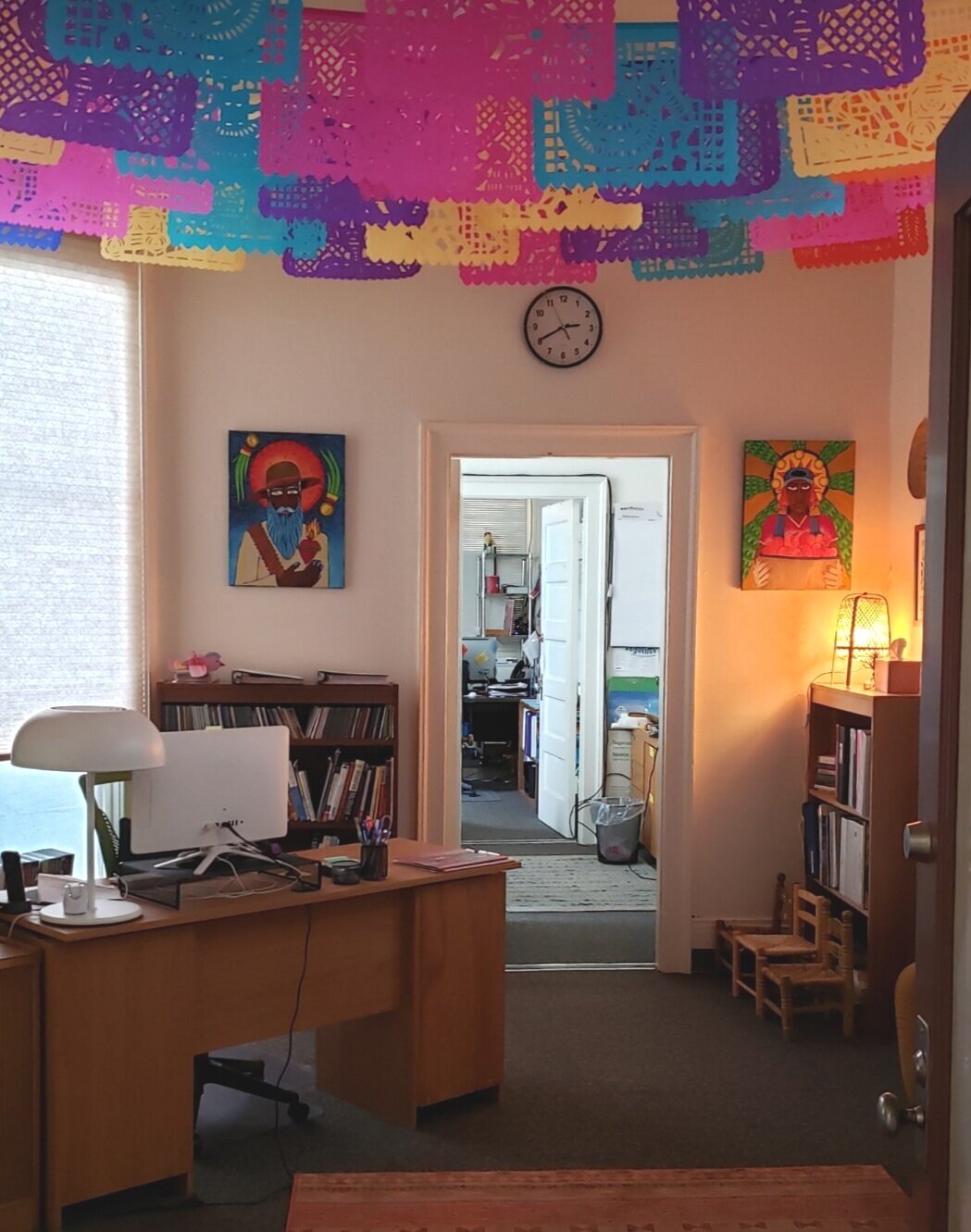
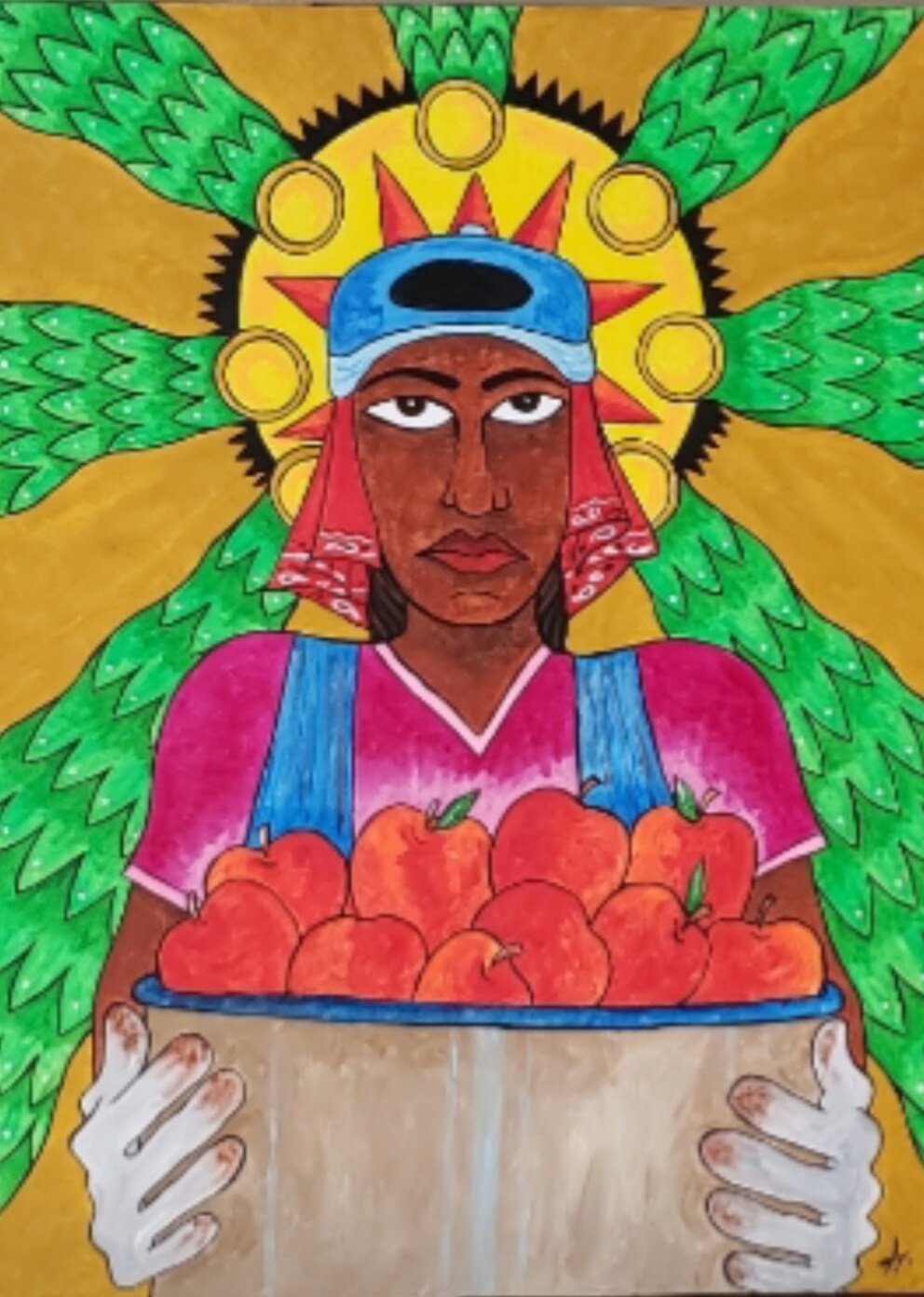
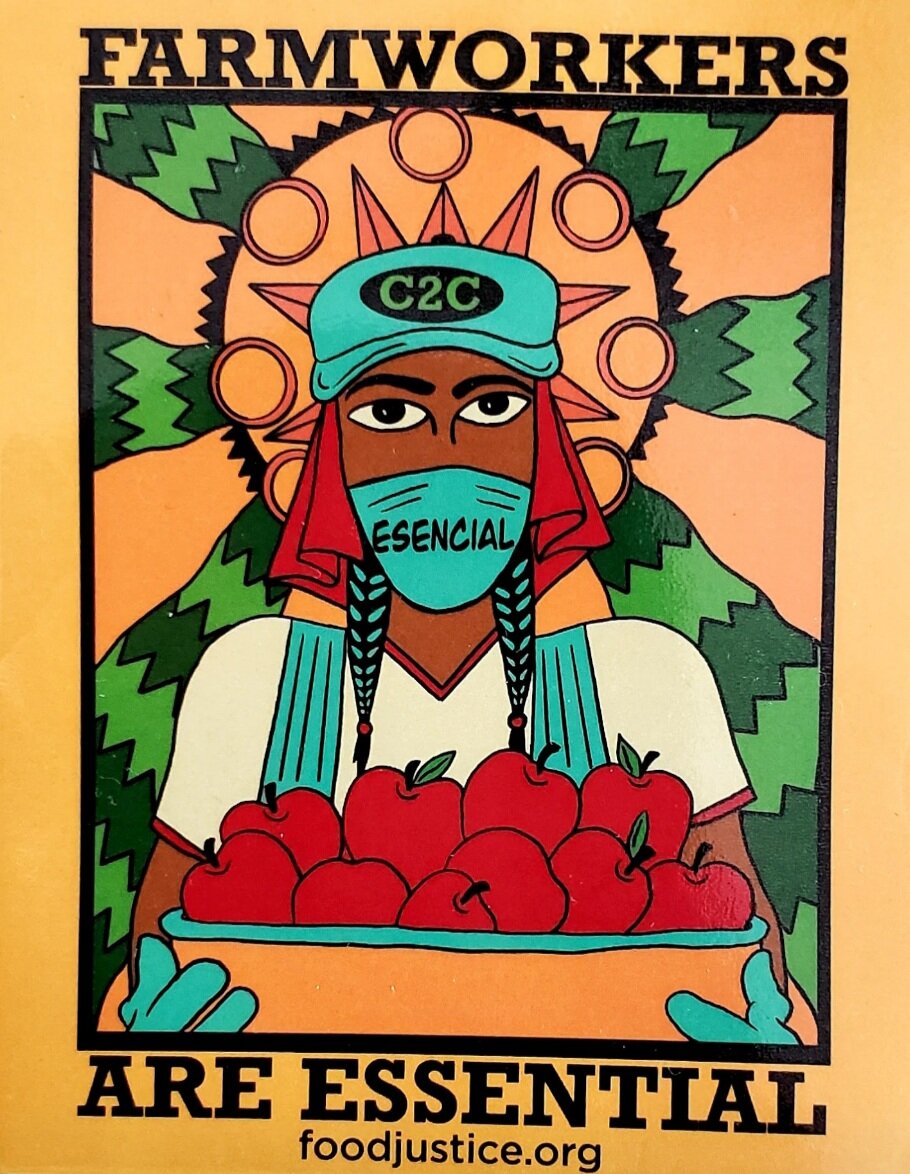
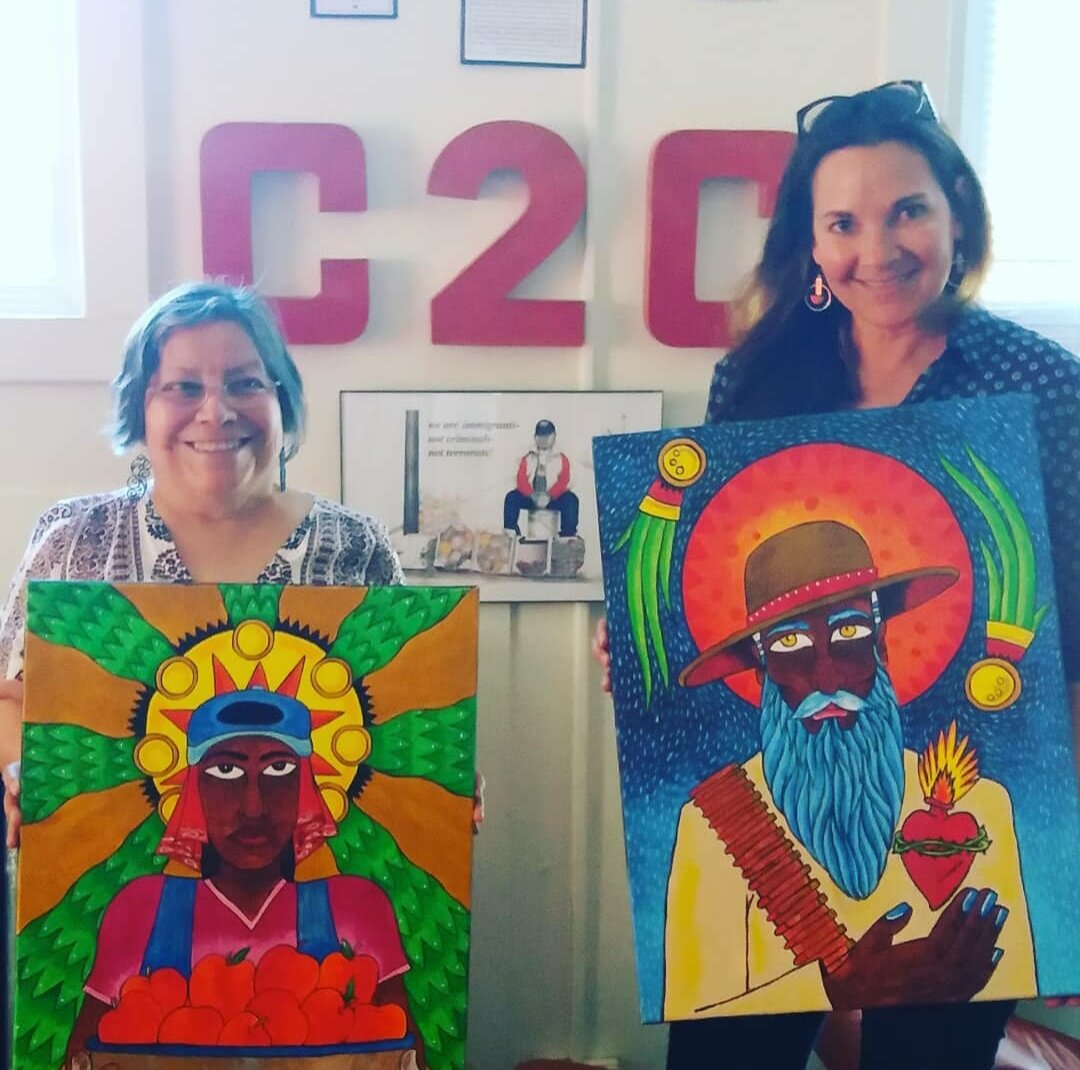
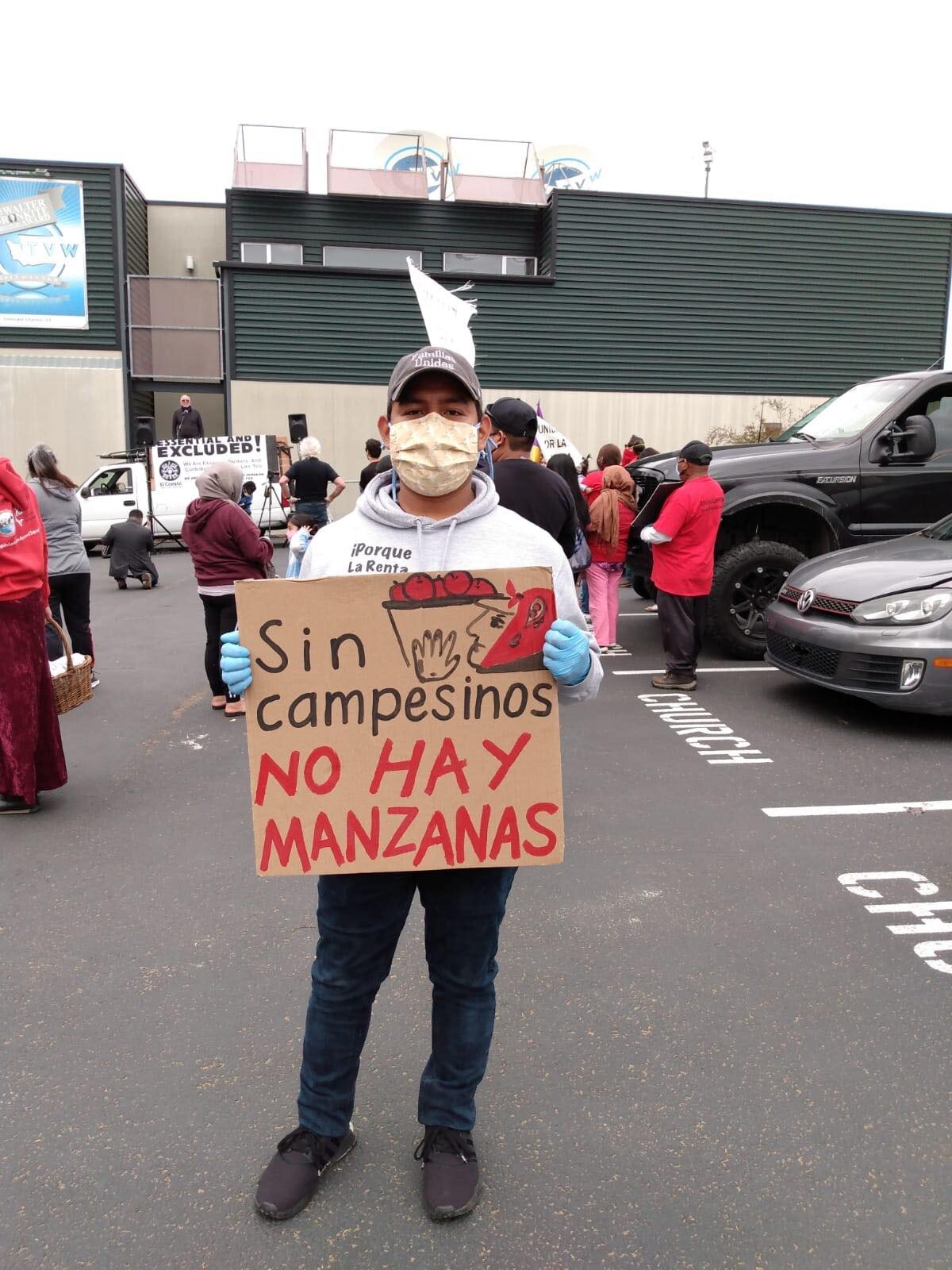
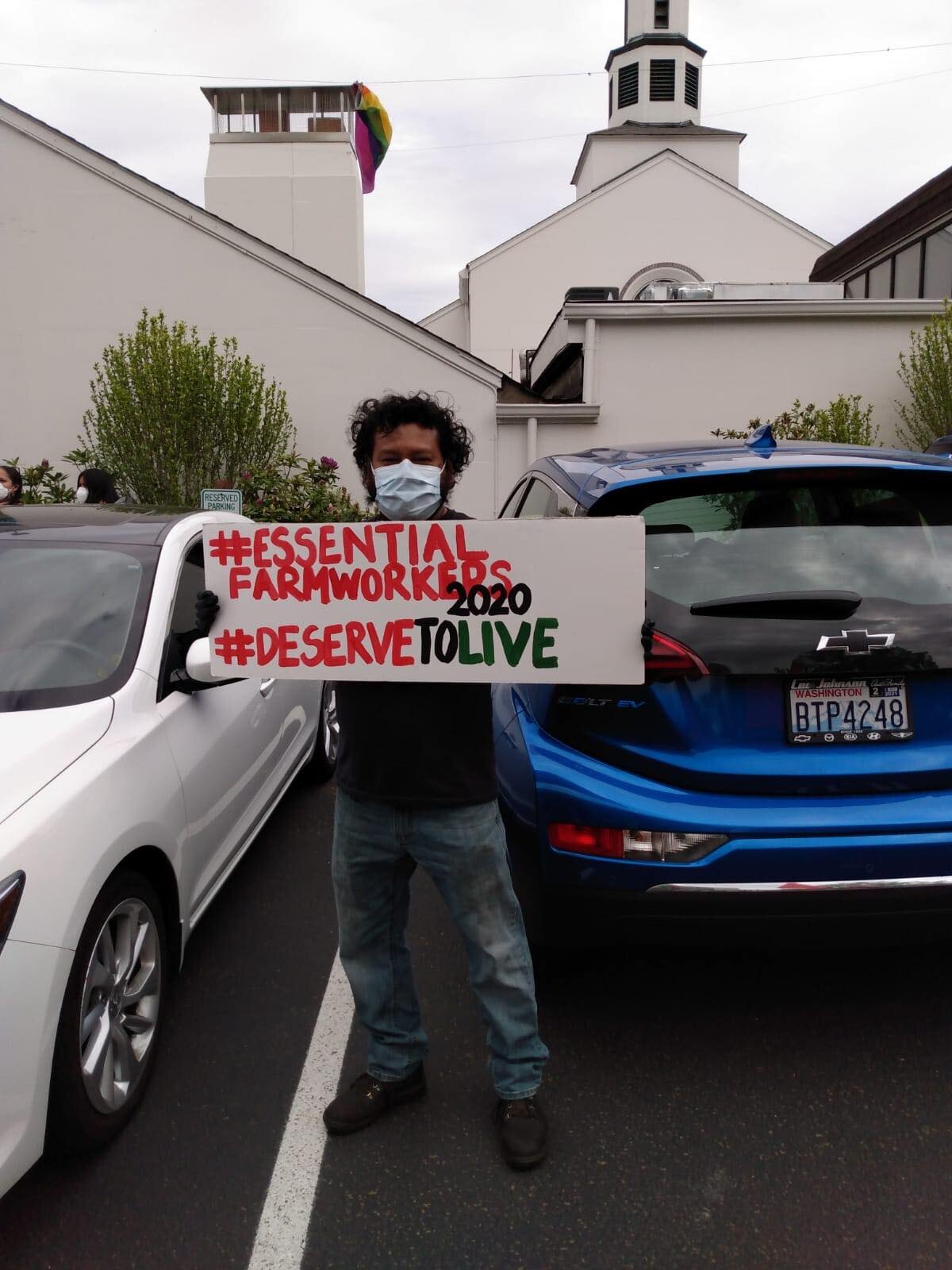
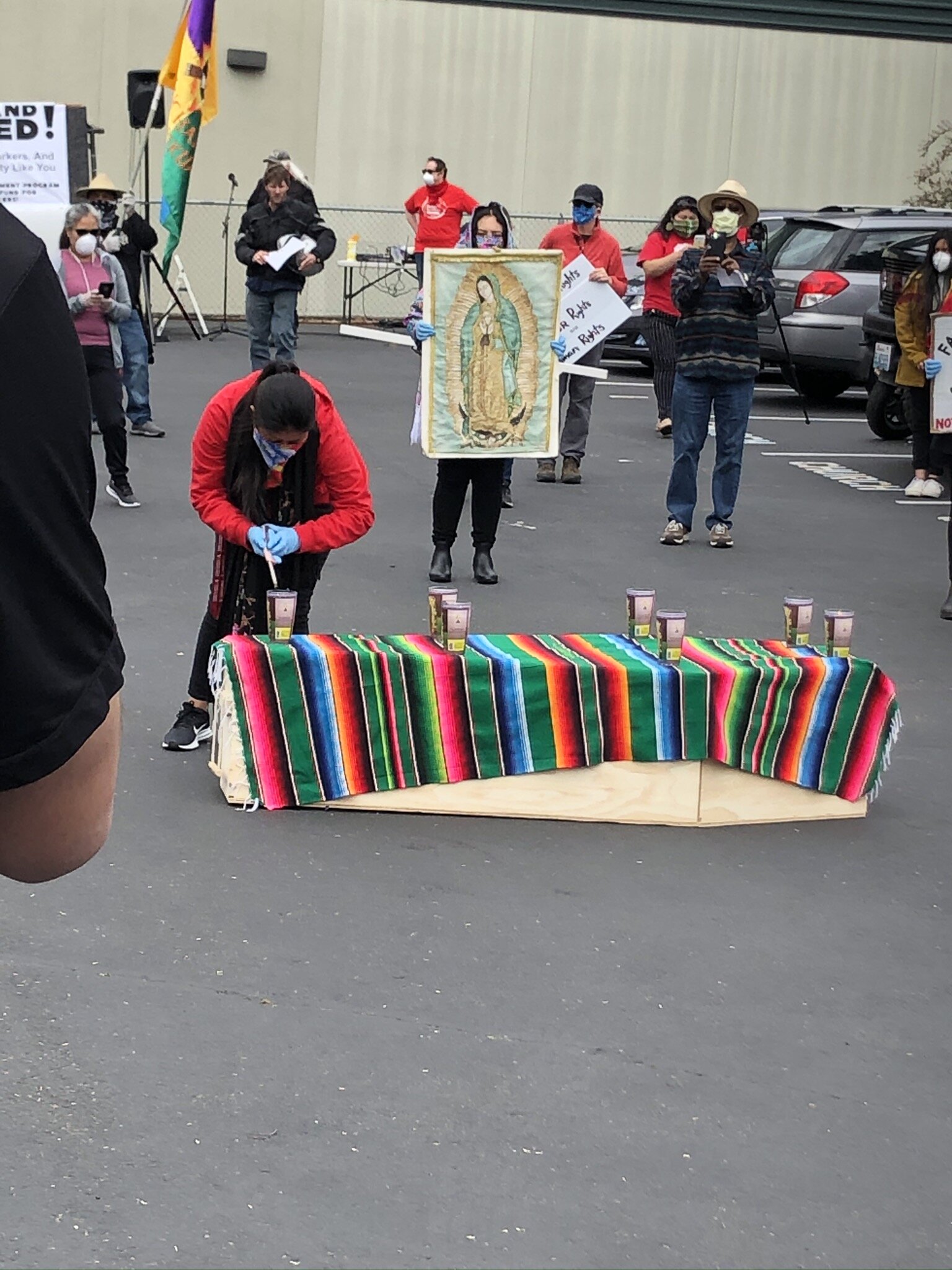
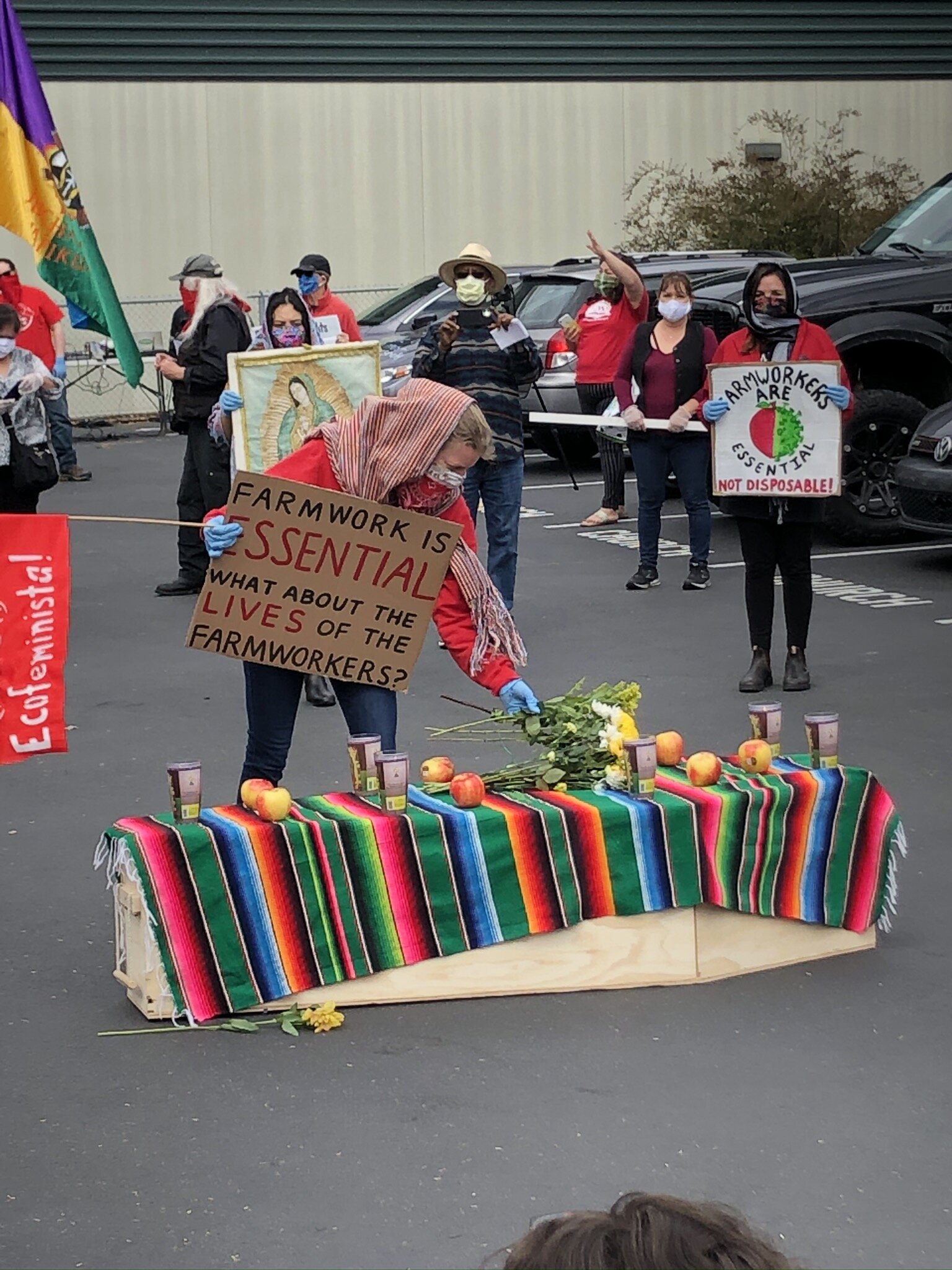
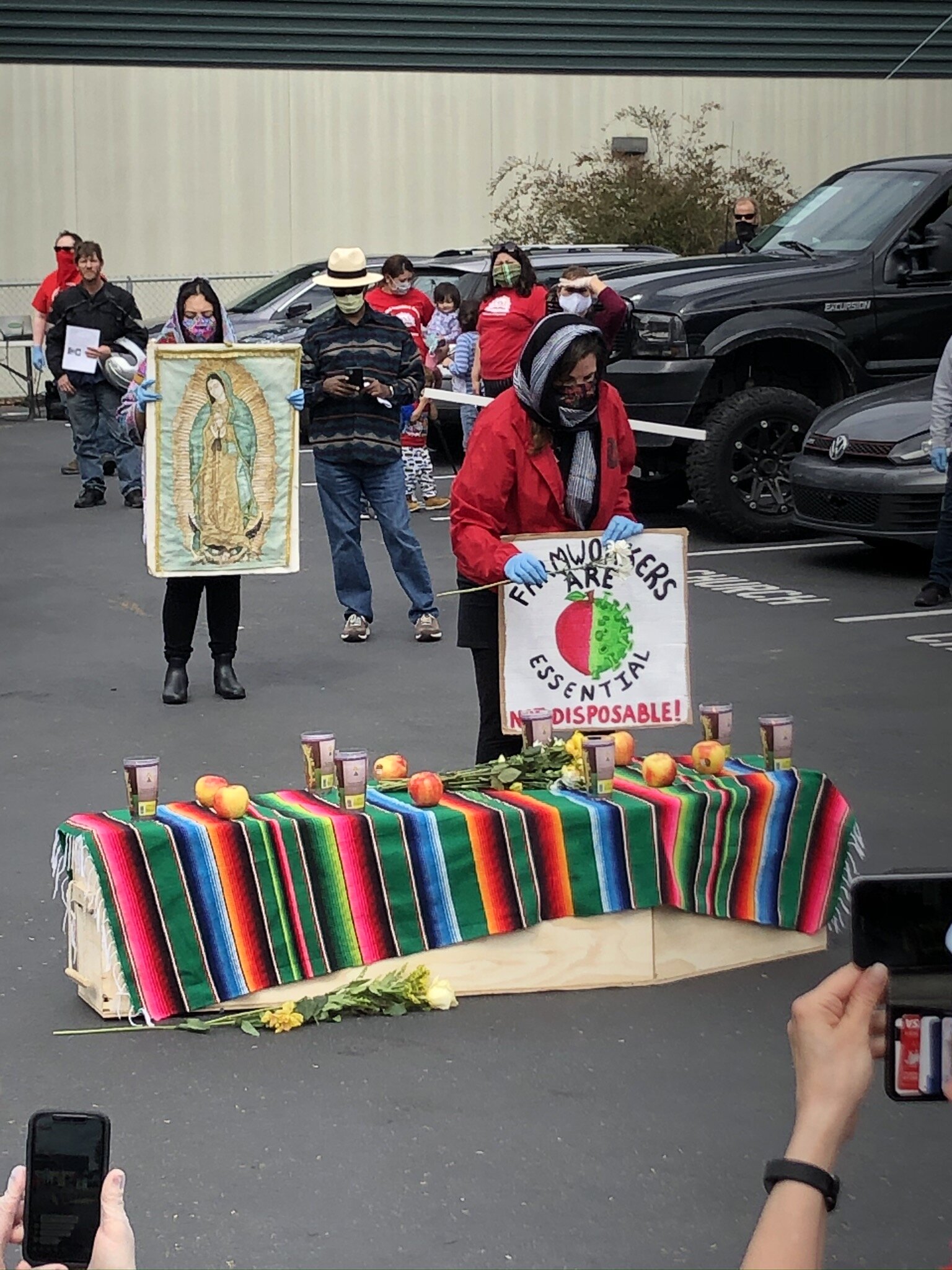
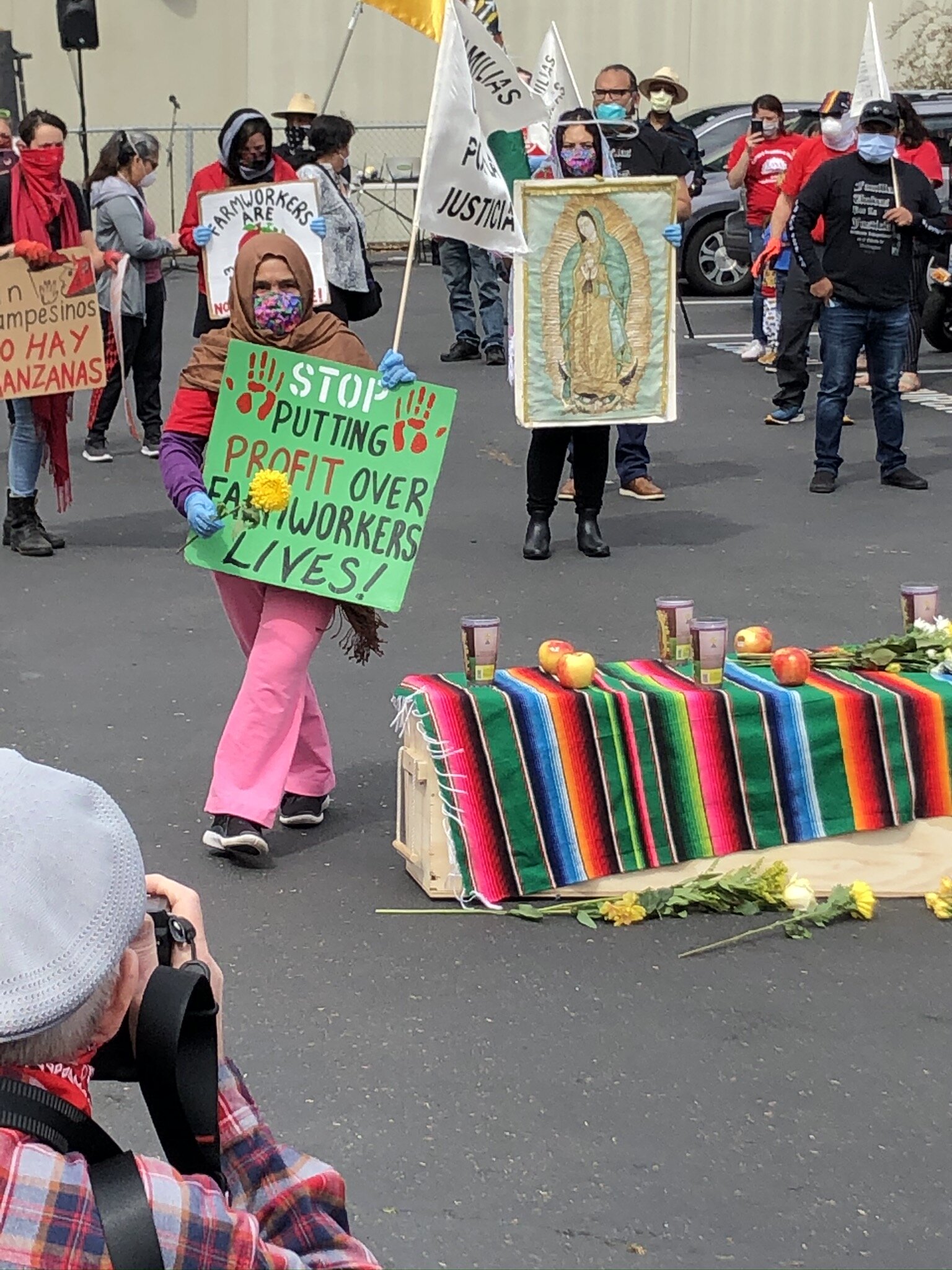
I was reminded that his presence is around us still. In our C2C Centro space in Bellingham you enter the reception that is filled with colorful papel picado hanging from the ceiling and features two of Antonio's paintings flanking a doorway. One of these paintings is titled Manzana Mama. This painting would be the basis for the Farmworkers are Essential image that highlighted the truth that during the Covid 19 pandemic farmworkers were deemed essential yet they were being treated as disposable. A Covid PPE mask now covered the face of Manzana Mama.

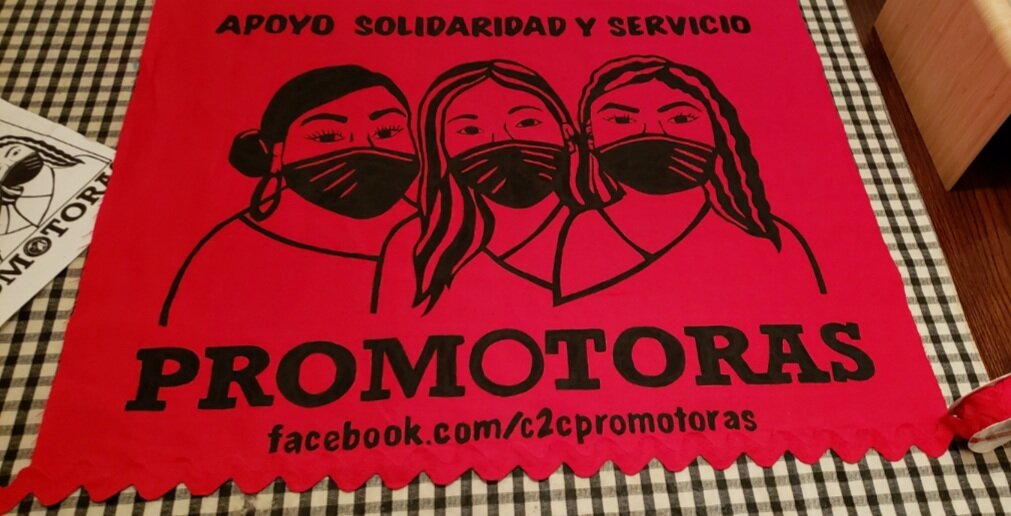
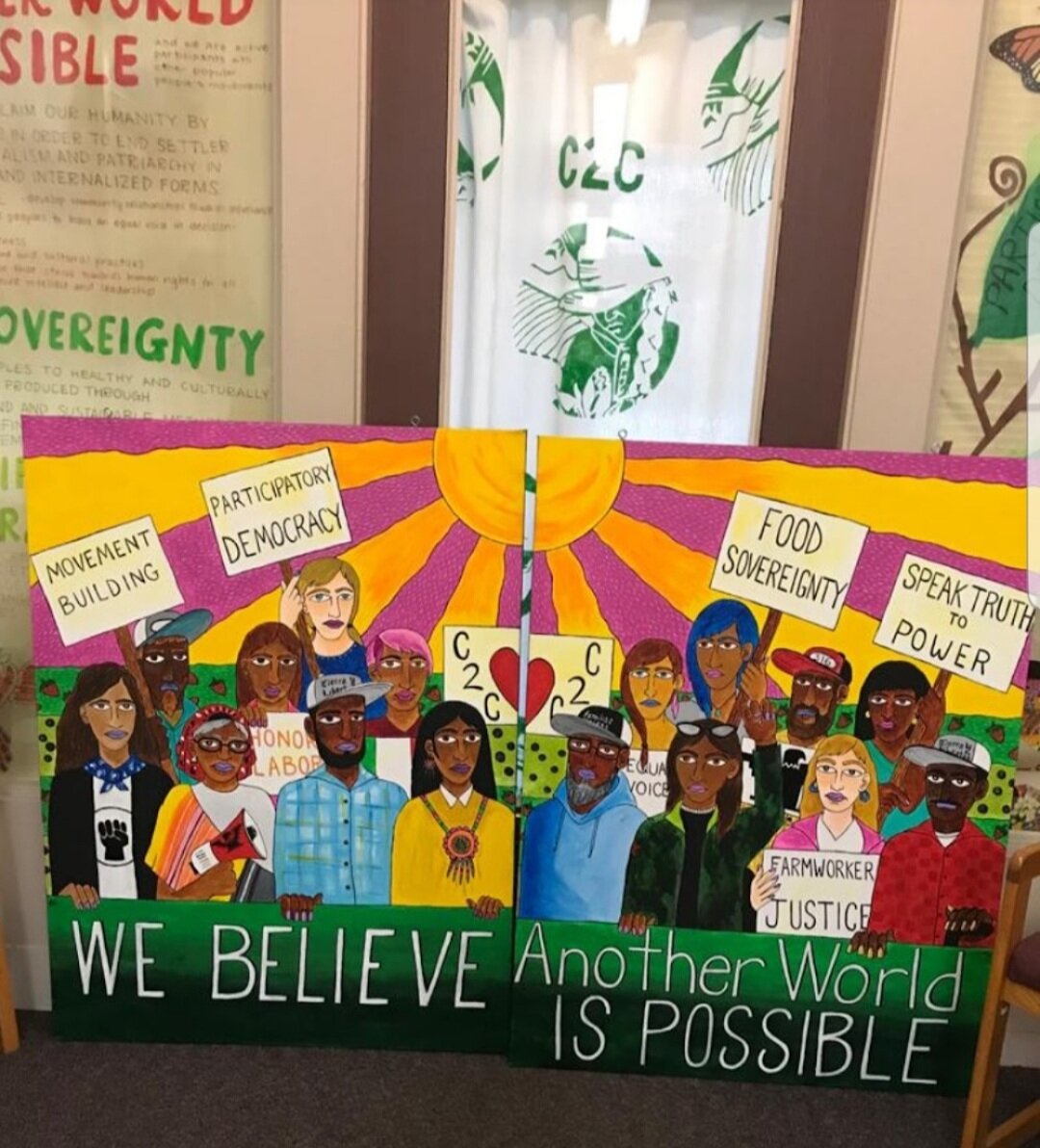
Antonio is also present in the delicate way he rendered the faces of the Promotoras for their logo and in our Social Forum room his large two-panel painting depicts members of our movement standing together in community. When we enter it centers us to the "we" rather than the "I".

Throughout this last year with social distancing and isolation we were able to meet only a few times. Usually outside a local bookstore where we would discuss a new project. Invariably talk would turn to our mutual fondness for collecting  him (junk) me (vintage) bric a brac.  Antonio was into Rat Rods (look it up) and we liked some of the same old school punk bands.

I always thought that we would have more time and that Antonio's work with us at C2C was just beginning. What I know of him is limited to the brevity of those few years but I  do know that his art, his faith and his family were at the core of everything he was.

 Antonio Gonzalez' life, his light, will continue to remind us that art, culture and artists themselves are very much essential.

Rest in Power Antonio.

You can listen to our tribute to Antonio on CommunityVOZ here.

The Legacy of the Braceros Makes Us All Braceros

By Rosa Martha Zárate Macías

Director and Spokesperson for the Alianza de los Braceros del Norte 1942-1964

Q. Why is it important for us to know about the Braceros?

The story of the Braceros will show the world how the impoverished communities are legally exploited, legally enslaved. In the case of the Braceros who came legally to this country, they came to support the United States in World War II with their arms, their brazos. Their history has to be known because of the injustices, the exploitation and the fraud committed against them, because the temporary worker programs are no more than a legalized way to forge the chains of slaves and thus violate workers’ rights and human rights.

That’s why we have to know about the Braceros because it shows how legally, the United States and other countries, their allies, used the temporary worker program to lure millions of men from the most impoverished sectors of Mexico and then exploited them for their goodwill and strength of arms.


Q. What are the legal issues we are dealing with? 

Braceros began organizing their movement in 1998. They believe they have a just claim against the Mexican government for the ten percent that was deducted from their salary by the US Department of Labor and farm owners. They are also bringing a case against the United States together with Mexico, for ignoring their demands seeking repayment of the historical debt owed to 4.6 million workers who came to this country to work in the agriculture industry and in the railroad industry. The Alianza was founded in 2007 to represent the Braceros residing in the US. Since then, members of the Red Binacional de Organizaciones de Ex Braceros has conducted a series of legal actions, taking their case to the United Nations, the Inter-American Commission on Human Rights, and the Permanent Peoples' Tribunal.* 


People in the U.S. should recognize their claims because the Braceros have not only been ignored but have been refused the compensation they are owed by the Mexican government and the Mexican banks who supposedly held the funds on behalf of the Braceros. Neither the United States nor Mexico have provided them with the documents necessary for their legal demands to move forward in order to obtain restitution for the nearly five million workers who became as Franklin D. Roosevelt called them, “soldados en los surcos,” that is, soldiers in the fields.


Q. What is the legacy of the Braceros?

The legacy of the Braceros, as we explain in the book, is very important to the history of the United States because their work made it possible for us to look back today and celebrate the victories in World War II. It is vital to get into the hands of the new generation, the granddaughters and grandsons of the Braceros, because it shows the price paid by their antepasados, their ancestors, so they could have a better life.


We can’t allow this new generation of Americans to forget what the Braceros endured: their willingness to leave home and family convinced they will have the possibility to better their lives. Their hard work in brutal and inhumane working conditions, the injustices, facing death from waiting for months to get a chance to be accepted, dying of hunger, incinerated, and buried in common graves and in the fields, and overall suffering discrimination and violation of their human dignity. The Bracero case was found by the Permanent Peoples' Tribunal to constitute a “case against humanity.”


The book has as one of its objectives, the recovery of the historical memory of the ancestral pilgrimage of our people, so the new generations assume their responsibility to participate in the building of a just society ¨with dignity and justice for all.” A people without historical memory will remain enslaved, subjected to the mechanisms of exploitation and domination. 


The values of courage, determination, looking for a better life, paying the price, all those are values no one can forget and that is one of the objectives of the book. The Braceros who didn’t go back to Mexico and now reside in the United States, have worked with us to assemble a testament, a will, a document, to say. “Never forget the way we were treated and never allow others to be enslaved as we were.”


The book is titled, Our Grandfathers Were Braceros and We Too/Nuestros Abuelos Fueron Braceros y Nosotros También because the people in control of the social system in which we live continue to exploit our labor force, our arms, our intelligence… we are the Braceros of today!


Q. There is a bill in congress right now, H-2A Temporary Agricultural Employment of Foreign Workers. What do you think of this legislation?

This is another goal, another objective of writing this book. Because in talking with the Braceros of the Alianza de Braceros del Norte from California, Nevada, Arizona, and Washington, it was decided that this book would set a precedent of how these temporary worker programs are a mechanism to keep enslaving people and to enforce this mechanism of exploitation. This proposed law has to take into account the Braceros’ story. We don’t want farm laborers to be victimized anymore nor have the exploitation of the past perpetuated. Any organizations involved in any way with the proposed legislation in Washington should take into account the half-century of struggle by the Braceros and be firm in watching and defending the rights of the temporary workers of today. 


Q. How will the members of the Alianza de Braceros del Norte benefit from the proceeds of the book?

Since early 2000, we have collaborated bi-nationally with the Braceros in Mexico. Since 2007, we decided to organize our own Alianza among Braceros living in US and assure that our Mexican constitutional rights are respected. Over that period, many authors, many historians, and other professionals have been interested in that history: they came to us, interviewed us, took our pictures, and we never heard back from them. My co-author, Abel Astorga Morales, and I, and the translator, Madeline Rios, decided to do better. So, whatever proceeds we get from the book will go to benefit the groups that participated in putting it together by their witness.


The money will be used for legal defense against both Mexico and the U.S. because the struggle continues, here and in Mexico. After 23 years, the governments in turn have not responded to the Braceros’ demand of justice. Thousands of the Braceros have joined the movement, most of them have died standing on the front line, the few survivors of the “Bracero Holocaust,” as they name their experience, are not ready to give up their fight until the historical debt is paid. 


We are inviting the children, the relatives of the Braceros to stand on the frontline and demand justice for their grandparents. 


Q. Tell us a little more about the book

This book, Our Grandparents Were Braceros and We Too/Nuestros Abuelos Fueron Braceros y Nosotros También is a bilingual edition. We have a photo album that reveals the way our grandfathers were treated, how they were sprayed with DDT, with pesticide. The strongest of them were chosen, as if they were selecting the best slaves. This book is for you and everyone in this country to learn and defend this struggle of the Braceros. We invite you to join the movement. 


We believe this book, which brings together primary documents of the time with firsthand accounts from people who worked in the Bracero Program, is a tremendous resource for anyone interested in labor rights history, and it exposes a dangerous precedent for migrant farmworker policies that continue to allow and condone abuses of workers today.


Rosa Martha Zárate Macías and Abel Astorga Morales are co-authors of Our Grandfathers Were Braceros and We Too/Nuestros Abuelos Fueron Braceros y Nosotros También. Madeline Newman Rios is the translator of the English version.


The book is a publication of Somos en escrito Literary Foundation Press. Copies are available from online retailers but we recommend ordering them through local bookstores and asking they carry the book for sale. Use the English title to order: Our Grandfathers Were Braceros and We Too. 


For more information or to contact Rosa Martha for interviews or presentations, contact editors@somosenescrito.com or call 510-219-9139.

______________________

Rosa Martha Zárate Macías, a native of Guadalajara, Jalisco, has resided in California since 1966. She was a primary school teacher in her hometown and later in San Ysidro, CA, earned a Bachelors in Music and in Pastoral Theology in Mexico, and studied under Paulo Freire in the U.S. and Mexico. As a singer-songwriter, she has participated in social justice actions in the U.S. since the 1960s. Cofounder of the Librería del Pueblo, an immigration and citizenship project in San Bernardino, she has collaborated in the founding of community, health, and alternative economy projects in the U.S. and Mexico. After two decades of supporting the campaign for justice of the Ex Braceros, she is also a proponent of the Binational Mi Abuelo Fue Bracero y Yo También project, whose aim is to establish educational programs for social change.


*Editor’s Note: The Permanent Peoples' Tribunal is an international People's Tribunal founded as a grassroots initiative in Bologna, Italy, on June 24, 1979, to make permanent the occasional tribunals held previously to denounce the crimes committed by the military regimes in Latin America.
The Farm Workforce Modernization Act Sets Dangerous Precedents for Workers

FCWA is a coalition of worker-based organizations whose members plant, harvest, process, pack, transport, prepare, serve, and sell food, organizing to improve wages and working conditions for all workers along the food chain. In 2019, farmworker members of FCWA opposed the Farm Workforce Modernization Act because we believed it would set dangerous precedents, divide workers, and ultimately make conditions even more difficult for farm workers across the country. 

The FWMA was introduced under the Trump administration and expands the H-2A program without providing necessary oversight or adequate protections, and makes e-verify mandatory for all agriculture employers.  It excludes many workers from a pathway to status, sets up a very long path to finally acquire residency status, and requires farmworkers to continue working in agriculture for up to 8 years to qualify. 

We join with undocumented workers across the country in calling for comprehensive immigration reform in 2021. As part of this reform, we need a broad and expansive vision of farmworker rights. We support President Biden’s goal of providing immediate green cards for farmworkers who have sacrificed so much during COVID to ensure our food security; however, we will continue to strongly oppose any bill that  will create more vulnerable conditions for farmworkers in the workplace. It is not the time to revive legislation crafted under the Trump administration, giving huge concessions to the grower lobby by linking the h2a program to immigration reform. Immigration pathways should not be used to allow for labor exploitation of immigrant workers.   

Our farmworker members have a long history of organizing with farmworkers across the US and Canada. As an Alliance, we believe that regardless of immigration status, all farmworkers deserve dignity, respect, and full protection on the job and in the communities in which their families reside. It is our belief that our movement should be guided by this vision of expanding access to rights and protection for all workers, especially the right to organize.  FWMA moves us in the opposite direction, and that is why FCWA and our farmworker members continue to oppose this bill.

FCWA es una coalición de organizaciones de trabajadores cuyos miembros plantan, cosechan, procesan, empacan, transportan, preparan, sirven y venden alimentos, y están organizándose para mejorar los salarios y las condiciones laborales de todos los trabajadores a lo largo de la cadena alimentaria. En 2019, los trabajadores agrícolas miembros de FCWA se opusieron a la Ley de Modernización de la Fuerza Laboral Agrícola (FWMA) porque creíamos que sentaría precedentes peligrosos, dividiría a los trabajadores y, en última instancia, haría que las condiciones fueran aún más difíciles para los trabajadores agrícolas en todo el país.


La FWMA se introdujo bajo la administración de Trump y expande el programa H-2A sin proporcionar la supervisión necesaria ni las protecciones adecuadas, y  hace que la verificación electrónica sea obligatoria para todos los empleadores agrícolas. La FWMA excluye a muchos trabajadores de un camino para estatus legalizado, establece un camino muy largo para obtener el estatus de residencia, y requiere que los trabajadores agrícolas continúen trabajando en la agricultura hasta por 8 años para calificar.

Nos unimos a los trabajadores indocumentados de todo el país para pedir una reforma migratoria integral en 2021. Como parte de esta reforma, necesitamos una visión amplia y expansiva de los derechos de los trabajadores agrícolas.Apoyamos el objetivo del presidente Biden de proporcionar tarjetas verdes inmediatas a los trabajadores agrícolas que han sacrificado tanto durante el COVID para garantizar nuestra seguridad alimentaria; sin embargo, continuaremos oponiéndonos firmemente a cualquier proyecto de ley que cree condiciones más vulnerables para los trabajadores agrícolas en el lugar de trabajo. No es el momento de revivir la legislación elaborada bajo la administración Trump, dando enormes concesiones al lobby de los productores lingo el programa H2A con una reforma migratoria . Las vías de inmigración no deberían utilizarse para permitir la explotación laboral de trabajadores inmigrantes.

Nuestros miembros trabajadores agrícolas tienen una larga historia de organización con trabajadores agrícolas en los EE. UU. Y Canadá. Como coalición, creemos que independientemente de su estatus migratorio, todos los trabajadores agrícolas merecen dignidad, respeto y protección total en el trabajo y en las comunidades en las que residen sus familias. Creemos que nuestro movimiento debe guiarse por esta visión de ampliar el acceso a los derechos y la protección para todos los trabajadores, especialmente el derecho a organizarse. FWMA nos mueve en la dirección opuesta, y es por eso que FCWA y nuestros miembros trabajadores agrícolas continúan oponiéndose a este proyecto de ley.


A RESPONSE TO THE WAR MACHINE BEING ACTIVATED BY OUR LOCAL GOVERNMENT 

“This is absolutely the moment to engage in the kind of educational activism that might help to encourage all of us, especially those of us who live in the most vulnerable neighborhoods, to purposefully rethink the meaning of safety and security.” - Angela Davis 2020

Community to Community Development recognizes that the military action taken on Thursday January 28th against the houseless people and their advocates on the people’s property is a violent action taken against all of us. As advocates for farmworkers and immigrant families we call out to our allies and supporters to reject the logic that these actions were and continue to be taken to “protect” us. We are in a moment of clear and present danger from white supremacist militias and right-wing delusional groups like Q’Anon. The Mayor and Interim Police Chief decided, without the people’s voice, to call in multiple county, state and federal enforcement agencies, with weapons meant for war. We find it extremely offensive that the city and county called on the Border Patrol to assist them in waging violence on vulnerable communities. We have heard many denials of a cooperative relationship between the Bellingham Police Department and federal immigration officials, yet nothing could be clearer than what we saw last Thursday. 

It cannot be overlooked that during the summer of 2020, white supremacist militia groups occupied downtown Bellingham in response to the Black Lives Matter movement. When the community called on the city to protect us from the danger of armed white supremacists on our streets, the response was negligible. This is a clear demonstration of institutional racism.

If there is a real and credible threat to our community, the government has a responsibility to let the people know what that threat is. We call on our community to join us in demanding transparency from the city and the county on everything that they have done in this situation, from attempting to silence dissent during public comment at city council meetings, to authorizing Customs and Border Patrol to join the Bellingham Police Dept. for the armed attack on January 28th, to maintaining a militarized presence on the rooftop of the police station throughout the weekend.

In the weeks since November 11th we have watched as houseless folks began to gather and camp on the lawn at City Hall. This situation is not new. Every winter we hear the voices in our community calling out for the city and county government to take action and create sustainable housing for those who need it most. This housing crisis has resulted in a growing population of homeless folks in Whatcom County. This winter houseless people have been even more vulnerable and exposed due to COVID-19. We have witnessed the city and county government prioritize temporary restructuring of the Downtown Business District. We did not see the same strength of effort for protecting human lives from the pandemic. 

We saw the mayor and city council ignore the pleas of advocates and unanimously pass a budget prioritizing the police department while there were houseless people on the lawn at City Hall. There is a pattern of ongoing political willfulness and organized discipline of ignoring vulnerable community’s voices. We have experienced this political behavior in trying to establish policies to protect immigrant families in Whatcom County and in the establishment of the County Council as the County Health Board. We are concerned about future efforts of the Immigration Advisory Board. The result of years of advocacy and direct action has been the establishment by ordinance of this Board. Our goal is still to provide safety, equity and opportunity for immigrant families. Given this violence using Border Patrol, we again question the professional relationship of the Bellingham Police Dept with Homeland Security.

Community to Community Development was founded to advocate alongside farmworkers, immigrants and their families and work towards improving our communities by striving together for equity, basic rights, safety and most of all recognition of our humanity and the dignity of our labor. In the 17 years since our founding, we have given voice to our communities’ grievances and suffering at the local, state and federal levels. Our grievances have been very public. We have used our First Amendment Rights many times. We have been very clear in many spaces; for our community to live well, we seek to abolish systems that have institutionalized racist structures and normalized violent behavior.  Black, Brown and Indigenous, poor and houseless residents have been asked to testify about this violence many times throughout the years. People have exposed themselves to retaliation because there was hope that these structures would be transformed into just institutions with equitable community participation. Hope that in working together, following a peaceful, orderly process, our communities would be safer, healthier and have more opportunity for a good life. While we present our realities to elected officials, Bellingham Police Officers and County Sheriff’s Officers continue to racially profile Black, Brown and Indigenous people, place police officers in our schools, and create an environment where many community members cannot trust law enforcement. The city has allowed local law enforcement to become increasingly militarized, using our tax dollars to normalize this militarization. 

We urge our friends and supporters to imagine a world where community resources are spent on solutions to homelessness instead of violent posturing. While the justification may be ambiguous references to threats, consider the threat to our freedom and autonomy that this militarized presence poses. Consider the message that is being sent to those who would dare dissent in any way while surrounded by tanks and guns, with helicopters circling overhead and snipers on the roofs in our neighborhoods. We can envision community safety as it relates to job satisfaction, connection with the earth and each other, safe housing, fair working conditions and freedom from incarceration, detention and deportation. There are many ways to work toward solutions that do not include militarized intimidation and violence. We have all the resources we need; it is the way these resources are being distributed that is causing the suffering. As an organization we recognize the challenge before us, that includes continuing to take on  the hard work of moving away from a reliance on this hyper-violent response to suffering, toward solutions that build a stronger more equitable community. We recognize this moment of political extremes. Please join us in holding our elected leaders accountable for such extreme violence and ensure it does not happen again as we build toward a better future for all of us.

Photo credit: Sattva Photo

CPOC Calls on Elected Officials to Speak Out Against White Supremacist Threats

The Coalition To Protect Our Community strongly condemns the continued persistence of the system of white supremacy that in itself enables the type of fascist action we saw Wednesday at the Capitol in Washington DC.​ It puts our community in danger when white nationalists and militia members are allowed to threaten democratic processes, injuring anyone who stands in their way while law enforcement turns a blind eye. The attack on the Capitol was a clear warning- with the intent to take hostages and overturn the rule of the people with an authoritarian coup. ​These extremists have threatened to return to Olympia and take over the State Capitol in the coming days.

We call on Mayor Seth Fleetwood, County Executive Satpal Sidhu, Sheriff Bill Elfo, and Interim BPD Chief Flo Simon to investigate and assure the public that any local law enforcement or County and City staff that participated in any way in the domestic terrorist insurrection in Washington DC or Olympia will be immediately fired. We also call on them to warn County and City staff and law enforcement officers that they will be fired if they participate in any future white nationalist insurrection against national, regional, or local government. We do not believe that these organized violent actions are First Amendment rights that anyone holds on or off their government jobs. We are seeing other local governments take strong action against employees and elected officials who participated in the insurrection in DC.

As elected leaders, Elfo, Fleetwood, and Sidhu have a responsibility to model true leadership and publicly support the COVID protocols, the election process, and the U.S. Constitution, and oppose domestic terrorism. There is no excuse for Whatcom County or the City of Bellingham to not take immediate action and make a public statement. We are asking our supporters and good people across the state to apply similar pressure to their elected officials to investigate and root out white supremacy in publicly held offices.

The Coalition to Protect Our Community is committed to continued rapid response as actions unfold in the coming days and weeks. We’re stronger together. Sign on to stay involved

Adios 2020! C2C is ready for the next decade starting in 2021!

This past year has been a long and difficult year for our communities and our Leadership Team. 

For C2C, 2020 has proven to be a pivotal year. We have been and continue to be tested. It has been said that the best way to know the character of a person is to see what they do during the difficult times. But what about the character of a movement and an organization? In the fall of 2019, we celebrated our 15th Anniversary of community organizing on local, regional, and statewide levels. In 2020 we began our 16th year by creating a 5-year strategic plan to continue to advocate and struggle with impacted community leaders for equitable workplace rights for farm workers and low wage Latinx workers, and protection, equity and dignity for immigrant families. We re-committed ourselves to our ecofeminist principles and organize to build local solidarity economies, create a food sovereignty culture by challenging corporate food industry production practices, policies and regulations. We vowed to continue to take the lead from our constituents and their demands for self-determination by strengthening our participatory democratic processes such as the Dignity Vigils, Tribunals, Dignity Dialogues and People’s Movement Assemblies. We affirmed and clarified our beliefs and principles. We went to the land and through our Mistica process we included Mother Earth and pledged to listen to her as we worked with our partners and follow the Just Transition framework as we educate our community and address policy and regulatory changes. 

Our work plan was radically changed in February soon after our Farmworker Tribunal in Olympia during the Annual Latino Legislative Day activities.

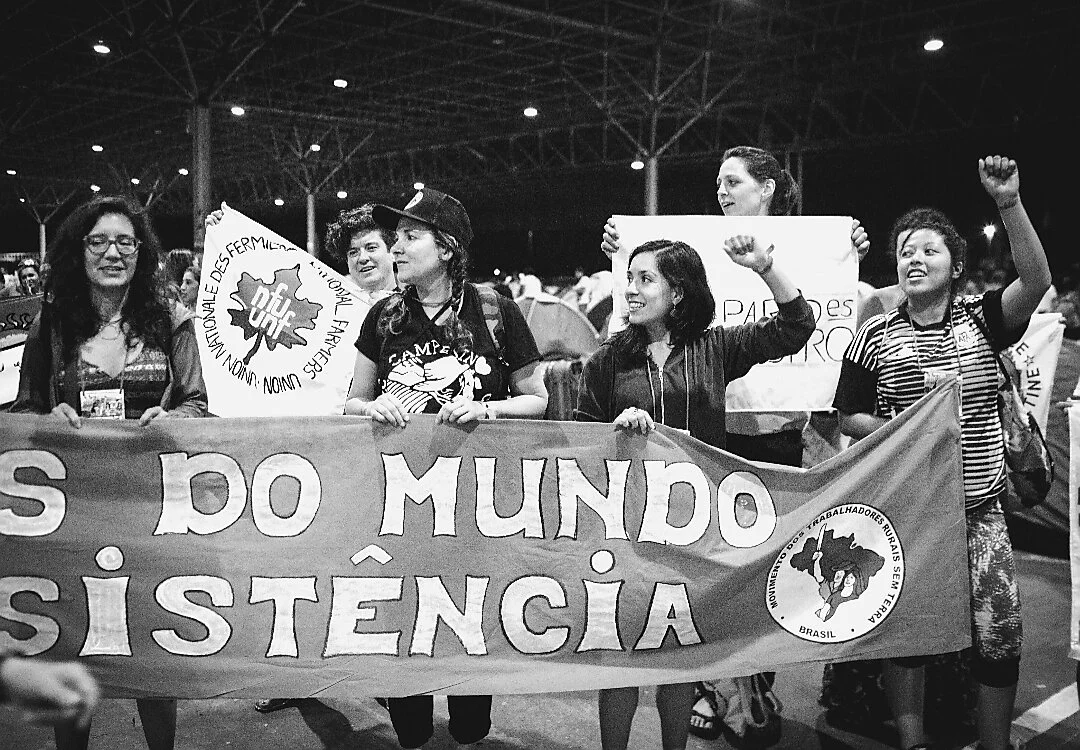
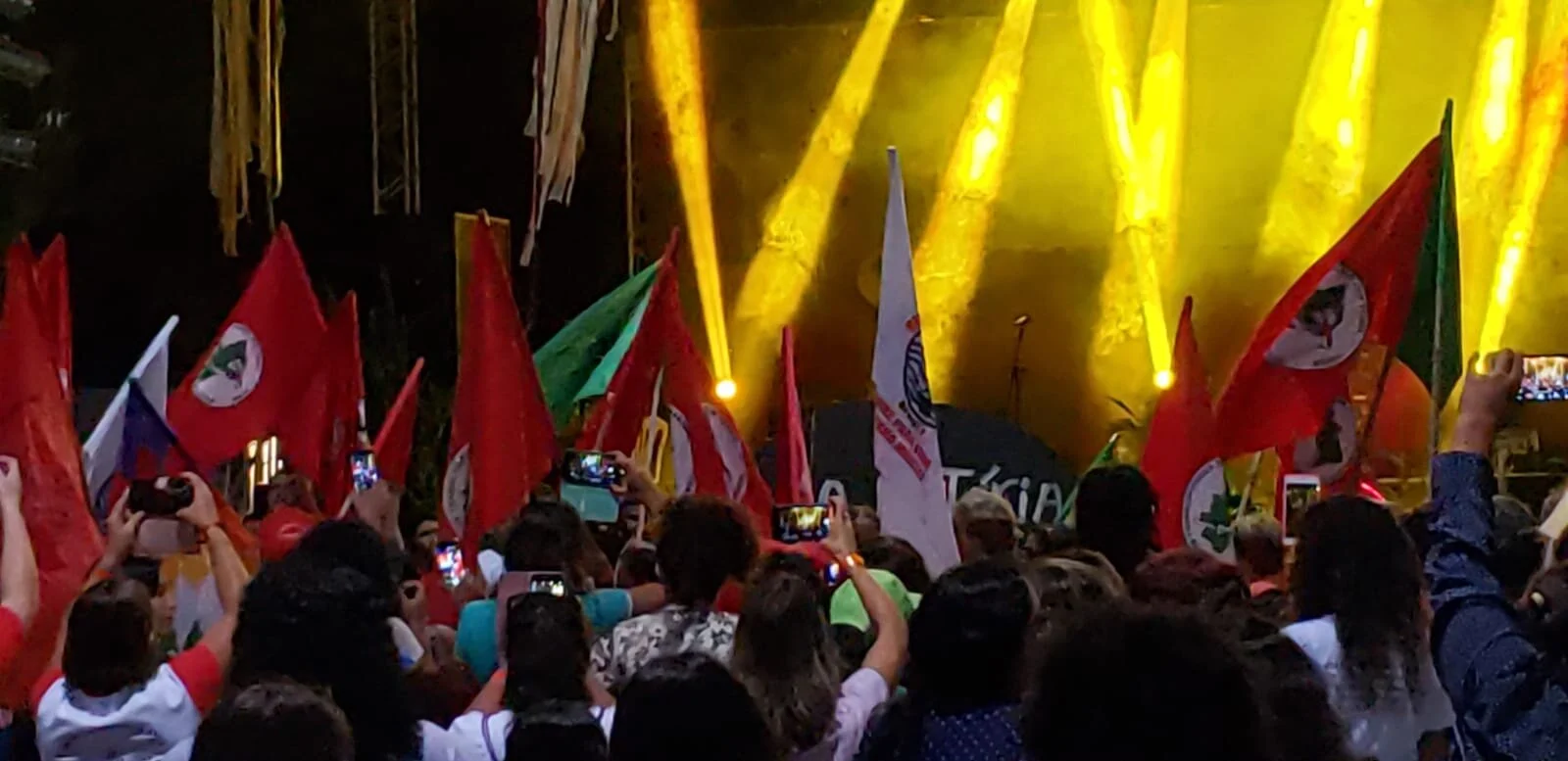
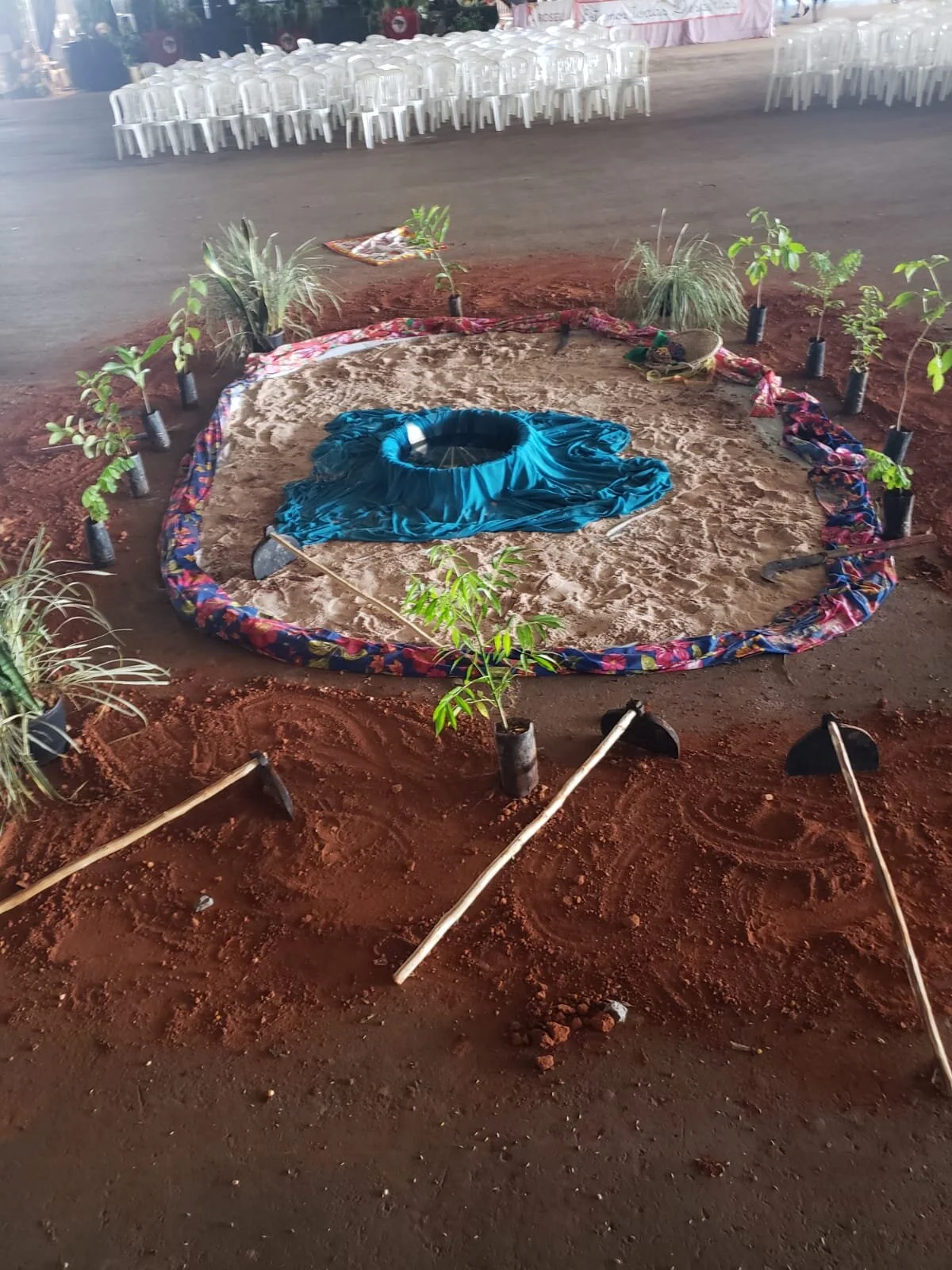
As ecofeminists we were fortunate to be able to connect with the Women’s Leadership of the Landless People’s Movement (MST) in Sao Paulo Brazil.  Little did we know how important these  gatherings and misticas with the MST women would be to help sustain us for the difficult times ahead. Being together with experienced ecofeminist leadership helped us to further align ourselves as an organized leadership team and strengthened trust in each other and our beliefs and principles as an organization. While our team was learning about land occupation, participatory democracy and self-determination, news reports from our loved ones back home told of food hoarding, empty shelves, and a growing anxiety in our hometowns.  New words entered our lexicon.  

We returned to self-quarantine, and held conversations with our communities for quick assessments on what was happening.  At the news of the classification of “essential workers” we realized that one thing that would be true is that farmworkers, Immigrants, POC, the houseless and the poor would be helped last (if at all) and impacted the most. It is what we have always experienced. One of our strengths in being led by impacted community leaders is our ability to pivot our energies quickly. We have learned in very real ways the demands heaped on all peoples living under capitalist systems. To produce to maintain profit levels by keeping economies “open” even though it literally could be killing you. 

This is a list of some of the actions we have taken:

  1. In January the Whatcom promotoras led the team in defense of a farmworker and his family’s attacks by local law enforcement and Border patrol – a violent action caught on video.

  2. We were honored to have our Annual Farmworker Tribunal space be the Courtroom of the WA State Supreme Court. We had record attendance and compelling testimony from farm workers from across the state. Two Supreme Court Justices opened and closed the Tribunal.

  3. We participated with Familias Unidas por la Justicia (FUJ) in the Agricultural Seasonal Workers Services Committee for months to demand fair and equitable workplace COVID-19 emergency rules to protect farmworkers. The State did not actually implement emergency rules until June, and that was only after 2 lawsuits were filed by FUJ. There were some victories, but a loss in protecting h2a workers in labor camp housing. A heartbreak for us all and showed how deep profit-making is in state agricultural production and its regulatory systems. Emergency rules expire January 8th. We are working with NW Justice Project and FUJ to try to save farmworker lives during this pandemic. We will not give up.

  4. On our return the C2C Promotoras hit the ground running, continuing to reach out to our communities to finish up the US CENSUS outreach. They found an urgent need for information on COVID, worker protections, what it means to be “essential”, direction to resources, access to PPE, especially masks. The promotoras worked with local health departments to ensure they set up mobile Covid testing sites in rural communities. They distributed stimulus surplus relief to over 1500 farmworker and immigrant families; and directed them to resources such as food, medical attention and helped resolve workplace protections complaints. To date we have tripled the number of promotoras in Whatcom and Skagit Counties. The need for outreach and information has doubled and continues to grow, especially now that we are at the peak of this dark COVID winter. We are all working with them to identify resources and provide any type of support needed. Sometimes the biggest need is being present in community and available to listen.

  5. C2C has opened a space for Promotora Outreach and Services in Mt Vernon in Skagit County; staffed by promotoras from local immigrant and farmworker families. They lead and establish culturally appropriate training, educational and outreach services.

  6. The C2C space in Bellingham is being restructured for Whatcom promotoras to provide increased culturally appropriate services.

  7. C2C supported Familias Unidas por la Justicia in the organizing and solidarity work they have been doing non-stop since May 7th in Yakima, WA. Packing shed workers walked out on strike in fear for their lives. These workers spoke truth to power and highlighted how agricultural employers were not following COVID safety protocols in the workplace, which is what we have been hearing from hundreds of workers statewide. They called FUJ leadership; Ramon Torres and Edgar Franks answered the call and immediately departed to Yakima. They established a base of organizing operations and have been in Yakima until their departure yesterday Dec. 31st. C2C ecofeministas provided solidarity on the picket lines with packing shed workers in June and July. Out of all this struggle for their lives and justice the packing shed workers have formed their own independent union, Trabajadores Unidos por la Justicia. We continue to provide support as needed.

  8. On the home front in Bellingham, after organizing for immigrant justice since 2005 in Whatcom County, after 3 years of ongoing Monday Dignity Vigils in front of City Hall in Bellingham, countless Dignity Dialogues plus direct actions, after community organizing for sanctuary and protections from racial profiling by local law enforcement and their cooperation with ICE, we finally forced the City Council to establish by ordinance an Immigration Advisory Board (IAB). We have Liz Darrow as our representative, as well as Ramon Torres and Jahn Zuniga as impacted community Board members. We began monthly public zoom meetings to evaluate relationships between law enforcement and federal immigration enforcement agents which keep our communities at risk. The IAB is the culmination of many years of interaction with local elected officials and the Whatcom County Sheriff, using our participatory democratic actions listed above. Our goal with the immigration advisory board is to highlight the areas of local policy that endanger community members and to push for policy improvements that address racial disparities and establish equitable processes toward a true sanctuary city.

  9. With a newly formed Coalition to Protect Our Communities with Whatcom DSA, Birchwood Food Desert Fighters and Whatcom Jobs with Justice we took action to protect the vote during the Presidential Election and to be ready with a rapid response team if the roving right wing white supremacists should turn violent against farmworkers, immigrants and POC in Whatcom County. The coalition continue to be ready to respond thanks to over 100 supporters that responded to our call.

  10. At C2C we have effectively infused and fundamentally established into the movement our Mistica spirit with art and artists of all types. Our Movement which requires deep and consistent organizing to create fundamental long term social and cultural change is difficult and cannot be sustained with out the beauty of the world we want to create. We are honored to now have a group of movement artists join us on the path with that beautiful beloved community.

  11. The pandemic has enabled us to find different ways of building our movement and we welcome the C2C Movement Support Team. We are grateful for all the time and skills these folks of all ages provide to our organization. In this moment, they stepped up. This group responds as we respond, as the community responds, as needed.

  12. Cooperativa Tierra y Libertad was resilient in the midst of the pandemic. Production was excellent. Cooperative decision making was tested and the worker owners did the right thing and produced delicious organic raspberries and blueberries on a smaller scale. The Bellingham Food Bank, Mallards Ice Cream and the Bellingham Community Food Co-op stepped up and bought the bulk of the berries produced. Tierra y Libertad provided living wage jobs with dignity to 13 farmworkers in rural Everson. All this during a pandemic. Worker owned cooperatives are a building block towards the creation of building a Solidarity Economy. This is the kind of local economy that can be resilient during crisis.

In this current political moment, ending this pivotal year, we want to thank all of the people that have stood by us, in difficult times and also in times of celebration and community unity. We ask that you continue to stand with us as we make the road by walking. As we walk we are learning about each other. This year we have learned during the COVID lockdowns that we did not know how to be at ease with the that perception we are doing less, even though in reality we are doing more; it is just different. The way capitalism and its systems are in our blood and how we must continually learn how to unpack it and create something more humane and therefore more sustainable. More beautiful and joyous; for everyone. Ultimately, we learned that our vision, our beliefs and principles are good and attainable. What’s more important, many that have heard our vision for 15 years, finally “get it”.

In the wake of the COVID-19 Pandemic, capitalism was forced to pause, even the innocent creatures were able to come alive, like the pandas that finally made love and in some parts of the world polluted air finally cleared up. ANOTHER WORLD IS POSSIBLE! And will not be achieved at the expense of poor people dying to keep the rich and powerful in their comfort level.

Dr. Fauci says the U.S. could return to normal by fall 'If We Diligently Vaccinate'. Fall is a long time off! A whole food growing season. At C2C we do not want to return to the pre-COVID “normal”. For our communities that has always been an exploitative “normal”. Our society was founded on the premise that we are living in a white supremacist, colonialist, capitalist process. We exist to support the liberation of all peoples, and Mother Earth, from the pre-COVID normal.  C2C is growing and pivoting with our sister organizations and will continue organizing in our communities to emerge to a post COVID world with a new normal because YES! ANOTHER WORLD IS POSSIBLE! YES! BLACK LIVES MATTER! 


Visual Companion | Community Voz S5 Ep 14 Behind What? pt 3

Artists Brenda Bentley, Francia Orozco and Antonio Gonzalez talk about the difficulties of creating in isolation and what keeps them going, even though their artwork isn't "Instagram-able".

Listen to the episode here

Songs in this episode:
Nothing to Lose by St Nomad
Butterfly by Umi
Reach for the Sky by Social Distortion
Liberated by DeJ Loaf ft Leon Bridges
Hold On by Alabama Shakes

Special thanks to Kim Wulfesteig for this episode's artwork

 Francia Orozco at Nepantla Cultural arts Gallery “Chingonas” art show

 Francia Orozco at Nepantla Cultural arts Gallery “Chingonas” art show

Francia y su familia en la Navidad

Francia y su familia en la Navidad

No se 30*40 mixed media by Francia Orozco

No se 30*40 mixed media by Francia Orozco

Intitulada 48*48 by Francia Orozco

Intitulada 48*48 by Francia Orozco

Somos 11 millones Screen Print 11*16 by Francia Orozco

Somos 11 millones Screen Print 11*16 by Francia Orozco

Ahogándome 11*17 Acrylic by Francia Orozco

Ahogándome 11*17 Acrylic by Francia Orozco

Mural at Villa Santa Fe by Francia Orozco and Candida Delgadillo

Mural at Villa Santa Fe by Francia Orozco and Candida Delgadillo

Antonio Gonzalez

Antonio Gonzalez

Antonio with his work

Antonio with his work

by Antonio Gonzalez

by Antonio Gonzalez

by Antonio Gonzalez

by Antonio Gonzalez

Artist Brenda Bentley on the strike line in Yakima 2020

Artist Brenda Bentley on the strike line in Yakima 2020

Brenda Bentley working on a banner for the Dignity Vigils

Brenda Bentley working on a banner for the Dignity Vigils

Banner artwork for Community Voz by Brenda Bentley

Banner artwork for Community Voz by Brenda Bentley

Brenda Bentley and Modesto Hernandez at the USFSA ANIMO! art show 2018

Brenda Bentley and Modesto Hernandez at the USFSA ANIMO! art show 2018

Mistica at USFSA ANIMO! art show 2018

Mistica at USFSA ANIMO! art show 2018

USFSA ANIMO! art show 2018

USFSA ANIMO! art show 2018

art work for t shirt by Brenda Bentley

art work for t shirt by Brenda Bentley

Banner by Brenda Bentley

Banner by Brenda Bentley

sign for action by Brenda Bentley

sign for action by Brenda Bentley

banner art work for action by Brenda Bentley

banner art work for action by Brenda Bentley

artwork by Brenda Bentley

artwork by Brenda Bentley

banner for May Day march by Brenda Bentley

banner for May Day march by Brenda Bentley

May Day march 2017. Banner by Brenda Bentley

May Day march 2017. Banner by Brenda Bentley

En Honor al Dia de los Pueblos Originarios e Indigenas

escrito por Arely Dominguez

C2C se encuentra en las tierras del pueblo Coast Salish. Hoy y todos los días honramos la lucha de los pueblos originarios contra el colonialismo y el racismo sistémico. Nos solidarizamos con quienes exigen justicia por las mujeres indígenas desaparecidas y asesinadas.

También debemos incluir a los Nativos Negros, los Indígenas Negros y los Afroindígenas.

Aquí en nuestros condados, como en muchos otros lugares, la mayoría de los trabajadores agrícolas son indígenas de las tierras del sur, que migran para sobrevivir del colonialismo.

Las promotoras de C2C han trabajado con diferentes pueblos indígenas, desde Mam, Triqui, Mixteco y Aguacateco.

Dos de nuestras promotoras también son orgullosamente indígenas, Mixtecas. De las tierras hermosas de Limon, Guererro, Tierra Colorada, Oaxaca y Santa Catarina, Oaxaca.

Arte: https://instagram.com/soni_artist?igshid=z8hy7odnupxn 

Visual Companion | Community Voz S5 Ep 8 The Promotora Music Show

Music is an important part of the movement. Our favorite songs remind us who we are and where we’ve come from. This is the third installment in our series of radio shows about C2C team members and the music they love past and present. In this episode several of the promotoras join us to talk about their favorite music.

In Rosalinda’s words, “By 1969 I was totally into rock and migrating, working in the fields as a teen mom. All the young Mexican Americans were into rock and roll. There was so much rock from California flowing north with the migrant workers. But that’s another show!”

The C2C promotoras are local community organizers in Whatcom & Skagit areas. Lucy, Arely, Australia, Jasmine, Cristal, Rocio, Griselda, Martina, Senaida, and Stephany are all in communication with our local immigrant and farmworker communities on a daily basis. This communication is essential to bridge information gaps and language barriers, combat dangerous misinformation, and respond to immediate and urgent needs. The promotoras are hearing about how quickly families' economic conditions are becoming dire. To support their organizing, donate here.  Learn more about the work the promotoras are doing on their Facebook page.

Listen to the podcast episode here.

Songs in this episode:

Los Caminos de la Vida by Los Diablitos
Caminos de Michoacan by Ricardo Amador
La de Mochila Azul by Pedrito Fernandez
Hakuna Matata by  Jason Weaver, Ernie Sabella, Nathan Lane, Joseph A. Williams
Me Enamorado de un Fantasma by Liberación
Como la Flor by Selena
Campfire Song Song by Dan Povenmire, Michael Culross, Jr., Jay Lender, Michael Walker, Carl Williams
La Gente Me Dice Que Soy un Loco by Mateo Reyes
Tu forma De Ser by Alberto and Roberto
Agua by J Balvin
Mi Niña by Ozuna
Mujeres by Julieta Venegas
Un Derecho de Nacimiento by Natalia Lafourcade

Promotora logo artwork by Antonio Gonzalez

Promotora logo artwork by Antonio Gonzalez

Promotora Daisy as a child

Promotora Daisy as a child

Promotora Lucy as a child

Promotora Lucy as a child

Promotora Arely as a baby

Promotora Arely as a baby

Promotora Cristal as a child

Promotora Cristal as a child

Promotora Australia as a child

Promotora Australia as a child

Promotora Martina as a child

Promotora Martina as a child

Promotora Stephany with her brother Jovany and dog Peluchin

Promotora Stephany with her brother Jovany and dog Peluchin

Promotora Australia at an action for farmworker lives on May 1st, 2020

Promotora Australia at an action for farmworker lives on May 1st, 2020

Promotora Lucy in the community

Promotora Lucy in the community

Skagit Promotoras giving masks and information to community

Skagit Promotoras giving masks and information to community

Skagit Promotoras

Skagit Promotoras

Honesto Silva Ibarra Presente

For many years, Community to Community Development has held a march for farmworker dignity during the peak of harvest season in Whatcom and Skagit Counties. Three years ago, Honesto Silva Ibarra passed away as the result of exploitative practices at Sarbanand Farms in Sumas, Washington. Since that time, we have held the farmworker march in his honor. This year, we were not able to hold our traditional march due to Covid 19. Still, we mark this day with love and respect for Honesto and all of the workers who have needlessly given their lives for lack of safety and basic human rights. On this week’s episode of Community Voz, leaders from the movement reflect on that day in August 2017 when we learned that Honesto had died, and on the continuing fight against Labor and Industries to win rights and safety for the workers who continue to struggle and die in the fields. Listen to the episode here.

We have compiled some photos from Camp Zapata, which was a gathering of workers who left Sarbanand farms following the hospitalization of Honesto Silva Ibarra. Also included are images from Farmworker Dignity Marches over the years, the current struggle in Yakima Valley, as well as some organizing work that Rosalinda Guillen, Edgar Franks, and Ramon Torres have been at the forefront of for many years. Thanks to Brenda Bentley, David Bacon, Edgar Franks, Cecilia DeLeon, Learner Limbach, and Liz Darrow for these photos.

We recognize and give appreciation for the lives of Honesto Silva Ibarra, David Cruz, and so many workers who have suffered at the hands of an industry that has never held their lives in the regard that they deserve. The struggle continues.

Songs in this episode:

El Inmigrante by Calibre 50

Juan José Rodriguez by Los Tucanes

photo credit brenda bentley

photo credit brenda bentley

photo credit Brenda Bentley

photo credit Brenda Bentley

MARCH FOR DIGNITY may 2017 PHOTO CREDIT BRENDA BENTLEY

MARCH FOR DIGNITY may 2017 PHOTO CREDIT BRENDA BENTLEY

farmworker march for dignity MAY 2017 photo credit brenda bentley

farmworker march for dignity MAY 2017 photo credit brenda bentley

may 2017 MARCH FOR DIGNITY PHOTO CREDIT BRENDA BENTLEY

may 2017 MARCH FOR DIGNITY PHOTO CREDIT BRENDA BENTLEY

FARMWORKER MARCH FOR DIGNITY may 2017

FARMWORKER MARCH FOR DIGNITY may 2017

march for dignity mAY 2017 photo by brenda bentley

march for dignity mAY 2017 photo by brenda bentley

Alex Mcintyre at the March for dignity MAY 2017 photo credit brenda bentley

Alex Mcintyre at the March for dignity MAY 2017 photo credit brenda bentley

MARCH FOR honesto august 2017 PHOTO CREDIT BRENDA BENTLEY

MARCH FOR honesto august 2017 PHOTO CREDIT BRENDA BENTLEY

march for honesto august 2017

march for honesto august 2017

march for honesto august 2017 photo credit cecilia deleon

march for honesto august 2017 photo credit cecilia deleon

Sarbanand protest august 2017 photo credit brenda bentley

Sarbanand protest august 2017 photo credit brenda bentley

confronting the bosses at sarbanand farms august 2017 photo credit brenda bentley

confronting the bosses at sarbanand farms august 2017 photo credit brenda bentley

CAMP ZAPATA 2017 PHOTO CREDIT CECILIA DELEON

CAMP ZAPATA 2017 PHOTO CREDIT CECILIA DELEON

camp zapata 2017 photo credit cecilia deleon

camp zapata 2017 photo credit cecilia deleon

rosalinda guillen conducting interviews at camp zapata 2017 photo credit cecilia deleon

rosalinda guillen conducting interviews at camp zapata 2017 photo credit cecilia deleon

A WORKER WITH INJURED FEET PHOTO CREDIT ASHLEY HIRUKO Camp zapata 2017

A WORKER WITH INJURED FEET PHOTO CREDIT ASHLEY HIRUKO Camp zapata 2017

camp zapata 2017 photo credit cecilia deleon

camp zapata 2017 photo credit cecilia deleon

cecilia deleon with a worker at camp zapata 2017

cecilia deleon with a worker at camp zapata 2017

camp zapata 2017

camp zapata 2017

BRENDA bentley ON NIGHTWATCH AT CAMP ZAPATA PHOTO CREDIT ALEX MCINTYRE

BRENDA bentley ON NIGHTWATCH AT CAMP ZAPATA PHOTO CREDIT ALEX MCINTYRE

ramon torres, edgar franks, and cecilia deleon at camp zapata 2017

ramon torres, edgar franks, and cecilia deleon at camp zapata 2017

Edgar Franks with a worker at CAMP ZApata 2017 Photo credit brenda bentley

Edgar Franks with a worker at CAMP ZApata 2017 Photo credit brenda bentley

donated food and supplies at camp zapata 2017 photo credit brenda bentley

donated food and supplies at camp zapata 2017 photo credit brenda bentley

August 5, 2017 vigil photo credit brenda bentley

August 5, 2017 vigil photo credit brenda bentley

workers from sarbanand farms held an August 5, 2017 vigil for honesto photo credit brenda bentley

workers from sarbanand farms held an August 5, 2017 vigil for honesto photo credit brenda bentley

an altar made for honesto silva ibarra at camp zapata August 2017 Photo credit brenda bentley

an altar made for honesto silva ibarra at camp zapata August 2017 Photo credit brenda bentley

memorial for honesto at the church of the assumption in bellingham august 13, 2017 photo credit brenda bentley

memorial for honesto at the church of the assumption in bellingham august 13, 2017 photo credit brenda bentley

memorial for honesto at the church of the assumption in bellingham august 13, 2017 photo credit brenda bentley

memorial for honesto at the church of the assumption in bellingham august 13, 2017 photo credit brenda bentley

memorial for Honesto at the Church of the assumption in bellingham august 13, 2017 photo credit brenda bentley

memorial for Honesto at the Church of the assumption in bellingham august 13, 2017 photo credit brenda bentley

memorial for honesto at the church of the assumption in bellingham august 13, 2017 photo credit brenda bentley

memorial for honesto at the church of the assumption in bellingham august 13, 2017 photo credit brenda bentley

camp zapata 2017 workers hold up the visas they were eventually able to get back from sarbanand. holding worker visas captive is a common h2a farm practice.

camp zapata 2017 workers hold up the visas they were eventually able to get back from sarbanand. holding worker visas captive is a common h2a farm practice.

Art build for farmworker march for dignity august 2018 photo credit brenda bentley

Art build for farmworker march for dignity august 2018 photo credit brenda bentley

art build for farmworker march for dignity 2018 photo credit brenda bentley

art build for farmworker march for dignity 2018 photo credit brenda bentley

BIJOU DARROW PRACTICING BATUCADA FOR THE FARMWORKER MARCH FOR DIGNITY 2018

BIJOU DARROW PRACTICING BATUCADA FOR THE FARMWORKER MARCH FOR DIGNITY 2018

cecilia deleon, modesto hernandez, ramon torres, edgar franks, and rosalinda guillen, Opening mistica March for dignity 2018

cecilia deleon, modesto hernandez, ramon torres, edgar franks, and rosalinda guillen, Opening mistica March for dignity 2018

2018 march for farmworker dignity photo credit brenda bentley

2018 march for farmworker dignity photo credit brenda bentley

march for dignity 2018 photo credit edgar franks

march for dignity 2018 photo credit edgar franks

photo journalist david bacon documents the farmworker march for dignity 2018 photo credit brenda bentley

photo journalist david bacon documents the farmworker march for dignity 2018 photo credit brenda bentley

2018 farmworker march for dignity photo credit brenda bentley

2018 farmworker march for dignity photo credit brenda bentley

batucada team 2018 farmworker march for dignity photo credit brenda bentley

batucada team 2018 farmworker march for dignity photo credit brenda bentley

cecilia deleon Confronting sarbanand during the farmworker march for dignity 2018

cecilia deleon Confronting sarbanand during the farmworker march for dignity 2018

brenda bentley and rosalinda guillen, Farmworker MARCH FOR DIGNITY 2018

brenda bentley and rosalinda guillen, Farmworker MARCH FOR DIGNITY 2018

art installation by brenda bentley with “guilty” verdict from the community left at sarbanand farms during the march for dignity 2018 photo credit learner limbach

art installation by brenda bentley with “guilty” verdict from the community left at sarbanand farms during the march for dignity 2018 photo credit learner limbach

modesto hernandez and brenda bentley, MARCH FOR DIGNITY 2018 PHOTO CREDIT BRENDA BENTLEY

modesto hernandez and brenda bentley, MARCH FOR DIGNITY 2018 PHOTO CREDIT BRENDA BENTLEY

ramon torres and learner limbach, farmworker march for dignity 2018 photo credit brenda bentley

ramon torres and learner limbach, farmworker march for dignity 2018 photo credit brenda bentley

An Altar for Honesto 2018 Photo Credit Brenda Bentley

An Altar for Honesto 2018 Photo Credit Brenda Bentley

dignity vigil at the bellingham wta station downtown 2018 photo credit brenda bentley

dignity vigil at the bellingham wta station downtown 2018 photo credit brenda bentley

SUNRISE mistica to begin 2019 march for dignity photo credit breNDA BENTLEY

SUNRISE mistica to begin 2019 march for dignity photo credit breNDA BENTLEY

misticia to open march for dignity 2019 photo credit liz darrow

misticia to open march for dignity 2019 photo credit liz darrow

MARCH FOR DIGNITY 2019 PHOTO CREDIT BRENDA BENTLEY

MARCH FOR DIGNITY 2019 PHOTO CREDIT BRENDA BENTLEY

march for dignity 2019 photo credit liz darrow

march for dignity 2019 photo credit liz darrow

MARCH FOR DIGNITY 2019 PHOTO CREDIT BRENDA BENTLEY

MARCH FOR DIGNITY 2019 PHOTO CREDIT BRENDA BENTLEY

FARMWORKER MARCH FOR DIGNITY 2019 PHOTO CREDIT BRENDA BENTLEY

FARMWORKER MARCH FOR DIGNITY 2019 PHOTO CREDIT BRENDA BENTLEY

Tracy bass running the merch table during the 2019 farmworker march for dignity photo credit brenda bentley

Tracy bass running the merch table during the 2019 farmworker march for dignity photo credit brenda bentley

FARMWORKER MARCH FOR DIGNITY 2019 PHOTO CREDIT DAVID BACON

FARMWORKER MARCH FOR DIGNITY 2019 PHOTO CREDIT DAVID BACON

FARMWORKER MARCH FOR DIGNITY 2019 PHOTO CREDIT DAVID BACON

FARMWORKER MARCH FOR DIGNITY 2019 PHOTO CREDIT DAVID BACON

ramon torres, president of familias unidas por la justicia, march for dignity 2019 photo credit brenda bentley

ramon torres, president of familias unidas por la justicia, march for dignity 2019 photo credit brenda bentley

Australia Hernandez and rosalinda guillen AFTER THE MARCH FOR DIGNITY 2019 PHOTO CREDIT BRENDA BENTLEY

Australia Hernandez and rosalinda guillen AFTER THE MARCH FOR DIGNITY 2019 PHOTO CREDIT BRENDA BENTLEY

ALTaR FOR HONESTO 2019 PHOTO CREDIT BRENDA BENTLEY

ALTaR FOR HONESTO 2019 PHOTO CREDIT BRENDA BENTLEY

ramon torres, president of familias unidas por la justicia, addresses workers on the picket line in yakima 2020

ramon torres, president of familias unidas por la justicia, addresses workers on the picket line in yakima 2020

hungerstrike misitica in yakima 2020 photo credit brenda bentley

hungerstrike misitica in yakima 2020 photo credit brenda bentley

australia hernandez at the strikes in yakima photo credit brenda bentley

australia hernandez at the strikes in yakima photo credit brenda bentley

WORKER STRIKING IN YAKIMA PHOTO CREDIT BRENDA BENTLEY

WORKER STRIKING IN YAKIMA PHOTO CREDIT BRENDA BENTLEY

workers on the picketline in Yakima 2020 photo credit brenda bentley

workers on the picketline in Yakima 2020 photo credit brenda bentley

HUELGA EN YAKIMA PHOTO CREDIT BRENDA BENTLEY

HUELGA EN YAKIMA PHOTO CREDIT BRENDA BENTLEY

Visual Companion | Community Voz S5 Ep 3 From Huapango to Rock

Music is an important part of the movement. Our favorite songs remind us who we are and where we’ve come from. As part of a series of radio shows about C2C team members and the music they love past and present, Brenda Bentley and Liz Darrow recently made a show about the influence of punk rock music on their lives. In this second part of the series, Rosalinda Guillen shares songs from her childhood and teen years.

In Rosalinda’s words, “By 1969 I was totally into rock and migrating, working in the fields as a teen mom. All the young Mexican Americans were into rock and roll. There was so much rock from California flowing north with the migrant workers. But that’s another show!”

Listen to the podcast episode here.

Songs in this episode:

No Salgas Niña al la Calle by Trio Tariacuri

El Barzón by Amparo Ochoa

El Cielito Lindo by Trío Guardianes de la Huasteca

Las Mañanitas by José Mendoza con Trio San Pedro

String Serenade No. 13 in G major by Mozart

Summertime by Ella Fitzgerald

Callejon sin Salida by Los Relampagos Del Norte

Mis dos Patrias by Los Tigres del Norte

Wooly Bully by Sam and the Pharoahs

La Bamba by Ritchie Valens

Brown Eyed Girl by Van Morrison

Twist and Shout by The Beatles

Piece of My Heart by Janis Joplin

Louie Louie by The Kingsmen

Purple Haze by Jimi Hendrix Experience

(I Can’t Get No) Satisfaction by The Rolling Stones

ROSALINDA (LEFT) IN 1955

ROSALINDA (LEFT) IN 1955

HULBERT’S LABOR CAMP 1960

HULBERT’S LABOR CAMP 1960

rosalinda at la conner high school 1966

rosalinda at la conner high school 1966

ROSALINDA’S SONS MACARIO AND JOAQUIN 1975

ROSALINDA’S SONS MACARIO AND JOAQUIN 1975

GUILLEN HOME IN MEXICO IN 1990

GUILLEN HOME IN MEXICO IN 1990

ROSALINDA DANCING WITH TOMAS MADRIGAL AT THE USFSA ANIMO! ARTSHOW OCTOBER 2018

ROSALINDA DANCING WITH TOMAS MADRIGAL AT THE USFSA ANIMO! ARTSHOW OCTOBER 2018

ROSALINDA DANCING WITH TOMAS MADRIGAL AT THE USFSA ANIMO! ARTSHOW OCTOBER 2018

ROSALINDA DANCING WITH TOMAS MADRIGAL AT THE USFSA ANIMO! ARTSHOW OCTOBER 2018

A short clip from “Los Tarantos” (1963) Rosalinda cites flamenco as another big musical influence in her childhood

Visual Companion | Community Voz S4 Ep 25 Punk Rock Feministas: Representations of Art and Culture

Community Voz is C2C's ecofeminist radio show which presents the grassroots work that local people are doing across intersecting movements. Our radio shows are engaging conversations about issues and news you probably won't hear anywhere else. We believe in community radio and alternative media, which highlights the character, beauty and courage of the voices of people on the ground. Tune in for reflections and report backs from C2C organizers and allies on the frontlines of the struggle for farmworker justice. We are extremely grateful to the talents volunteered on this show by Liz Darrow, who did all of the recording and engineering, as well as KMRE, our local non profit public radio station and host!

Recently on Community Voz, Brenda Bentley and Liz Darrow from C2C talked with artist Angelita Martinez about the influence of the punk rock movement in their lives and work. They discuss some of their favorite punk rock bands and the political impact of punk, including its limited representation of women and people of color. Listen to the episode here.

Angelita Martinez is a Seattle based artist who practices with an emphasis in painting and drawing. Raised in Montana and attending the University of Montana, she learned some things here and there about working in 2D, arguing about art history/present, and creating images with various art styles and aesthetics. Main medium is acrylic, color pencil, and ink. She has shown in Montana, Washington, Nevada, and Oregon. See more of Angelita’s work here.

Find more of Brenda Perlin’s photography in her book Crime and PUNKishment.

Songs in this episode: Oh Bondage! Up Yours! by X-Ray Spex, Feminazi by Fea, Gloria by Patti Smith, Dead of Night by Orville Peck, We Will Bury You by The Bags, Pledge of Allegiance by The Brat, Rid of Me by PJ Harvey, On My Radio by The Selecter, Peek-a-Boo by Siouxsie and the Banshees, Shitlist by L7, To Bring You My Love by PJ Harvey

Brenda’s Punk memorabilia

Brenda’s Punk memorabilia

C2C Ephemera

C2C Ephemera

Pauline Black, born Belinda Magnus, is the vocalist for the 2 tone ska band The Selecter. Pauline was adopted as a child by a white couple who were not supportive of her embracing her blackness. She changed her name to Pauline Black to “point out th…

Pauline Black, born Belinda Magnus, is the vocalist for the 2 tone ska band The Selecter. Pauline was adopted as a child by a white couple who were not supportive of her embracing her blackness. She changed her name to Pauline Black to “point out the elephant in the room”. Black continues to work as an actor and author. Read more about pauline here.

brenda & Lynn 1979 woolworth’s photobooth

brenda & Lynn 1979 woolworth’s photobooth

punk gig circa 1980

punk gig circa 1980

alice bag from the alice bag band. photo by brenda perlin

alice bag from the alice bag band. photo by brenda perlin

punk boyfriend, alex gonzales. photo by brenda perlin

punk boyfriend, alex gonzales. photo by brenda perlin

girlfriends over boys. photo by brenda perlin

girlfriends over boys. photo by brenda perlin

kevin and arnell hollywood nights. photo by brenda perlin

kevin and arnell hollywood nights. photo by brenda perlin

"Not a wild animal's fault when barriers are crossed-Wildlife World Zoo, Aquarium and Safari Park" 2019 by angelita martinezAcrylic on birch Antler & Talon Gallery, PDX

"Not a wild animal's fault when barriers are crossed-Wildlife World Zoo, Aquarium and Safari Park" 2019 by angelita martinez

Acrylic on birch

Antler & Talon Gallery, PDX

"The Middle Pillar" 2019 by angelita martinezAcrylic on BirchGhost Gallery, Seattle

"The Middle Pillar" 2019 by angelita martinez

Acrylic on Birch

Ghost Gallery, Seattle

"Stay To See Our Slides From Our Ayahuasca Vacay" 2018 by angelita martinezMixed media on stonehenge drawingPush/Pull, Seattle

"Stay To See Our Slides From Our Ayahuasca Vacay" 2018 by angelita martinez

Mixed media on stonehenge drawing

Push/Pull, Seattle

"Summer BBQ" 2018 by angelita martinezAcrylic on birchStatix Gallery, Seattle

"Summer BBQ" 2018 by angelita martinez

Acrylic on birch

Statix Gallery, Seattle

IMG_3233.jpg
IMG_3223.jpg
small town brats

small town brats

Visual Companion | Community Voz S4 E 23: Reflections from weeks at the strikes

Community Voz is C2C's ecofeminist radio show which presents the grassroots work that local people are doing across intersecting movements. Our radio shows are engaging conversations about issues and news you probably won't hear anywhere else. We believe in community radio and alternative media, which highlights the character, beauty and courage of the voices of people on the ground. Tune in for reflections and report backs from C2C organizers and allies on the frontlines of the struggle for farmworker justice. We are extremely grateful to the talents volunteered on this show by Liz Darrow, who did all of the recording and engineering, as well as KMRE, our local non profit public radio station and host!

Brenda, Maureen, and Abby share their perspectives on what it was like to be in Yakima for extended periods of time supporting the various strikes. Brenda was at Allan Bros. Fruit, Jack Frost Fruit Co., and Matson Fruit Co. Maureen was at Allan Bros. and then Jack Frost from the first to the last day of their strike. Abby joined her at at Jack Frost and intermittently visited Columbia Reach Pack around the corner, and stayed until the last day of Jack Frost. Thank you to all of the workers who welcomed us, gave us food and shelter, and taught us about solidarity and struggle. To learn more about what we saw on the picket lines, listen to the episode here.

Songs in this episode: Canto al Trabajador by Bajo Salario and Know Your Rights by the Clash

Visual companion | Community Voz S4 E20: Youth Perspective

Community Voz is C2C's ecofeminist radio show which presents the grassroots work that local people are doing across intersecting movements. Our radio shows are engaging conversations about issues and news you probably won't hear anywhere else. We believe in community radio and alternative media, which highlights the character, beauty and courage of the voices of people on the ground. Tune in for reflections and report backs from C2C organizers and allies on the frontlines of the struggle for farmworker justice. We are extremely grateful to the talents volunteered on this show by Liz Darrow, who did all of the recording and engineering, as well as KMRE, our local non profit public radio station and host!

Four high school seniors from Mt Vernon High School share their perspectives on what it is like to shelter in place as children of farmworkers. Many thanks to Stepheny, Marisol, Nayeli, and Rocio for taking the time to talk with us. To learn more about the experiences of these women, listen to the episode here.

Music in this episode:

Como la Flor by Selena, Sunday Best by Surfaces, Créeme by Karol G and Maluma, 100 Preguntas by Ozuna
and Sugar by Maroon 5

Below are photographs of some of the students who participated in the show:

Mt Vernon High school seniors (from left to right) Liliana Tapia-Madrigal, Stephany Lopez, and Marisol Martinez

Mt Vernon High school seniors (from left to right) Liliana Tapia-Madrigal, Stephany Lopez, and Marisol Martinez

Mt Vernon High School senior Nayeli Gomez

Mt Vernon High School senior Nayeli Gomez

Mt Vernon High School Senior Stephany Lopez

Mt Vernon High School Senior Stephany Lopez

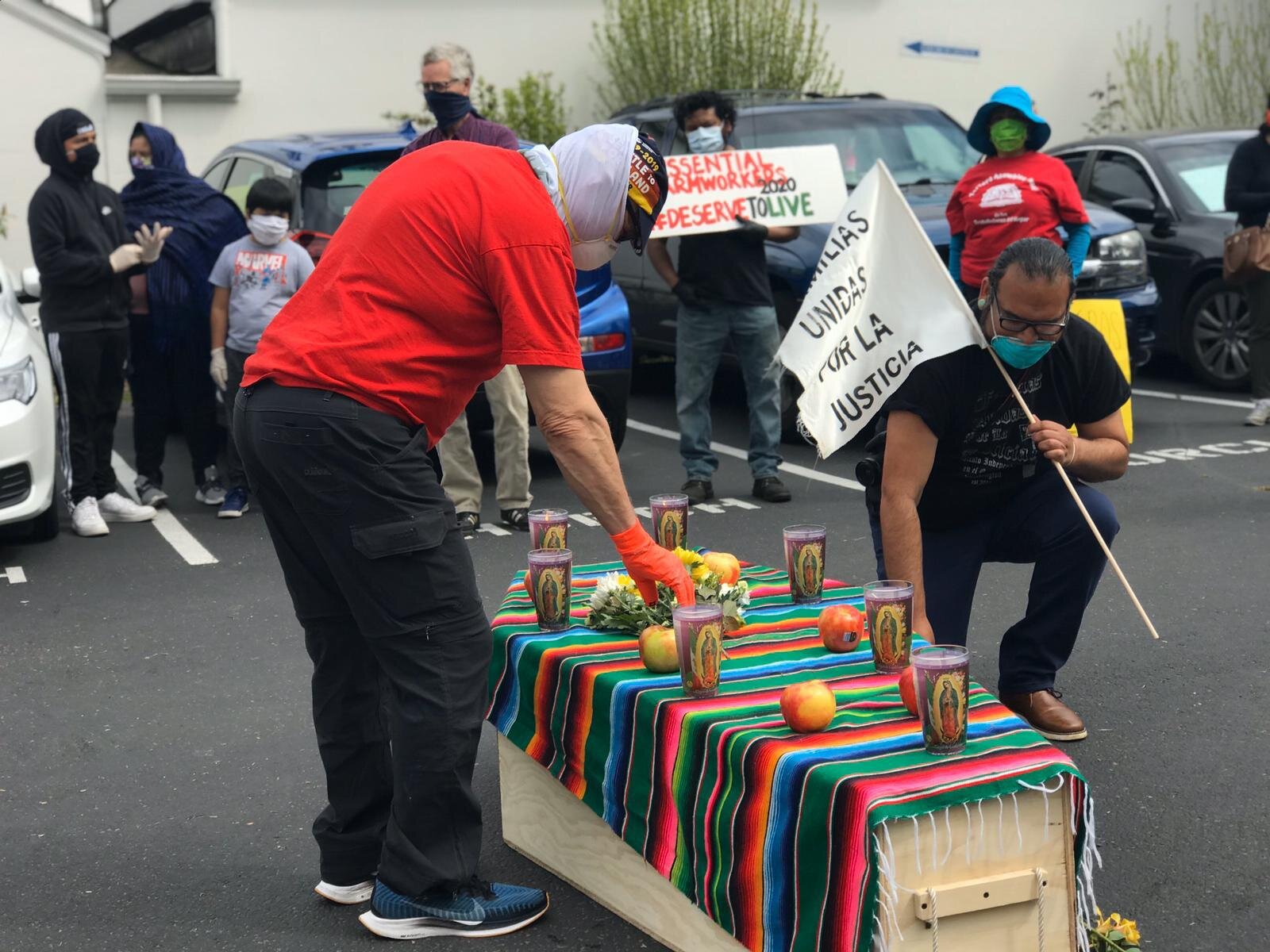
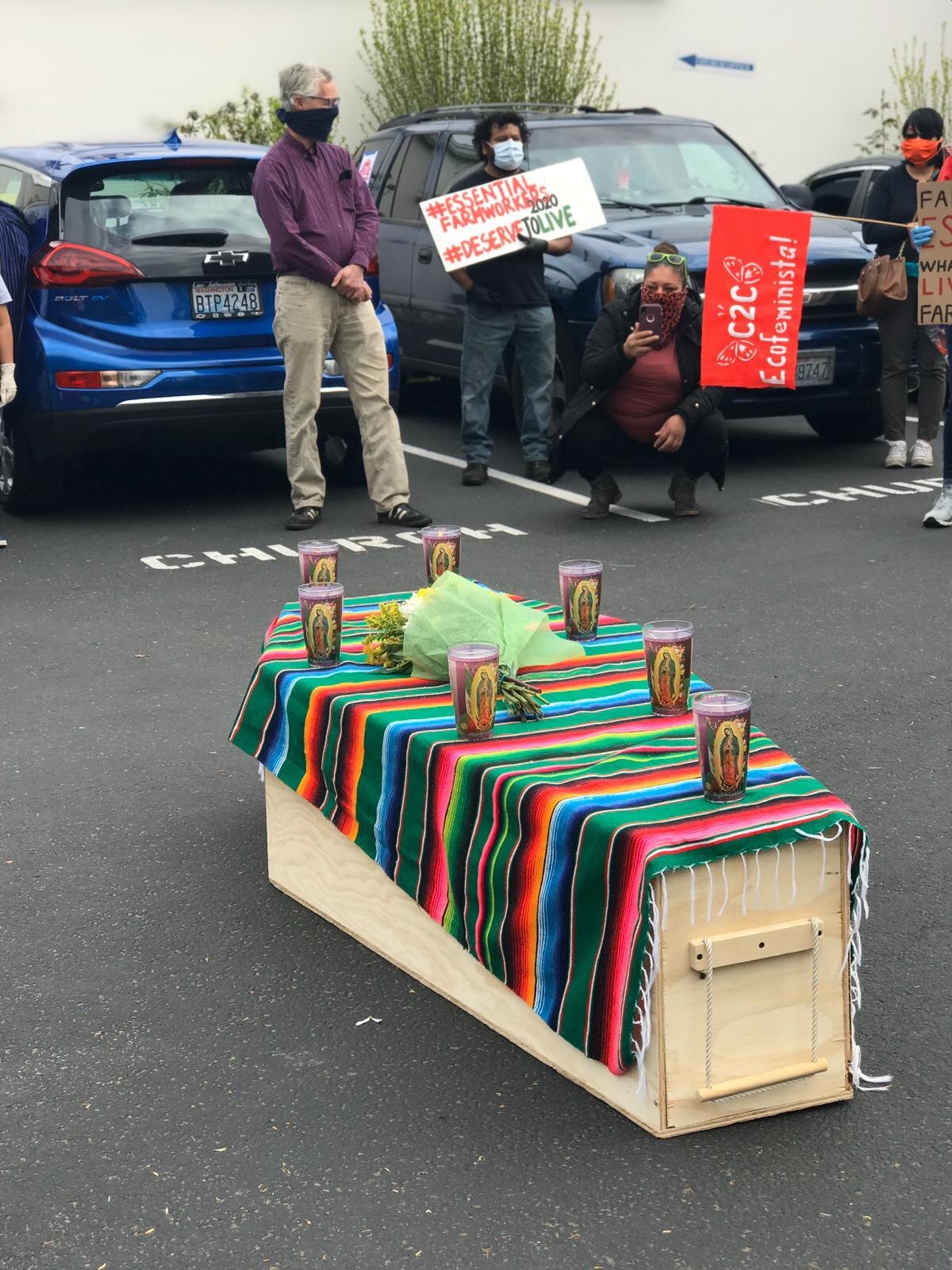
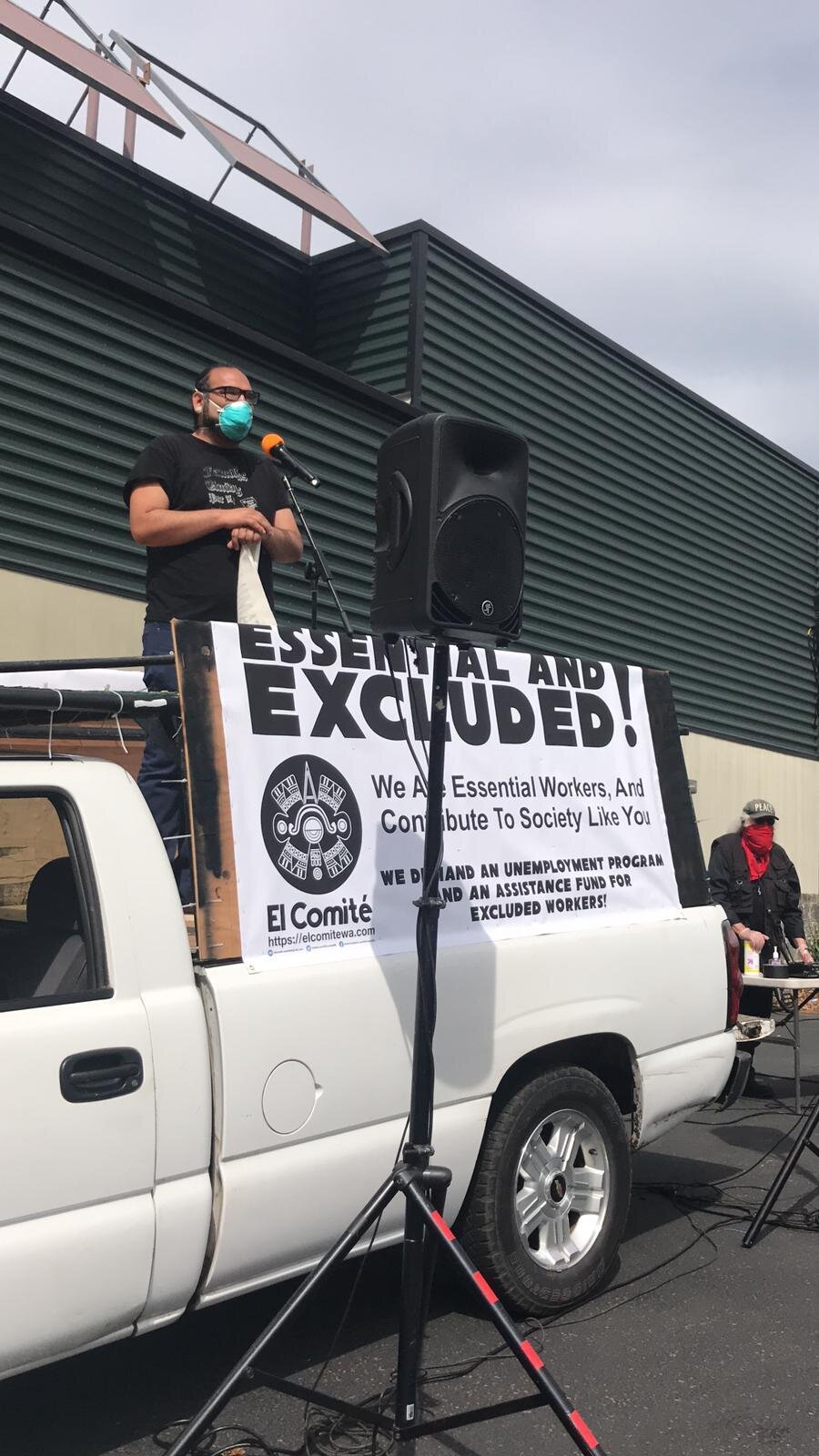
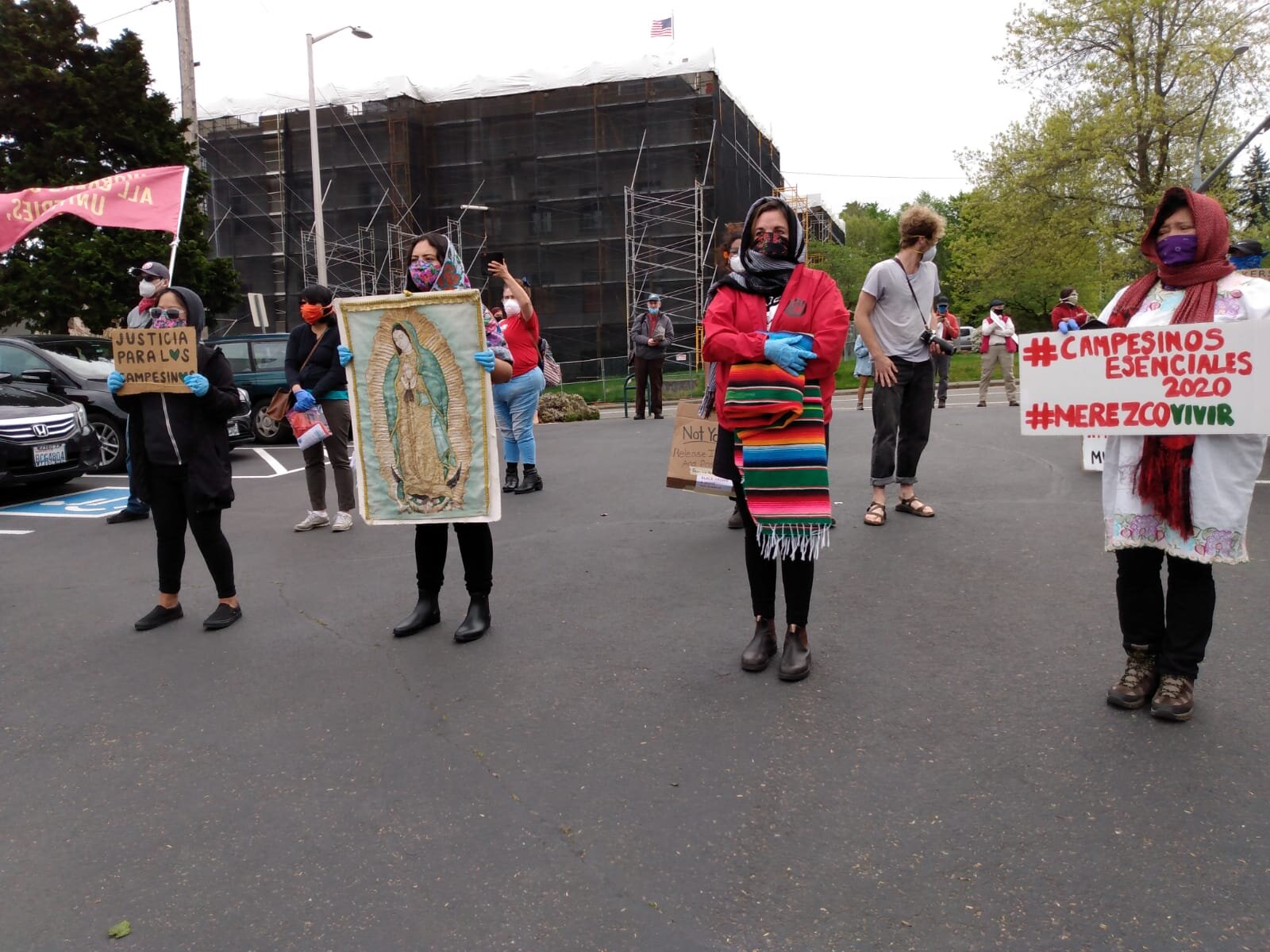
Caravan to Olympia for Excluded Farmworkers - May Day 2020

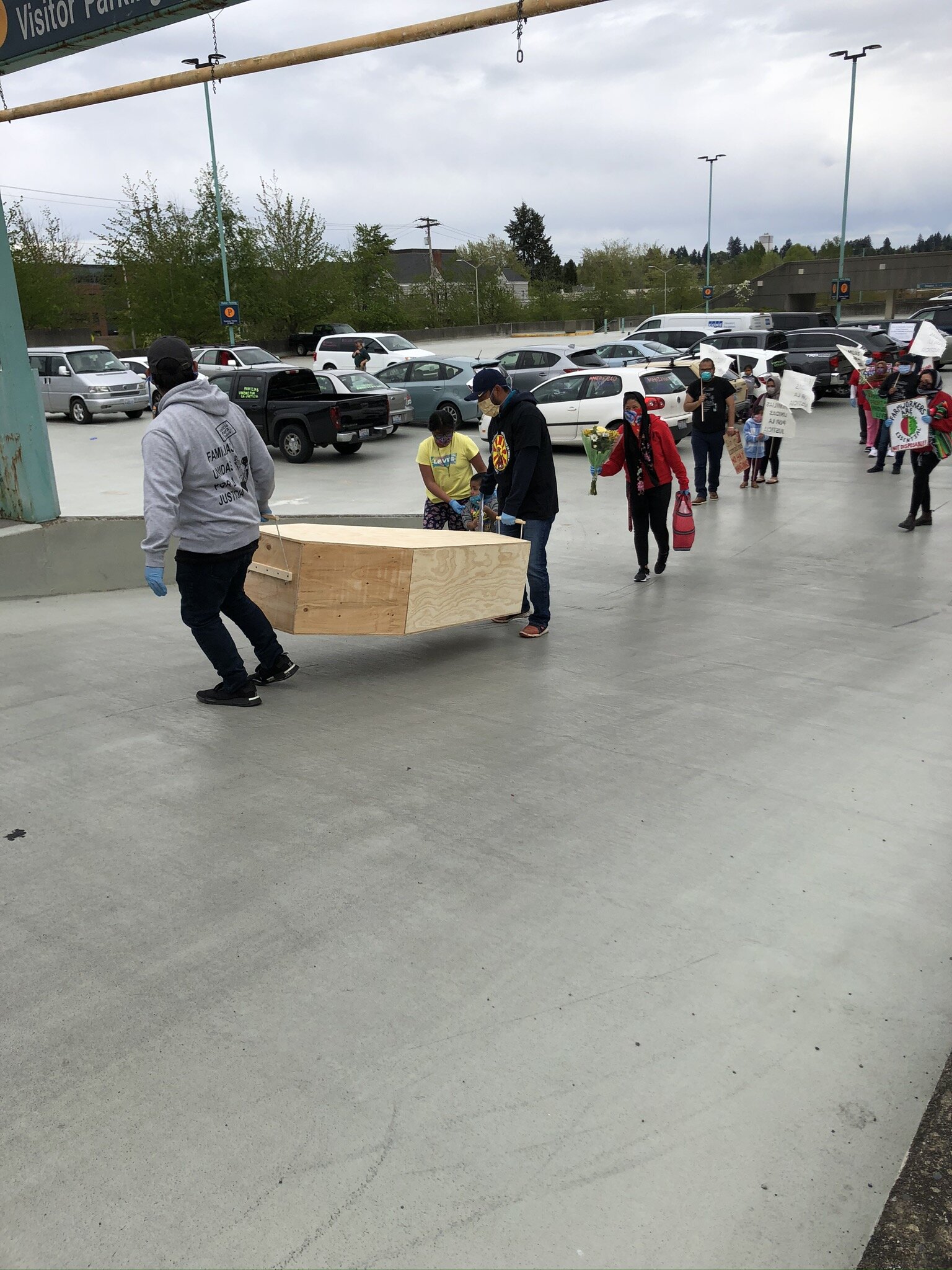
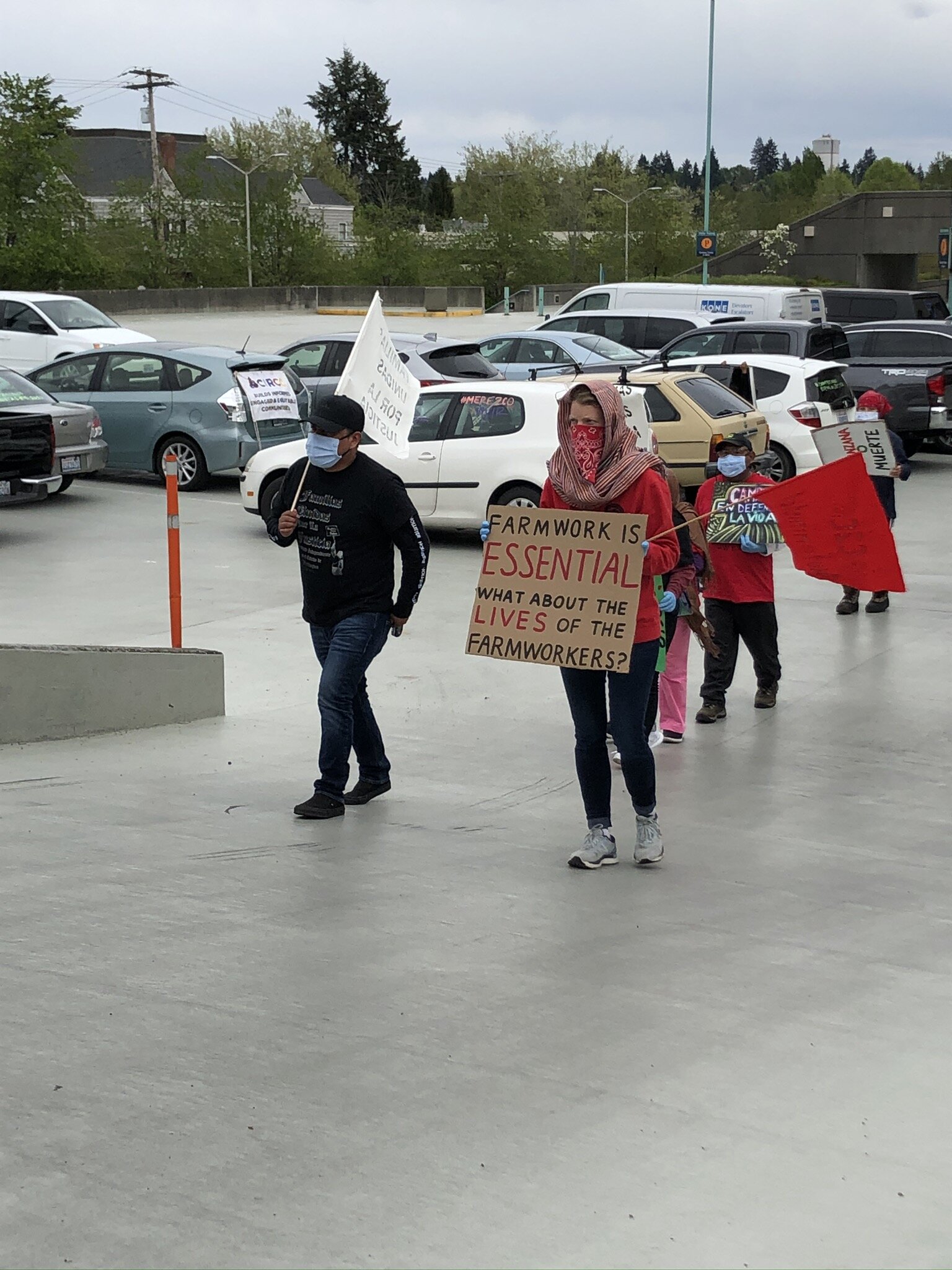
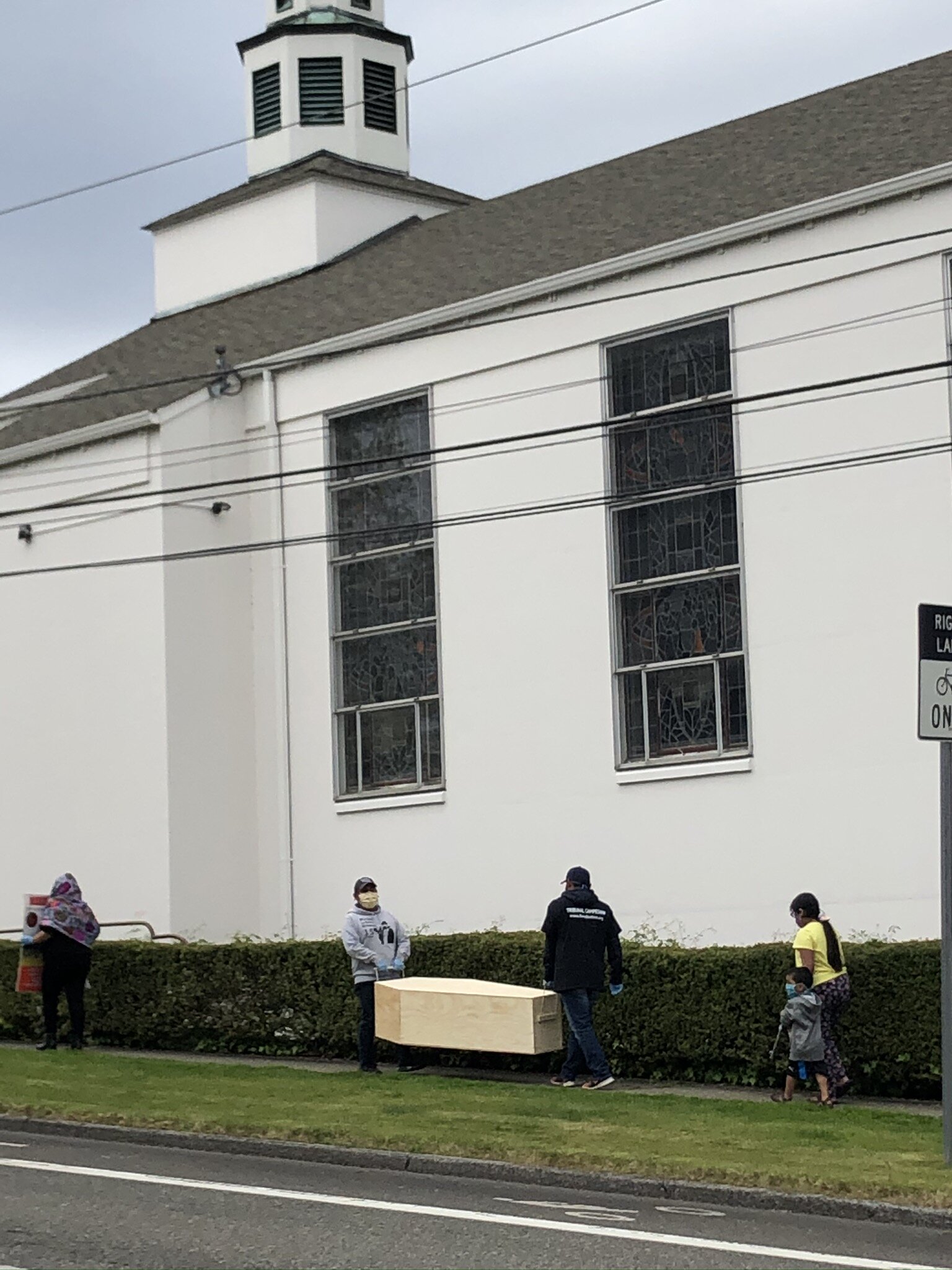
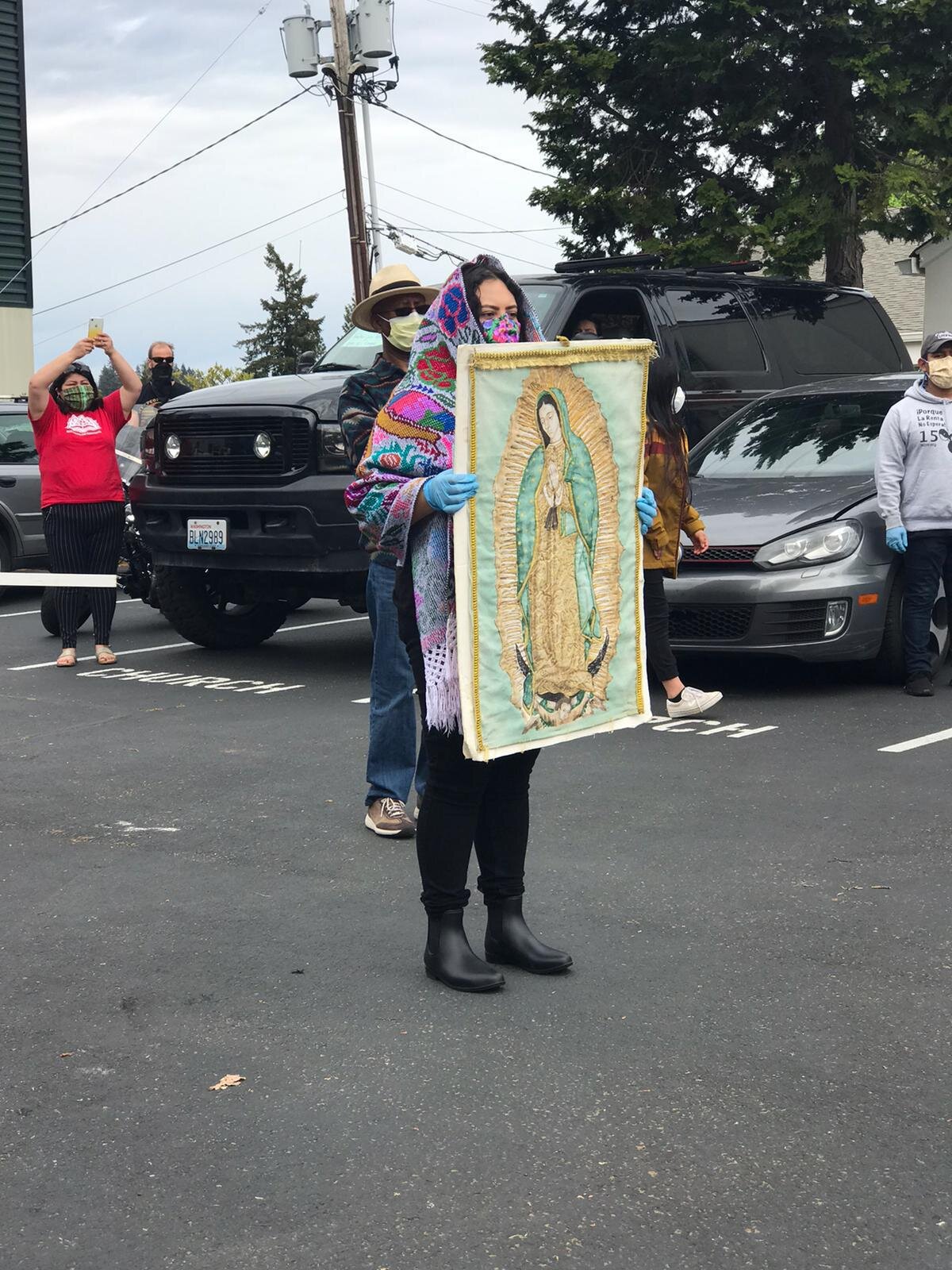
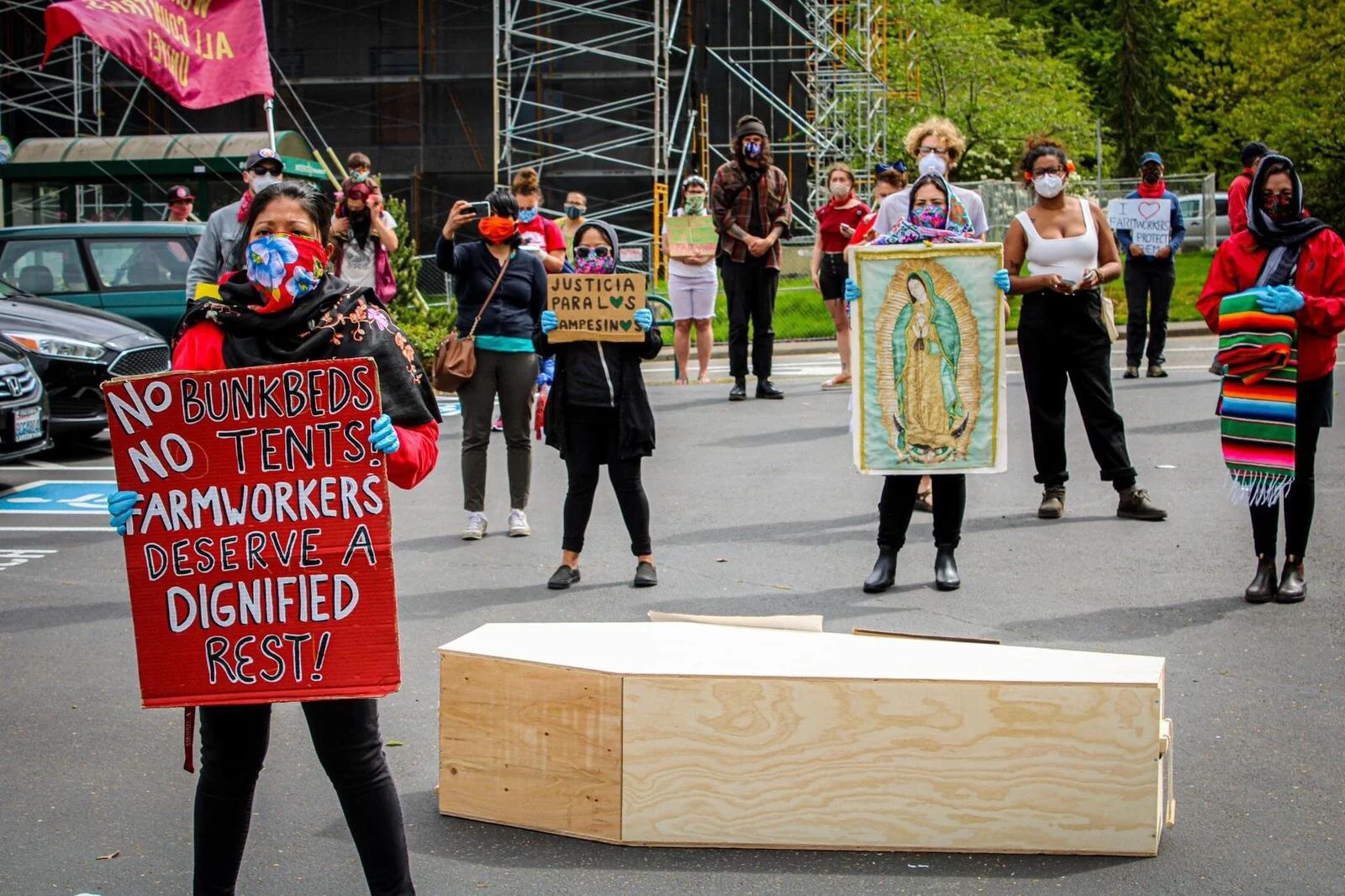
This May Day, Community to Community and Familas Unidas honored the essential labor of farmworkers who work to produce the food we all eat, as we do on all days. Alongside El Comité, members of the union and C2C led a caravan to the state capitol in Olympia and confronted the government with the cost of ignoring farmworkers’ needs and rights. In the time of a pandemic, the already abysmal conditions under which farmworkers are made to labor have only grown more inadequate. Farmworkers’ housing, food, pay, and PPE are all far from meeting the basic standards befitting any worker, much less those who have been designated as “essential” by the government themselves. C2C and FUJ's mística lay the symbolic burden that the government and consumers in mass must be willing to confront if they continue pushing farmworkers to labor without dignity, care, and protection.

Visual companion | Community Voz S4E19: Brazil Report back Pt 2, En Defensa da Terra e do MST

Community Voz is C2C's ecofeminist radio show which presents the grassroots work that local people are doing across intersecting movements. Our radio shows are engaging conversations about issues and news you probably won't hear anywhere else. We believe in community radio and alternative media, which highlights the character, beauty and courage of the voices of people on the ground. Tune in for reflections and report backs from C2C organizers and allies on the frontlines of the struggle for farmworker justice. We are extremely grateful to the talents volunteered on this show by Liz Darrow, who did all of the recording and engineering, as well as KMRE, our local non profit public radio station and host!

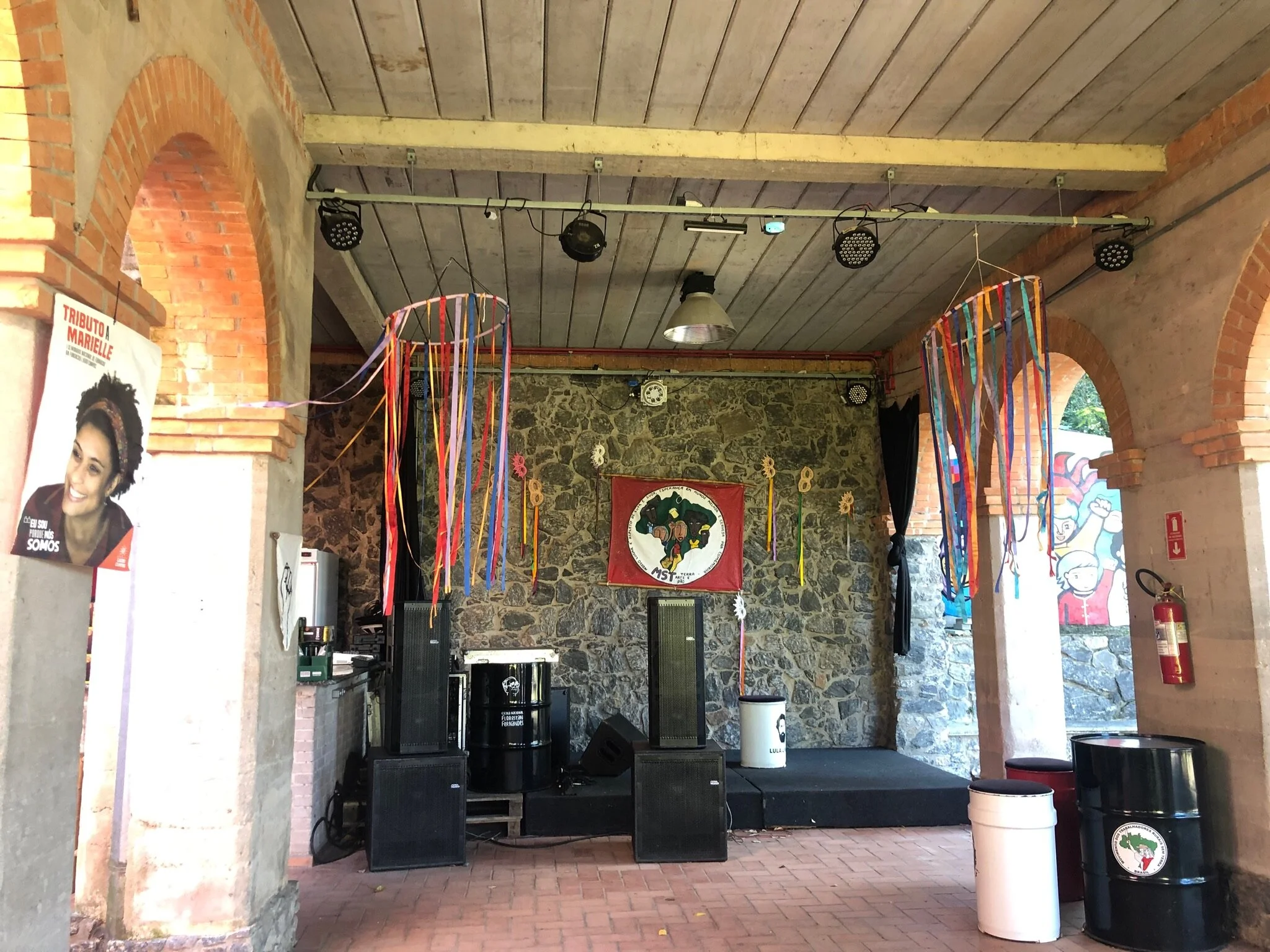
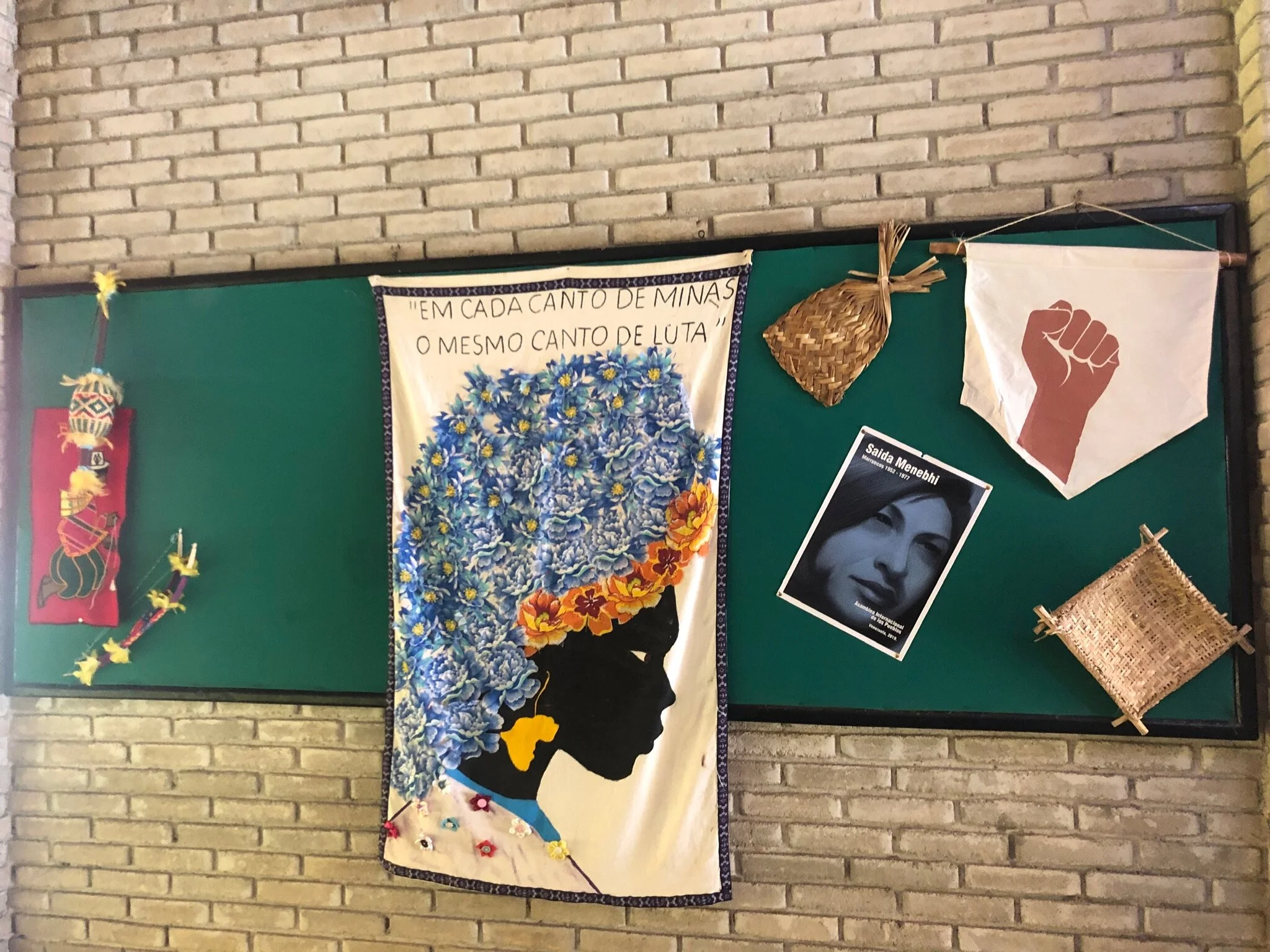
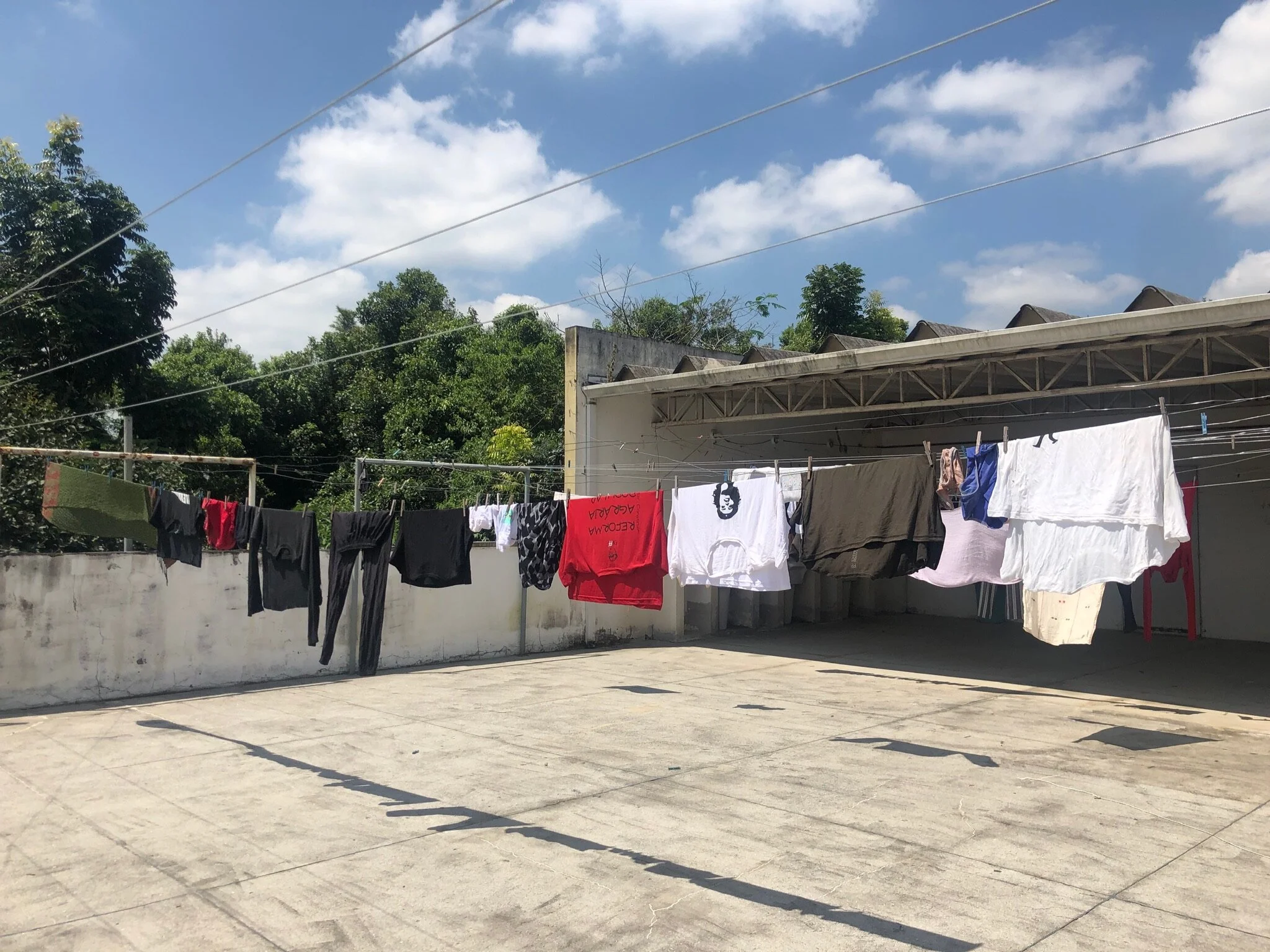
For 3 weeks in March, C2C promotoras and leaders visited with the MST (Landless Workers Movement) in Brazil. We studied at the MST’s political consciousness-raising school, participated in the first national gathering of the women of the MST as part of an international delegation, marched with our brothers and sisters on International Women’s Day, visited an MST encampment (Marielle Vive), and visited an MST settlement (Mario Lago). To learn more about our trip and all that we brought back from our time with the MST, listen to Part 2 of our Brazil report back series here.

Music in this episode: Construcao by Chico Buarque, O dia em que a Terra Parou by Raul Seixas

Below are photographs of some of the places and experiences we described on the show:

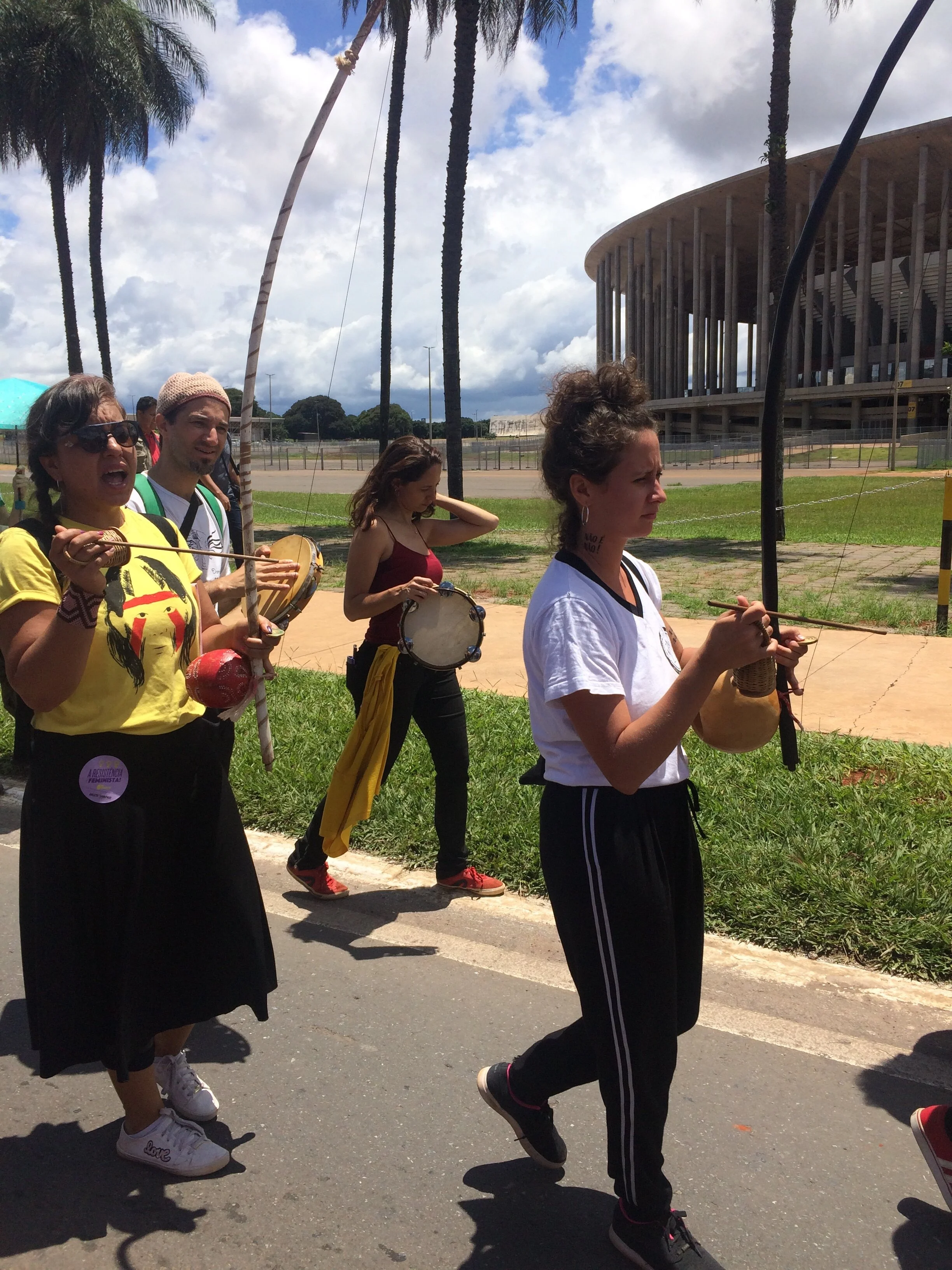
musicians marching alongside us at the international women’s day march playing the berimbau -maureen

musicians marching alongside us at the international women’s day march playing the berimbau -maureen

mid-march selfie with karen from rethink new orleands + portia from the national union of metalworkers south africa/socialist revolutionary workers party! -maureen

mid-march selfie with karen from rethink new orleands + portia from the national union of metalworkers south africa/socialist revolutionary workers party! -maureen

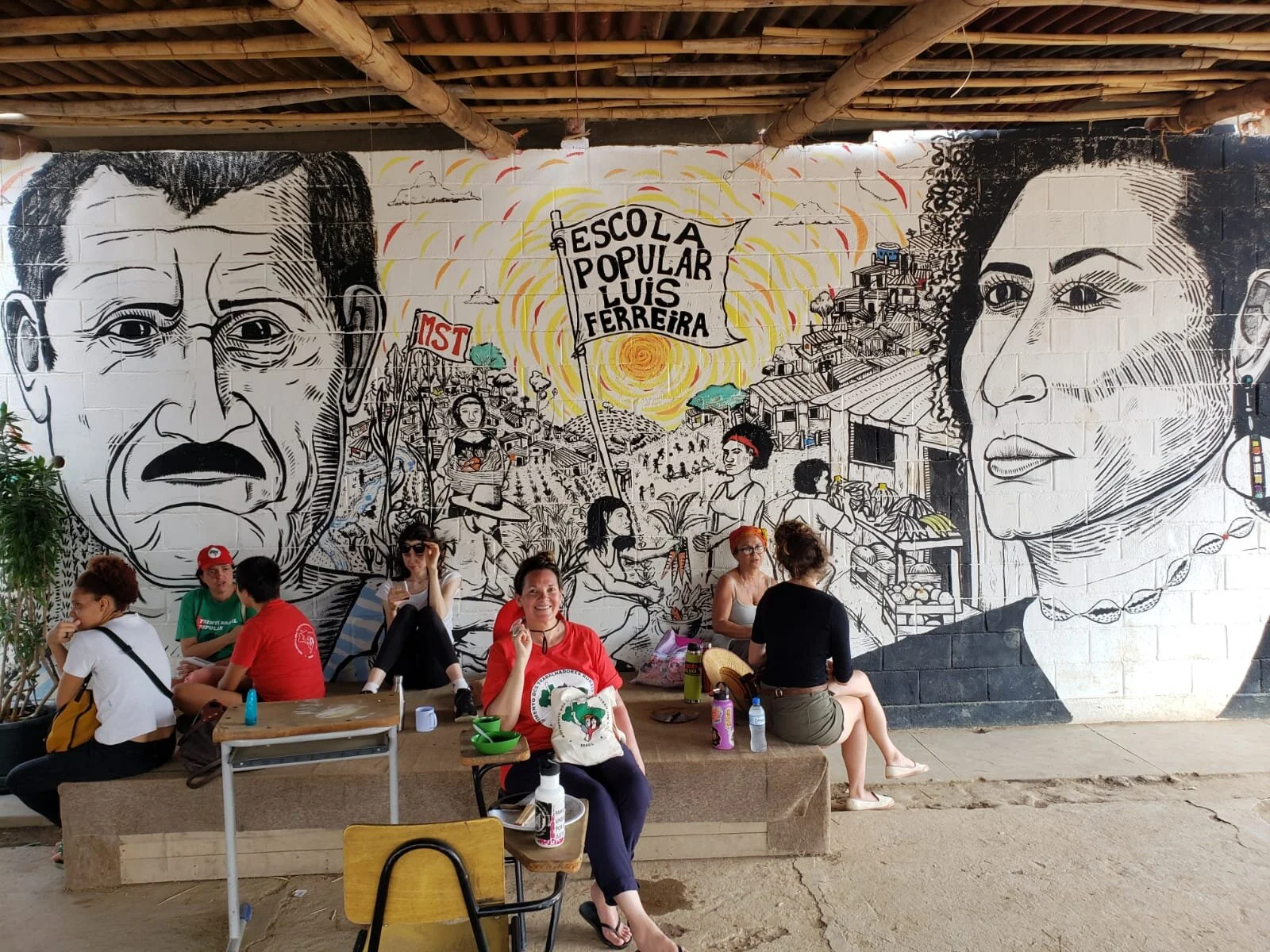
Mural at the encampment showing Luis Ferreira, an activist who was murdered while fighting for water rights, and Marielle Franco, who was murdered while fighting for black women’s rights -Lucy

Mural at the encampment showing Luis Ferreira, an activist who was murdered while fighting for water rights, and Marielle Franco, who was murdered while fighting for black women’s rights -Lucy

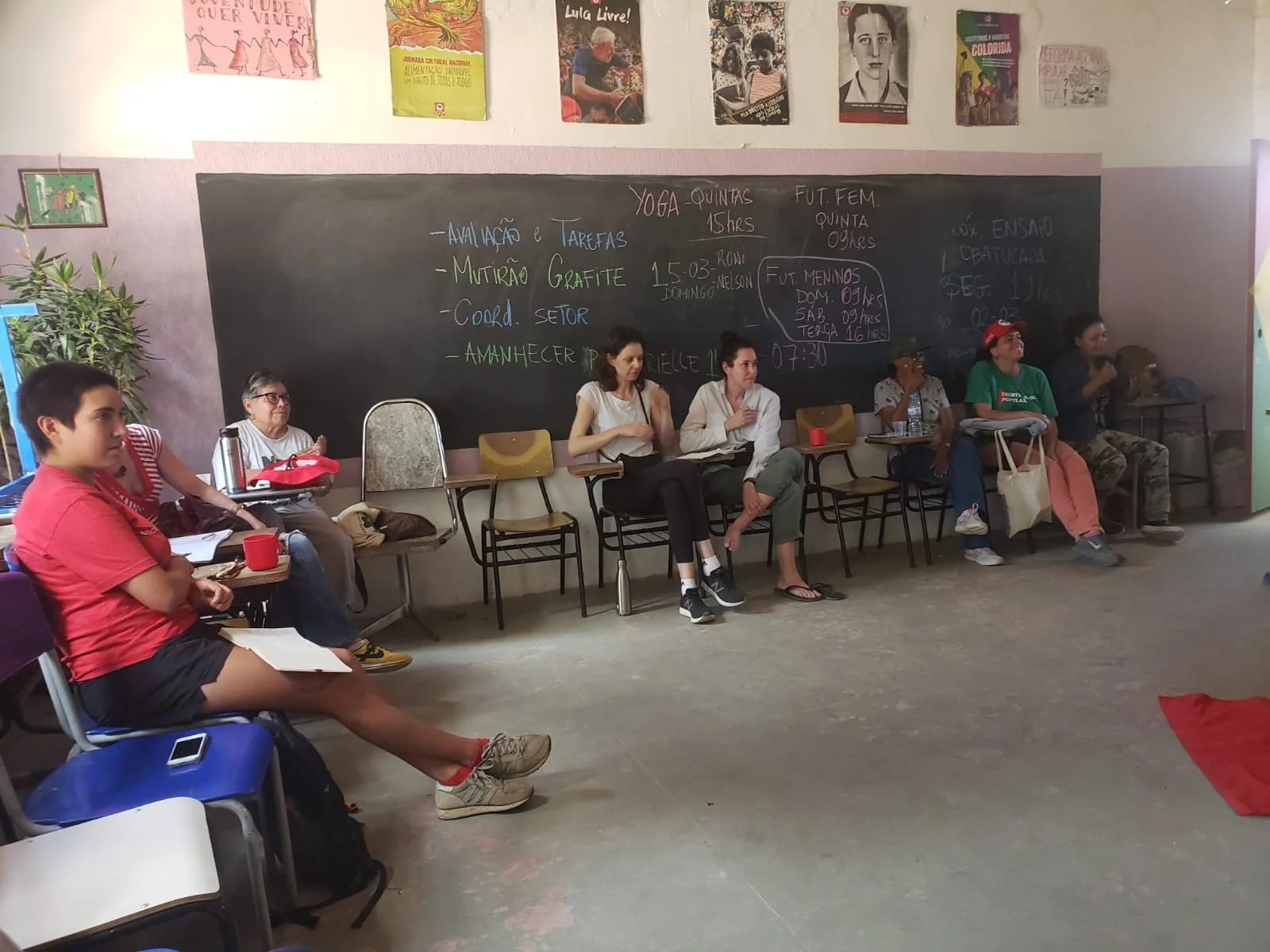
Here we are in the school named after Luis, where they teach children and have different types of activities during the week: music, movie nights, etc. -Lucy

Here we are in the school named after Luis, where they teach children and have different types of activities during the week: music, movie nights, etc. -Lucy

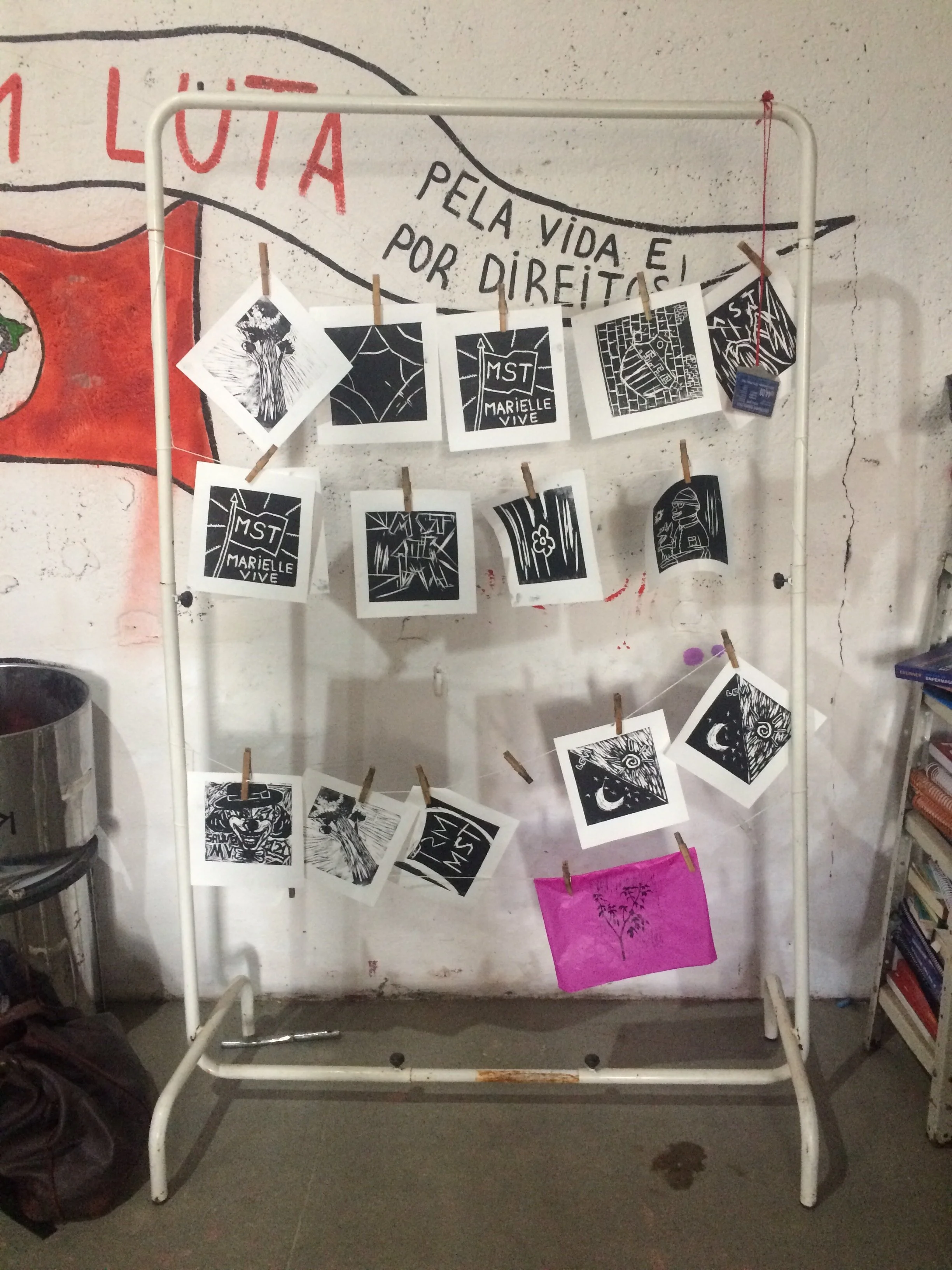
linocuts made by children living at the marielle vive encampment -maureen

linocuts made by children living at the marielle vive encampment -maureen

Learning from our compañero about plants near the school at Marielle vive.. particularly a plant that tastes like meat! meat is very hard to come by at the camp, so many folks get essential nutrients from this plant. #wisdom -australia

Learning from our compañero about plants near the school at Marielle vive.. particularly a plant that tastes like meat! meat is very hard to come by at the camp, so many folks get essential nutrients from this plant. #wisdom -australia

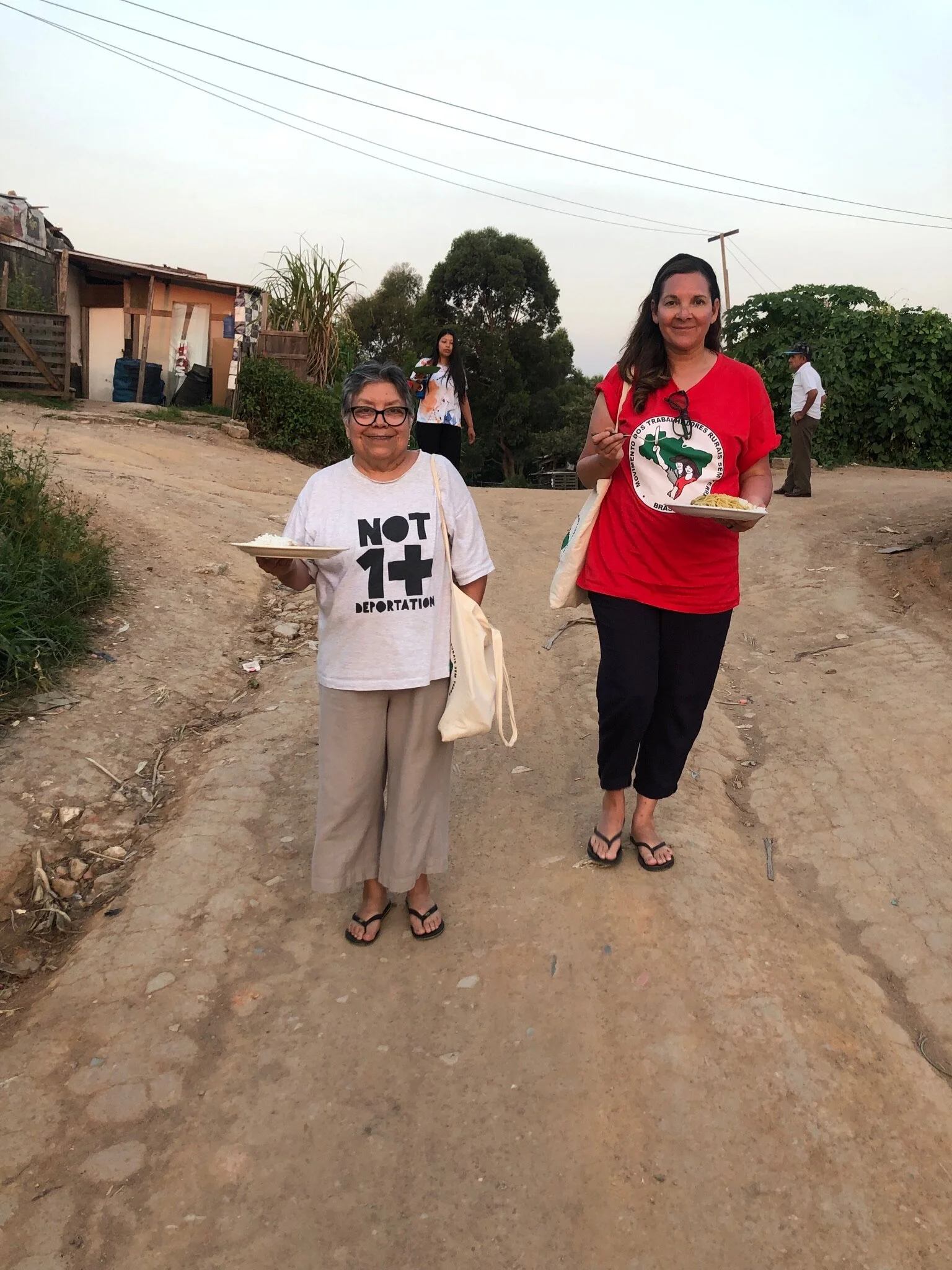
Rosalinda and Brenda with dinner at Marielle Vive -Liz

Rosalinda and Brenda with dinner at Marielle Vive -Liz

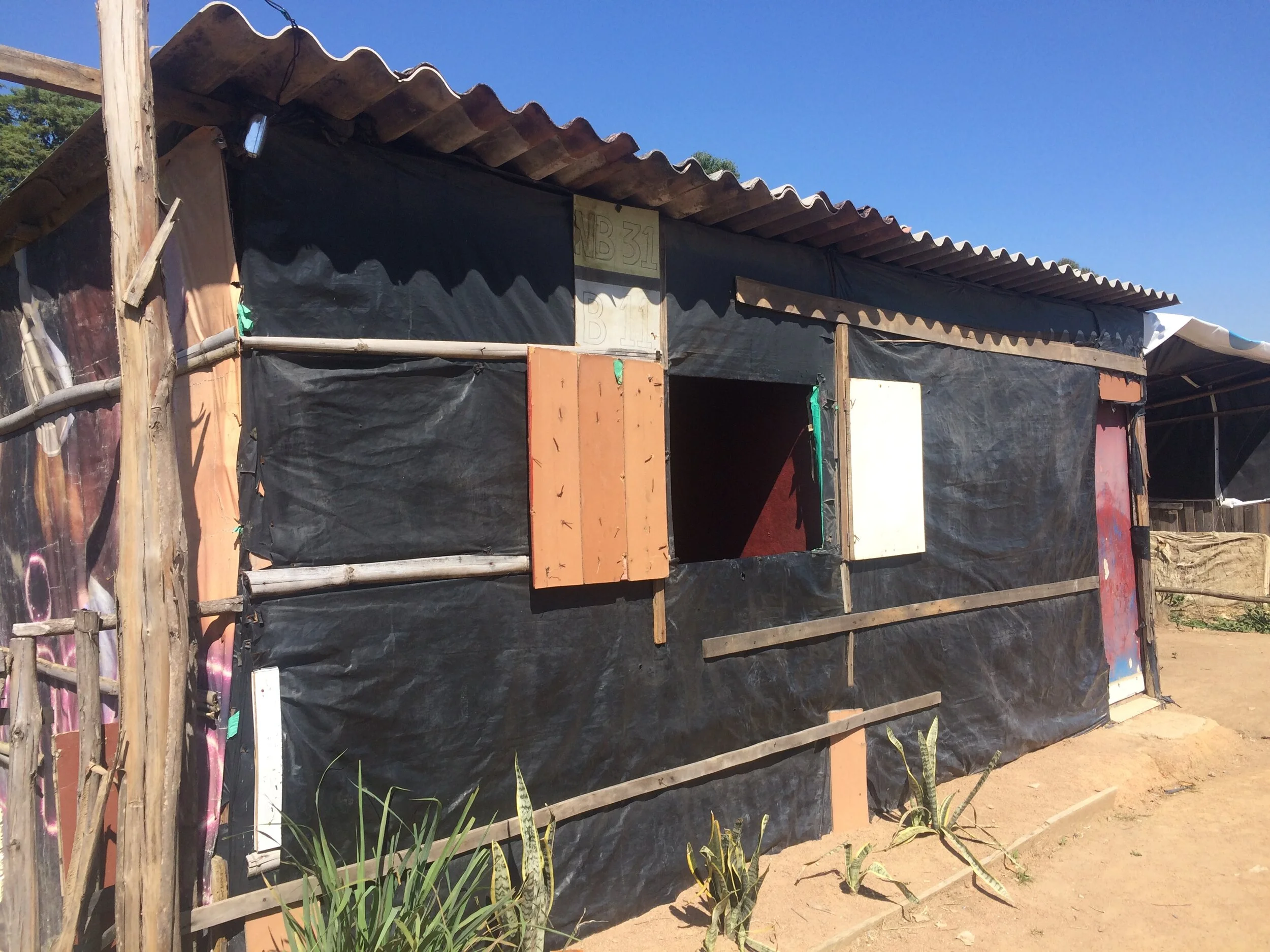
one of the barrack homes marked with the resident’s “nucleo de base” (base group, neighborhood organizing unit) -maureen

one of the barrack homes marked with the resident’s “nucleo de base” (base group, neighborhood organizing unit) -maureen

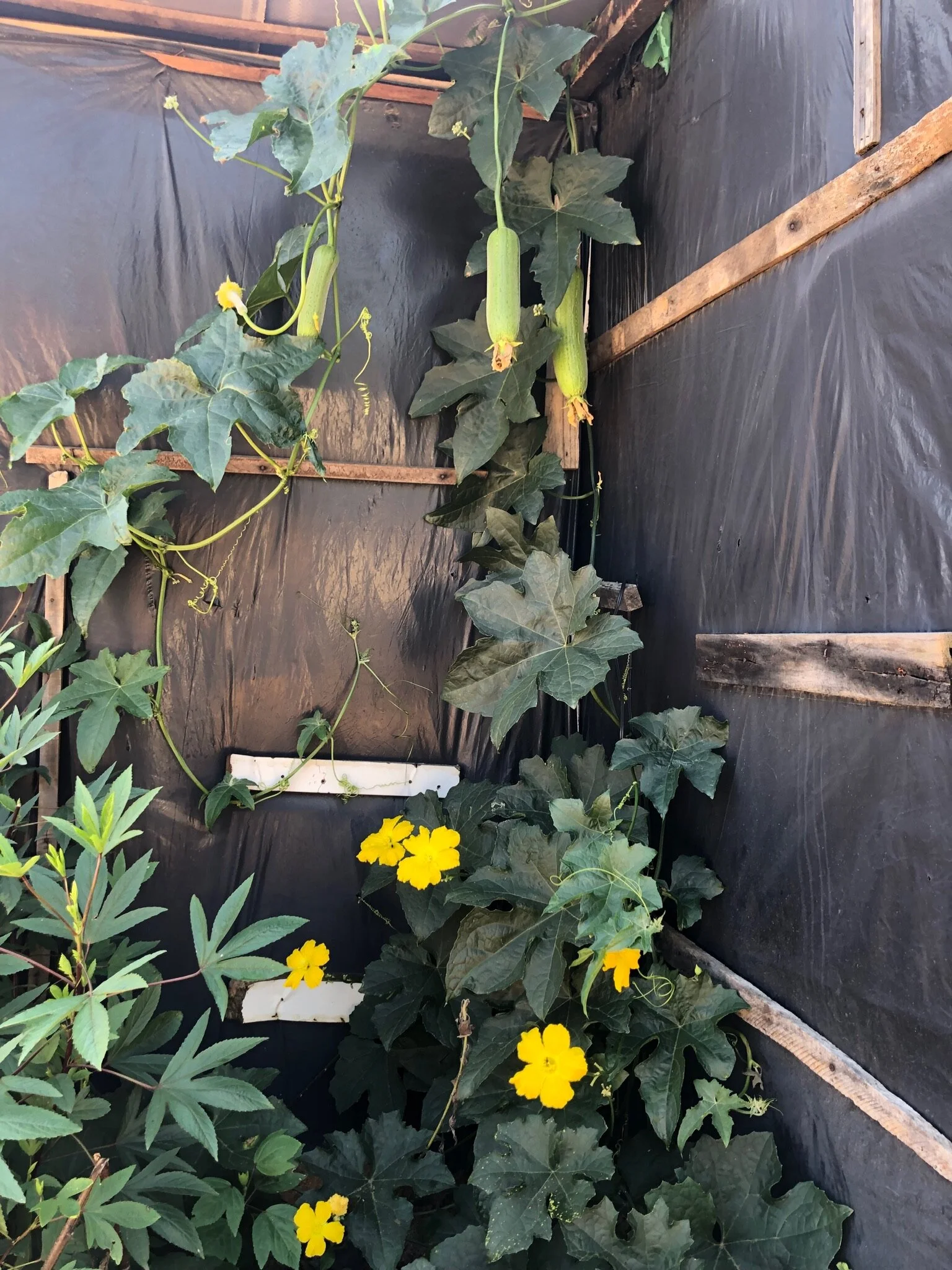
Squash growing outside a home at Marielle Vive -liz

Squash growing outside a home at Marielle Vive -liz

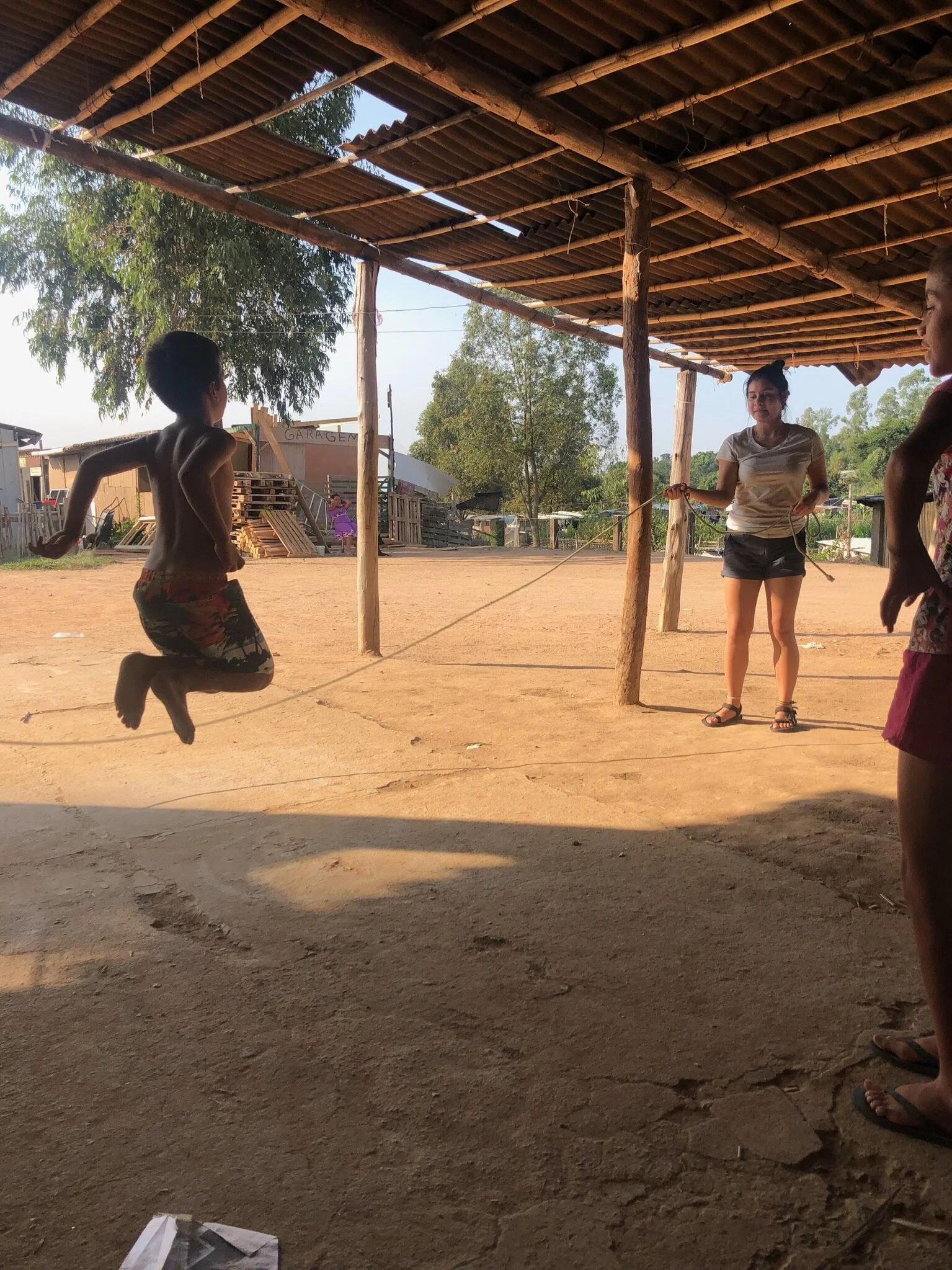
Stepheny running the jump rope at Marielle Vive -liz

Stepheny running the jump rope at Marielle Vive -liz

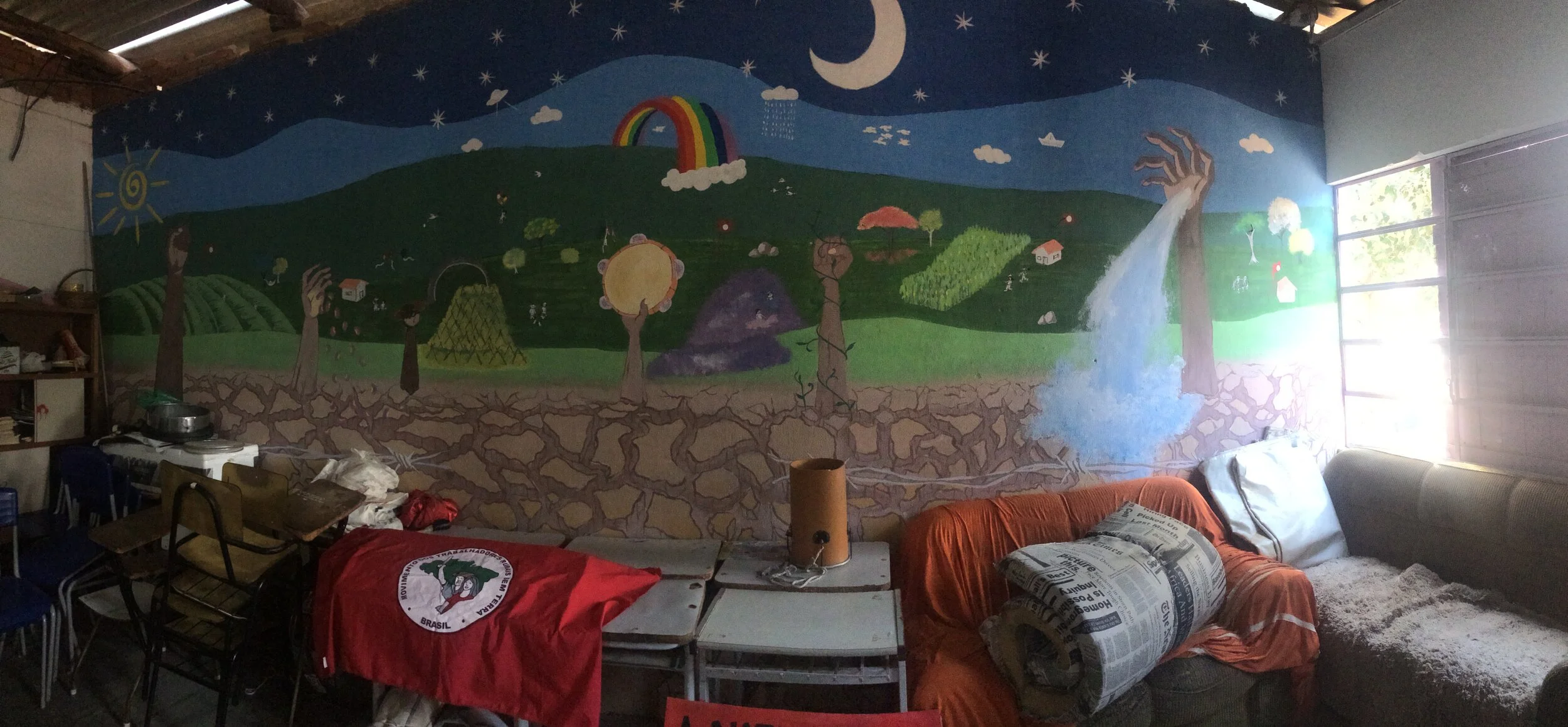
mural in the classroom where we slept -maureen

mural in the classroom where we slept -maureen

ACTION ALERT | Submit comments on proposed emergency regulations regarding farmworker housing by 5 p.m. Monday April 27

On Thursday April 23, the Department of Health and the Department of Labor and Industries finally published proposed emergency regulations regarding farmworkers' housing (critically leaving out transportation and work sites), scheduled to take effect May 1st. While it is a relief that the State of Washington has decided to take action, on careful review of these "new" orders, our frustration grows because there is very little change from the current, inadequate regulations, and in fact, they have added the unacceptable allowance of tent housing.

It is appalling that it took the threat of a lawsuit to force Governor Inslee to force the State Agencies to issue these orders. It is even more appalling that the State's actions came too late to prevent 70 farmworkers from becoming ill in Yakima, and 42* H2A workers becoming ill at the Stemilt labor camp in Wenatchee. * Note: contrary to the Stemilt press release stating there were 37 ill workers, there are actually 42 workers who have tested positive.

WE ASK THAT YOU JOIN US AND SUBMIT COMMENTS NOW VIA EMAIL to the Department of Health and Labor and Industries demanding that the content of these new emergency orders truly protects and helps save lives of farmworkers and those in rural communities where they live and work by including these key additions.

Comments on the draft emergency rules will only be accepted through this Monday, April 27, 2020. Submit comments to both the Department of Health (housing@doh.wa.gov) and Labor and Industries (cynthia.ireland@lni.wa.gov) demanding these changes we have highlighted below:

Education:


• MODIFY (1) (a): “Educate occupants about COVID-19, how to prevent virus spread, and what to do if they develop symptoms.”

• To read: “Educate occupants about COVID-19, how to prevent virus spread, and what to do if they develop symptoms in a language or languages understood by the workforce, and allow entry of community health workers and community based outreach workers to provide additional information.”


Sleeping quarters (1) (b) (i):


• REMOVE from (1) (b) (i) (A): “For bunk beds, only the lower bunk on each bed may be occupied except for sleeping rooms occupied by single families” And replace with: The use of bunkbeds is not permitted in all temporary farmworker housing licensed by the Department of Health. No more than 2 people can reside in a room of 150-200 square feet as recommended by epidemiologists from the University of Washington.

Our concerns: It is not acceptable to allow bunk beds limited to use of only the bottom bunk as there will be no guarantee of enforcement of whether or not farms are using the top bunk to house farmworkers.
 
• REMOVE (1) (b) (i) (C) in its entirety:
“An operator may implement other effective engineering and/or administrative controls to modify this requirement by incorporating it in the plan required and having it pre-approved by the Department of Health and/or the Department of Labor and industries.”
 
• REMOVE (1) (b) (ii) in its entirety:
“Physical barriers such as plastic shields can be used for fixtures such as sinks where occupants may come in close contact for short periods of time” REMOVE from (1) (i) (B): “floor to near ceiling temporary non-permeable barrier (e.g., plexiglass, plastic sheeting, etc;.)”

DEMAND: Current ratios for housing, showers, sinks, cooking and food storage facilities (such as spacing in shared refrigerators), and laundry must be revised to reflect social distancing protocols recommended by the CDC. Maintaining the current ratios and installing barriers is not enough, because, especially without reinspection of modified housing, barriers are likely to be ineffectively installed, and won’t hold up to use, heat, environment during the season. Barriers, particularly those made of plastic sheeting, are likely to be pushed aside, damaged, or otherwise become inoperative.


• REMOVE (1) (b) (iii) in its entirety: “Discourage people from visiting buildings or sleeping quarters that are not their assigned living spaces, to minimize cross-contamination in the case of illness.” Our concerns: this could potentially be used against promotoras, community-based outreach such as the Census, or union representatives visiting buildings or sleeping quarters because it does not comply with protocols. It could also prevent self-organizing. If the farms follow every safety protocol according to our recommendations and visiting community outreach workers, health workers, or union representatives are also complying with mask/glove/social distancing requirements it should be no problem for workers to move from building to building or for visitors to arrive at camp.
 
• REMOVE (1) (b) (v) in its entirety: “The use of tents meeting the requirements of WAC 296-30716147/WAC 246358-077 for use at housing sites other than cherry harvest camps or other proposed temporary housing proposals may be approved after review by the Department of Health for the initial review and approval.  Review of these temporary requests will be expedited”

Our concerns: The current standards for tents don’t have requirements for heating, allow up to 15 people per tent, it is possible to have only 1 electrical outlet per tent and only 1 window, there are no requirements for AC. Poses extreme risk in case of wildfire, where smoke cannot be excluded and can get trapped in the tent – lack of ventilation is likely to cause increased rates of infection and would be exacerbated by compromised air quality.
 
• ADD as (1) (i) (D): “Separate housing must be provided for those workers at a higher risk from COVID19.”


Cleaning (1) (c):


• MODIFY (1) (c) (iii) to specify “adequate supplies” should comply with CDC recommendations for facilities that house people overnight

Our concerns: “adequate supplies” – quantities or antiviral qualities aren’t specified in either (1) (c) (iii) or (1) (c) (iv)

• MODIFY (1) (c) to include: “(v) Require training in a language or languages understood by contracted workers regarding COVID-19 cleaning, disinfecting, and sanitizing protocols for any contracted cleaning labor prior to their arrival to clean temporary worker housing. Require that those contracted workers use disposable gloves and wear masks covering nose and mouth while working at the site.”
Policies and procedures to identify and isolate sick occupants (1) (d):
• INCLUDE in (1) (d): “Require employers to facilitate testing of all employees upon their arrival to the farm to work.”
 
• MODIFY (1) (d) (iv) to include: “The operator must provide their regular pay during the isolation period.”
 
• MODIFY (1) (d) to include as (vi):
“The operator must immediately notify all workers who have been in contact with confirmed COVID-19 case, isolate them if they are still employed at the work site, and test them, following CDC guidelines for contact tracing.”
 
REMOVE in its entirety (2): “(2) Operators must revise their written TWH management plan to include implementation of the above requirements. The plan must identify a single point of contact for COVID-19 related issues. The revised TWH plan must be submitted to the Department of Health for the initial review by May XX, 2020.  Failure to submit a revised plan will result in license revocation.”
 
And replace with: “Re-inspect all temporary housing and only issue licenses and/or certifications of compliance with state standards to facilities that fully comply with these regulations.”

Visual companion | Community Voz S4E17: Brazil Report back Pt 1, Mulheres Em Luta

Community Voz is C2C's ecofeminist radio show which presents the grassroots work that local people are doing across intersecting movements. Our radio shows are engaging conversations about issues and news you probably won't hear anywhere else. We believe in community radio and alternative media, which highlights the character, beauty and courage of the voices of people on the ground. Tune in for reflections and report backs from C2C organizers and allies on the frontlines of the struggle for farmworker justice. We are extremely grateful to the talents volunteered on this show by Liz Darrow, who did all of the recording and engineering, as well as KMRE, our local non profit public radio station and host!

For 3 weeks in March, C2C promotoras and leaders visited with the MST (Landless Workers Movement) in Brazil. We studied at the MST’s political consciousness-raising school, participated in the first national gathering of the women of the MST as part of an international delegation, marched with our brothers and sisters on International Women’s Day, visited an MST encampment (Marielle Vive), and visited an MST settlement (Mario Lago). To learn more about our trip and all that we brought back from our time with the MST, listen to Part 1 of our Brazil report back series here.

Music in today’s show: Secos and Molhados by Sangue Latino

Below are photographs of some of the places and experiences we described on the show:

One of the classrooms at Escola Nacional Florestan Fernandes (ENFF, Florestan Fernandes National School). So much political formación is done here! -AUSTRALIA

One of the classrooms at Escola Nacional Florestan Fernandes (ENFF, Florestan Fernandes National School). So much political formación is done here! -AUSTRALIA

Banner hung near a large classroom with images of peasant women with tools of the land, reminding us what our movements move towards. -AUSTRALIA

Banner hung near a large classroom with images of peasant women with tools of the land, reminding us what our movements move towards. -AUSTRALIA

A plant pot right by the flag poles where we gathered to recite and sing the MST movement hymn -AUSTRALIA

A plant pot right by the flag poles where we gathered to recite and sing the MST movement hymn -AUSTRALIA

recipeENFF.jpeg
Two of many recipes found at the dining hall at ENFF with social justice messages -AUSTRALIA

Two of many recipes found at the dining hall at ENFF with social justice messages -AUSTRALIA

Mural on a cistern at ENFF (artist instagram: @tody_one) - Maureen

Mural on a cistern at ENFF (artist instagram: @tody_one) - Maureen

Aerial view of a garden at ENFF -Maureen

Aerial view of a garden at ENFF -Maureen

Silhouettes on the door of one of the classrooms at the ENFF where we studied the history of agrarian reform and the mst -Maureen

Silhouettes on the door of one of the classrooms at the ENFF where we studied the history of agrarian reform and the mst -Maureen

A soccer field at ENFF, in honor of the Corinthians’ Democracy -Maureen

A soccer field at ENFF, in honor of the Corinthians’ Democracy -Maureen

MST flag and commons area at ENFF -Liz

MST flag and commons area at ENFF -Liz

Artwork at ENFF -Liz

Artwork at ENFF -Liz

The laundry roof at ENFF -Liz

The laundry roof at ENFF -Liz

16-hour bus ride to Brasilia…with attitude. -BRENDA

16-hour bus ride to Brasilia…with attitude. -BRENDA

Solidaridad internacional! -BRENDA

Solidaridad internacional! -BRENDA

Beatuiful MST flags at the first women’s encontro (gathering) Brasilia-BRENDA

Beatuiful MST flags at the first women’s encontro (gathering) Brasilia-BRENDA

part of a mística, which we had every morning at the Encontro -Lucy

part of a mística, which we had every morning at the Encontro -Lucy

Rosalinda addressing the 1st national gathering of the women of the MST (translation provided by the MST) -Maureen

Rosalinda addressing the 1st national gathering of the women of the MST (translation provided by the MST) -Maureen

The mística awaiting the women returning from the 1st Women’s Gathering, prepared by men of the MST -Maureen

The mística awaiting the women returning from the 1st Women’s Gathering, prepared by men of the MST -Maureen

C2C demands immediate protection for farmworkers in Washington State

Dear supporters,

Daily living and working was already dangerous and precarious for hundreds of thousands of farmworkers and immigrants before the onset of COVID-19. ICE has terrorized our communities and powerful growers have suppressed workers' efforts to organize. Generations of environmental racism have contaminated poor neighborhoods and caused lifelong health impacts in communities of color. This pandemic has found a perfect environment to increase our communities' risk of fatality if they contract the virus. The agricultural industry has long refused to implement health and safety protections for farmworkers or worker housing, while state and federal agencies looked the other way. Today, agribusiness is functionally exempt from COVID-19 protocols in Washington State and nationwide.

During times like these, capitalism reveals itself as an economic system that functions only for those that have the financial means to protect themselves. This pandemic is revealing structural racism and its barriers to equity. It is revealing the economic fragility and health disparities our communities live with every day. It is revealing the weaknesses of systemic mechanisms' ability to respond to crisis -- set up by our goverment using our tax dollars, and once again failing us.

The responses to this pandemic are leaving out the working poor, and in general the working class, the vulnerable, and otherwise "expendable" people. Our federal and state governments are acting like there is a certain level of acceptable fatalities of agricultural workers -- deemed "essential workers" according to Governor Inslee's "Stay Home, Stay Healthy" proclamation. The responses, and lack of responses, to our demands and objections to "business as usual" by corporate agriculture show us that to them there is an acceptable price the farmworker community must pay to sustain the current profit margins in the agricultural industry. Government at every level is complicit in every worker's death during this pandemic.

As an ecofeminist, anti-capitalist organization, we know that these deaths are needless and preventable. We also know that agribusiness will not stop their exploitative practices without a fight. As farmworkers join countless other workers on the frontlines of the COVID-19 crisis, workers being laid off, and workers still working for employers not following social distancing and sanitizing practices, we ask you to join us in demanding WA State take immediate action to put in place real protections with accountability and enforcement in the agricultural industry, so that farmworkers can survive this virus and the financial crisis that is already crippling families.

Call Governor Inslee (360) 902-4111 and DEMAND immediate protection for farmworkers in Washington State:

  1. Enact Emergency Orders with funding for staffing to ensure all COVID-19 protocols, including appropriate social distancing guidelines, are being followed in the fields and packing/processing, with enforcement and consequences for noncompliance, such as fines. Provide personal protective clothing and equipment to farmworkers at no cost to them. Pay farmworkers sick leave if they become ill. Establish an incentive for recruitment of needed farmworkers in WA State, including raising wages to work in agriculture.

  2. Ensure there will be no retaliation against workers asking for better protections, or for becoming ill. Ensure the COVID-19 protocols are not used as retaliation in hiring practices.

  3. Require transparent recruitment and hiring information and housing protections for all farmworkers related to COVID-19. In addition to informing workers about the terms and conditions of employment when workers are being hired, all persons who are recruiting for agricultural employment in WA must provide detailed information about the risks of COVID-19, including how employers will protect their safety while transporting and housing them, and in the workplace.

  4. All farmworker housing, tools, and equipment must be fully sanitized before farmworker families move in and use the equipment. There must be proof of that sanitation. There must be designated sanitized quarantine living facilities with access to medical personnel, and COVID-19 plans approved by WA State Department of Health and local Health jurisdictions.

Email Employment Security Department (nick.streuli@gov.wa.gov) and DEMAND they stop processing and approving H2A visa applications immediately for farms in Washington State

The H2A guestworker visa program has a long history of exploitation and abuse. By design, the program makes it almost impossible to regulate the protocols needed to prevent COVID-19 contagion. Farmworkers are forced to work in close proximity and share close living and eating quarters, as well as being transported on a daily basis in vans and buses in large groups. The current protocols are not enforceable and have huge gaps, giving individual corporate farms loopholes. This sets up scenarios with potentially deadly consequences for farmworkers and rural communities that are already under served in healthcare, transportation, and infrastructure.

There is no plan within Governor Inslee's protocols to prepare for the influx of an estimated additional 20,000 H2A workers into the state once the season begins. We estimate over 10,000 H2A workers have already arrived between the months of December and February. Furthermore, there has been no protection for those H2A workers that are already here -- not during their long-distance travel, nor now while they are living in crowded housing and working in close contact in the fields.

Donate to C2C

The C2C promotoras, Lucy, Arely, Australia, Daisy, Cristal, and Norma, are all in communication with our local immigrant and farmworker communties on a daily basis. This communication is essential to bridge information gaps and language barriers, combat dangerous misinformation, and respond to immediate and urgent needs. The promotoras are hearing about how quickly families' economic conditions are becoming dire. To support their organizing, donate here. To support direct organizing in the fields and workplace, donate to Familias Unidas por la Justicia.

*** If you will receive money from the federal stimulus package, we urge you to donate it to our organizations in solidarity. Your donations will allow us to hire more promotoras in rural Whatcom and Skagit Counties. This is a time of need, but we are also preparing for the recovery that farmworker families will need after the pandemic is contained. Additional promotoras will be key to this recovery.

OPPOSE dangerous narratives around the need to 'ease up' guestworker visa regulations! Call Representative Pramila Jayapal (206) 674-0040, and Senator Patty Murray (206) 553-5545 and tell them to OPPOSE HR 5038.

Artificial "worker shortages" are the result of domestic farmworkers being laid off and replaced by H2A workers, and low wages forcing domestic farmworkers into other industries. Increasing the ease of guestworker visas in agriculture is not a sustainable strategy for a healthy, local food system, and during this pandemic it is life-threatening for domestic farmworkers and guestworkers alike, as well as for our broader communities.

For more information about HR 5038, read this analysis by Elizabeth Henderson from the Northeast Organic Farming Association (NOFA).

We have a vision. We have been building the alternative world that we believe is possible. Since our founding we have been working towards the construction of a solidarity economy, centered on worker-owned cooperatives, as a way to truly liberate our food system and those who labor within it. Worker-owned food and farming cooperatives have the potential to be the safest workplaces in public health crises like this, as workers determine and implement safety protocols, as well as wages and employment plans, with the best interest of themselves and their community in mind.

*Stay tuned for ways to support Cooperativa Tierra y Libertad in the coming months.

INTERNATIONAL SOLIDARITY AND A JUST RECOVERY

COVID-19 proves that the world cannot weather a pandemic as long as countries like the United States fail to guarantee healthcare and safety, in the community and the workplace, as a human right for all. It's going to take all of us, everywhere, fighting for the end of capitalism and the emergence of local solidarity economies centered on collective well-being.

When the recovery phase of this crisis begins, we must create green jobs and develop worker-owned cooperatives to recapture displaced workers. We will continue to reject false solutions like "cap and trade" that further sacrifice the environment and people for toxic fossil-fuel based industries. We will continue to fight for a resilient, healthy food system free of pesticides and worker-exploitation.

Though we may not see each other in person for a while, you can listen to conversations between leaders and activists in our community and beyond by subscribing to our radio show, Community Voz, hosted by KMRE 102.3 FM in Bellingham.

Ánimo y solidaridad,

Rosalinda, Lucy, Australia, Arely, Brenda, Liz, and Maureen

Visual companion | Community Voz S4E6: El Estado Opresor, Report back from Chile

Community Voz is C2C's ecofeminist radio show which presents the grassroots work that local people are doing across intersecting movements. Our radio shows are engaging conversations about issues and news you probably won't hear anywhere else. We believe in community radio and alternative media, which highlights the character, beauty and courage of the voices of people on the ground. Tune in for reflections and report backs from C2C organizers and allies on the frontlines of the struggle for farmworker justice. We are extremely grateful to the talents volunteered on this show by Liz Darrow, who did all of the recording and engineering, as well as KMRE, our local non profit public radio station and host!

Between late November 2019 and early January 2020, Maureen traveled throughout Chile visiting family and participating in social movements during the most recent social uprising. To hear some of her reflections on the trip, listen here.

Below are some photos she took on the streets as she traveled:

the fight against anti blackness and racism is a global struggle (Santiago, Chile)

the fight against anti blackness and racism is a global struggle (Santiago, Chile)

Wheatpaste of a popular song/chant (Santiago, Chile)

Wheatpaste of a popular song/chant (Santiago, Chile)

those who die in the struggle live forever (Santiago, Chile)

those who die in the struggle live forever (Santiago, Chile)

based on the work of las tesis, a feminist collective based in valparaíso (Santiago, Chile)

based on the work of las tesis, a feminist collective based in valparaíso (Santiago, Chile)

wheatpaste honoring the legacy of lesbian artists, scholars, activists… (Santiago, Chile)

wheatpaste honoring the legacy of lesbian artists, scholars, activists… (Santiago, Chile)

“piñera, it’s your fault 200 people can’t read this” (Santiago, Chile)

“piñera, it’s your fault 200 people can’t read this” (Santiago, Chile)

inside the women’s tent at the cumbre de los pueblos after a workshop on recycling workers’ rights (santiago, chile)

inside the women’s tent at the cumbre de los pueblos after a workshop on recycling workers’ rights (santiago, chile)

meeting up with ggj - jaron and lupe at the cumbre (santiago, chile)

meeting up with ggj - jaron and lupe at the cumbre (santiago, chile)

visiting álvaro, camarada from coordinadora nacional de inmigrantes chile (santiago, chile)

visiting álvaro, camarada from coordinadora nacional de inmigrantes chile (santiago, chile)

artisans’ demands outside the caleta (horcon, chile)

artisans’ demands outside the caleta (horcon, chile)

“a gold cage is still a cage” (santiago, chile)

“a gold cage is still a cage” (santiago, chile)

“we obey land, not capital” (santiago, chile)

“we obey land, not capital” (santiago, chile)

water defenders from the mapuche community calling a meeting (melipeuco, chile)

water defenders from the mapuche community calling a meeting (melipeuco, chile)

popular art (melipeuco, chile)

popular art (melipeuco, chile)

“in chile, they assassinate those who struggle!” (valdivia, chile)

“in chile, they assassinate those who struggle!” (valdivia, chile)

“we’re in a dictatorship” (valdivia, chile)

“we’re in a dictatorship” (valdivia, chile)

photographs of those murdered/disappeared across chile since october 2019 (valdivia, chile)

photographs of those murdered/disappeared across chile since october 2019 (valdivia, chile)

“you don’t sell our island, you defend it” (chiloe, chile)

“you don’t sell our island, you defend it” (chiloe, chile)

the fight against “green” technology that still destroys chile (chiloe, chile)

the fight against “green” technology that still destroys chile (chiloe, chile)

visiting the divers’ union and the fishermen’s cooperative (chiloe, chile)

visiting the divers’ union and the fishermen’s cooperative (chiloe, chile)

(Chiloe, Chile)

(Chiloe, Chile)

“love your neighbor, hate the assassin state” (santiago, chile)

“love your neighbor, hate the assassin state” (santiago, chile)

las tesis on a panel open to the community (valparaíso, chile)

las tesis on a panel open to the community (valparaíso, chile)

the large poster says “violence is when women keep dying due to clandestine abortions” - abortions were made illegal in chile during the dictatorship (valparaíso, chile)

the large poster says “violence is when women keep dying due to clandestine abortions” - abortions were made illegal in chile during the dictatorship (valparaíso, chile)

(Santiago, Chile)

(Santiago, Chile)