
How Much is a Farmworkers Life Worth?
/
We are human and our lives are not to be sacrificed during a climate emergency!
As floodwaters rose in Skagit Valley, the majority of farms and businesses respected the County’s emergency evacuation alerts and ceased operations to allow workers to join their families and prepare for the coming floods.
Despite the rising water and the ongoing evacuation alerts, two farms kept their workers in the fields working from before sunrise to after sunset, less than a mile from the river, some working with heavy equipment that gets easily stuck in the mud.
Knutzen Farms continued to operate their potato packing shed with workers inside even as groundwater pooled around them. Skagit Valley Farm had people out harvesting brussels sprouts, from 7am to 7:45pm on Wednesday the 11th and Thursday the 12th. In the community during these days of heavy anxiety over the uncertainty of the Skagit River’s dikes breaking some farmworker families were missing their father, brother and sons because they had been called in to work.
How much is a farmworkers life worth?
To the farmers who employ them? To the state agencies responsible for overseeing their safety? To the families they work hard to support?
Who is being sacrificed to a climate emergency?
We have already lost two farmworkers in the last 10 years to the growing climate crisis. In 2017, Honesto Silva Ibarra died from overheating and smoke filled air while working at Sarbanand Farms on an H-2A visa from Mexico. Striking workers who walked the picket line in protest of his death and the poor working conditions were fired. Ibarra was only 28 years old and a father of two.
During the last flood in 2021, farmworker Jose Garcia was swept away in his truck by floodwaters while on his way to work at a dairy farm. The cows needed to be milked. No employer or State agency has ever been held accountable for his death.
How much is a farmworkers life worth?
In the case of Ibarra, the fine leveled at Sarbanand Farms was initially only $150,000. After cooperating with the investigation, the fine was reduced initially to $75,000 and then finally to only $36,000 by Whatcom County District Judge Pro Tem, Dave Cottingham.
It took two more years and a class action lawsuit before Sarbanand was fined $3.6 million by the Department of Labor and barred from hiring H-2A visa workers for 3 years.
No action has ever been taken in Mr Garcia’s case, his was the only death in the flood in Whatcom County in 2021.
C2C is committed to supporting Familias Unidas por la Justicia as they fight to literally save the lives of their members through this crisis, which was caused by climate change.
We ask that you stand with us! Our food security should not require human sacrifice!

Ways to support Justice for farmworkers and Farmworker families affected by the flood:
Contact your WA State Representatives and demand Paid Hazard Leave for lost wages during extreme weather events!
Commit to be ready to respond to emergency exploitative work incidents on WA State Farms by e-mailing c2cinfo@foodjustice.org with your contact information
C2C supports farmworker families who were affected by the current flood. Donations are needed both to respond to this immediate emergency as well as to change our systems, protect our local food system, and grow our communities’ resilience to these emergencies which are increasingly frequent.
Donate toys/funds for the children of members of Familias Unidas por la Justicia. Donations and funds will be accepted 11am-3pm at 224 Stewart Road, Mount Vernon through December 22nd. You may also donate by mailing cash cards or checks made out to Familias Unidas por la Justicia to P.O. 1206, Burlington, WA 98233
Protect job security for farmworkers in our community by opposing the exploitative federal H-Aa program. Call your Congressional Representative today and ask them to oppose these bills currently being proposed.
As people on the front line confronting climate change, just climate policy must include farmworkers!
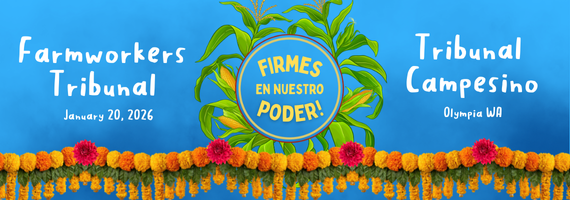
This is why the annual Farmworker Tribunal remains a critical event for advancing food and climate justice. On January 20, 2026, Farmworkers will gather from across the state to share their experiences and weigh in on the policy decisions that impact them the most.
You can keep up with the latest information on our Tribunal Webpage, and be the first to know about other upcoming events on our Event Calendar.